

|
 あけぼのそう (曙草)
|
|
|
          |
|

|
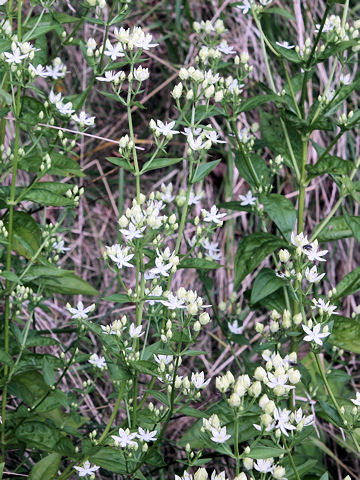
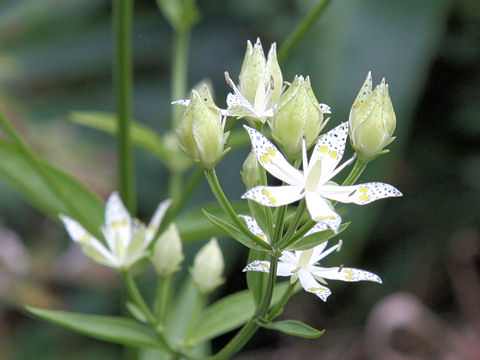
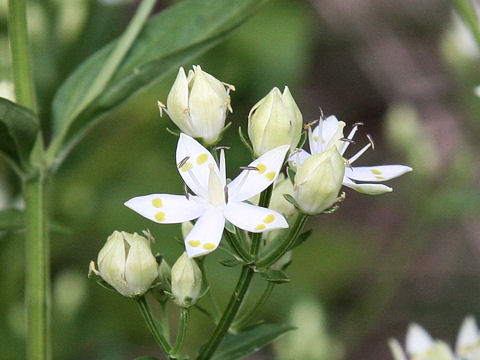
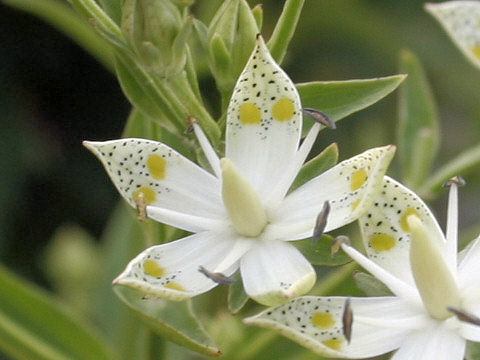
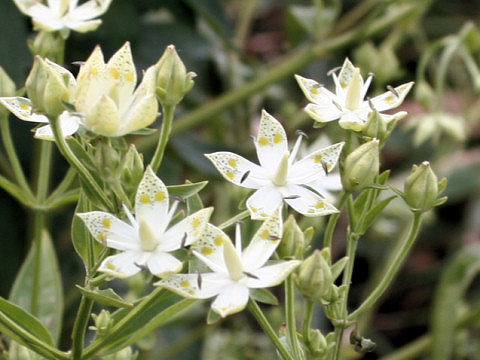
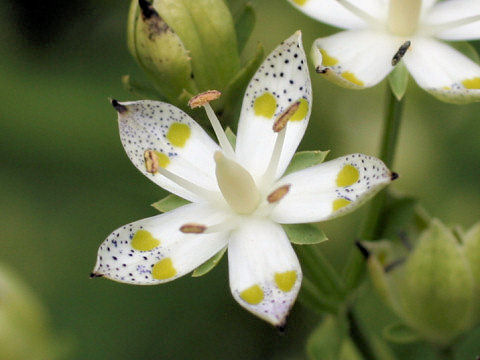
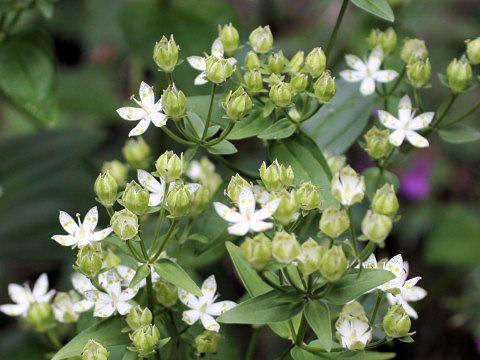
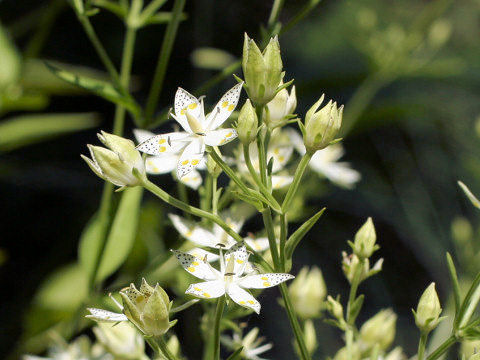
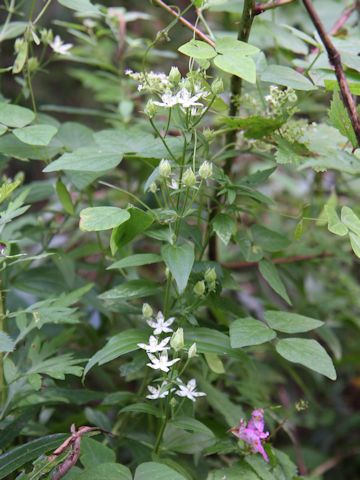
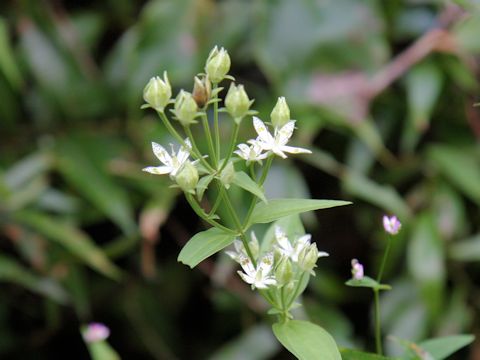
わが国の各地をはじめ、朝鮮半島や中国、ヒマラヤに分布しています。山野の湿り気のあるところに生え、高さは50~80センチになります。根生葉は長楕円形ですが、花期には枯れています。茎葉は卵状長楕円形で先が尖ります。9月から10月ごろ、茎の先に花柄のある白い花を咲かせます。花冠は深く5裂し、裂片には黄緑色の蜜腺溝が2個と濃い緑色の斑点がたくさんあります。和名は、花冠の斑点を夜明けの星空に見立てたもの。中国語では「獐牙菜(zhang ya cai)」と呼ばれます。 韓国語では「トゥジョムスンプル(두점쓴풀)」です。これは「2点(トゥジョム: 두점)」+「センブリ(スンプル: 쓴풀)」の合成語です。花弁に2個の斑点があるセンブリという意味です。「スンプル」は直訳すれば「苦い(スン: 쓴)」+「草(プル: 풀)」です。 |
|
|
リンドウ科センブリ属の二年草で、学名は Swertia bimaculata (syn. Ophelia bimaculata)。英名はありません。 |
|
|
The "Akebono-so" (Swertia bimaculata) belongs to Gentianaceae (the Gentian family). It is a biennial herb that is native to Japan, as well as the Korean Peninsula, China and the Himalaya. This herb grows in damp hills and fields and can reach 50-80 cm in height. The basal leaves are oblong and blighted in flowering time. The cauline leaves are ovate-oblong with acute tips. The pedunculate white flowers come on the stems from September to October. The corolla is five partite and the lobes have two yellowish-green nectar-line valleculas and many dark green mottles. The Japanese name likens the spots on the corolla to the stars in the dawn sky. It is called "獐牙菜" (zhang ya cai) in Chinese. In Korean, it's called "du-jeom-sseun-pul" (두점쓴풀). This is a compound ward consisting of "double-spotted" (du-jeom: 두점) and "Senburi" (sseun-pul: 쓴풀). It refers to a type of senburi that has two spots on its petals. "sseun-pul" literally translates as "bitter" (sseun: 쓴) + "grass" (pul: 풀). |
|
|
[上・中2] 愛知県設楽町津具にて、2007年10月04日撮影。 [中1] 岐阜県中津川市阿木「根ノ上高原」にて、2007年10月04日撮影。 [中3・中4] 滋賀県多賀町霊仙「霊仙山」にて、2005年09月09日撮影。 [中5・中6] 長野県大鹿村大河原にて、2005年09月22日撮影。 [中7] 大阪府河内長野市滝畑「岩湧山」にて、2005年09月30日撮影。 [中8・下] 茨城県北茨城市「花園山」にて、2012年09月22日撮影。 |
|
|

|
Shu Suehiro shu@botanic.jp
|