

|
 あまどころ (甘野老)
|
|
|
|
-- もっと見る(Show more)--
-- 閉じる(Close) --
|
|
|
|

|
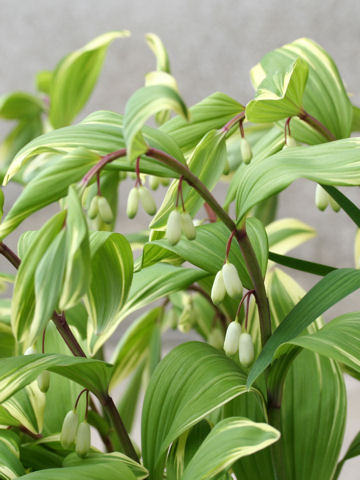
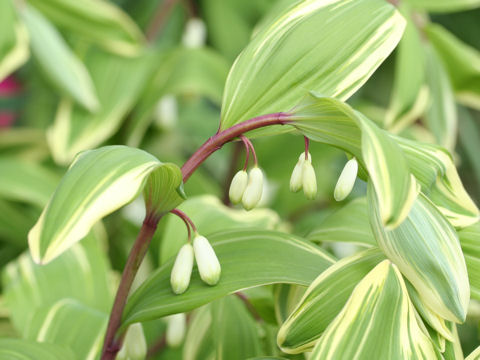
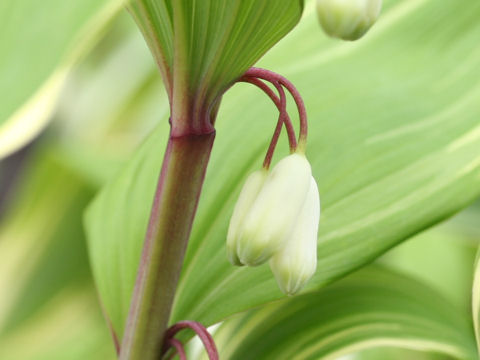
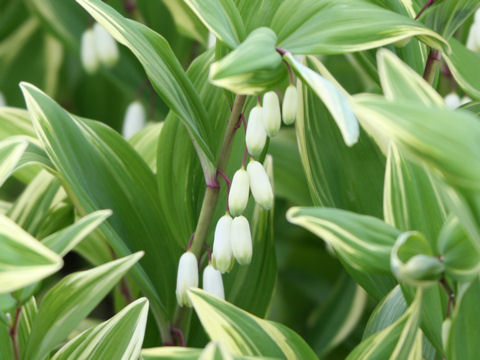
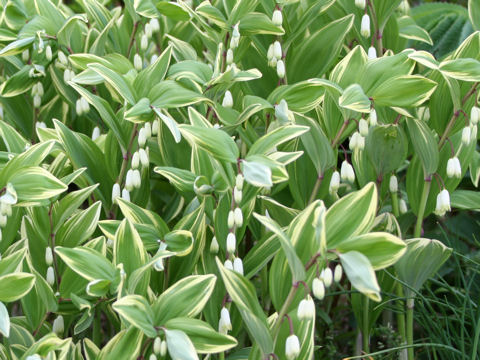
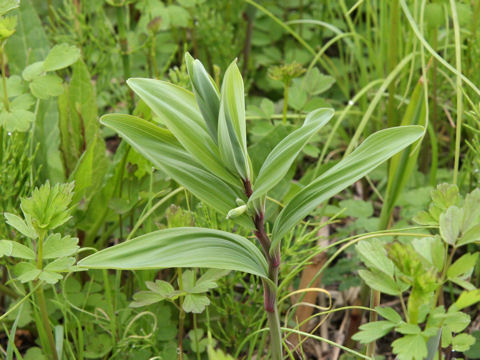
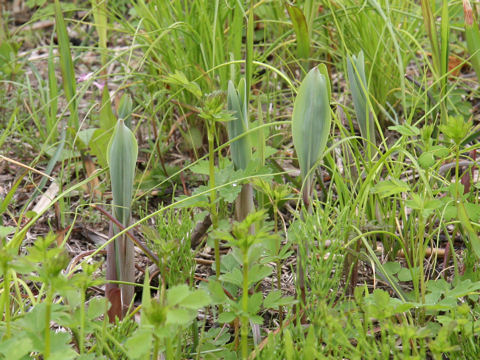
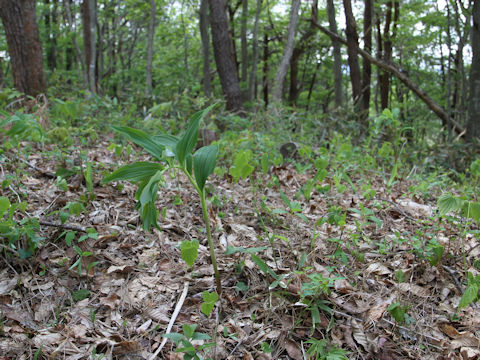
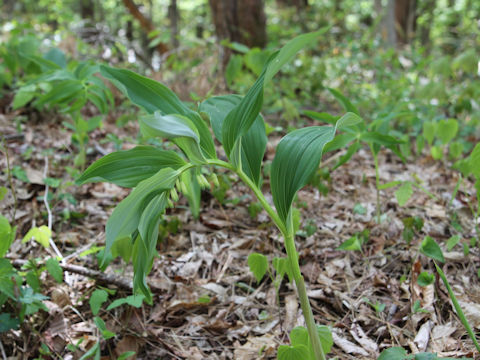
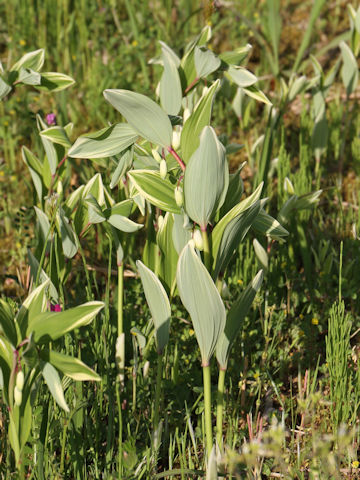
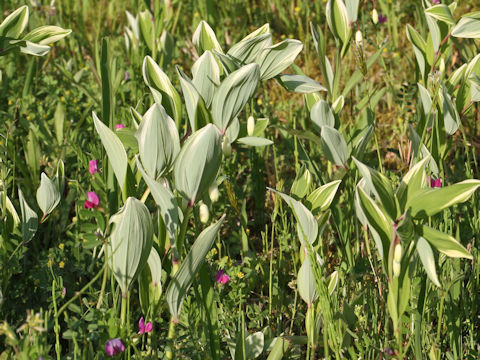
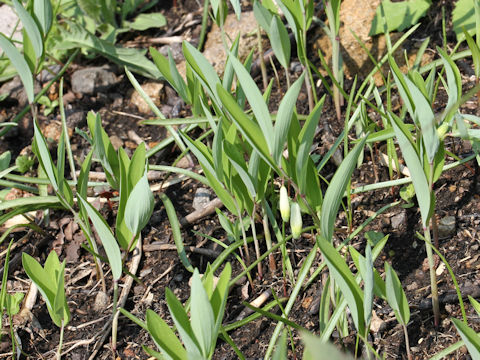
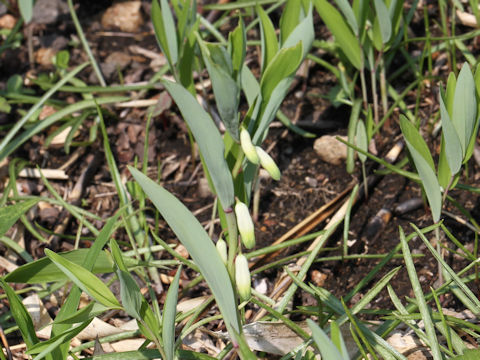
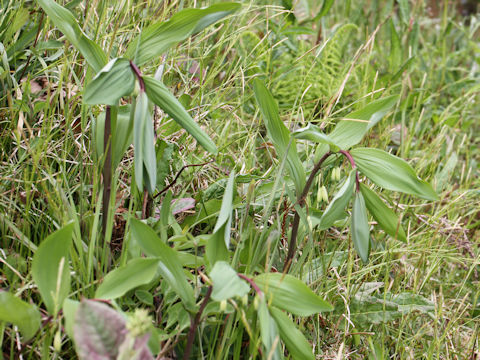
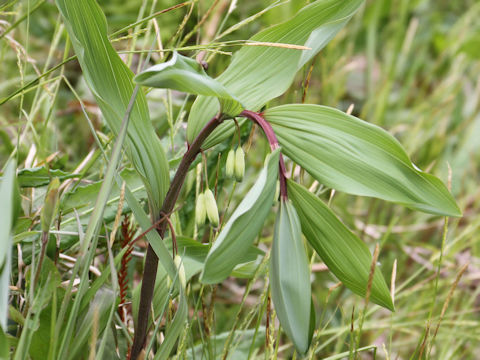
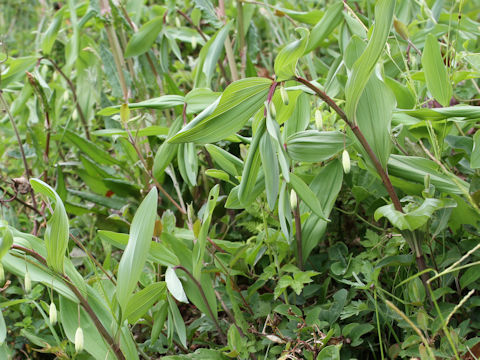
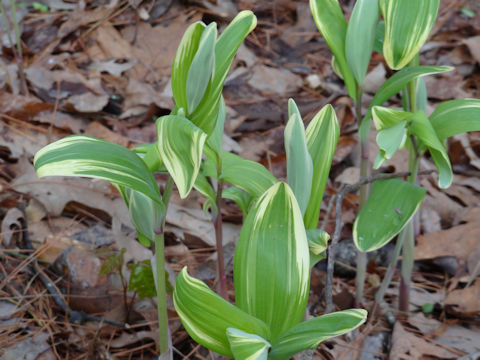
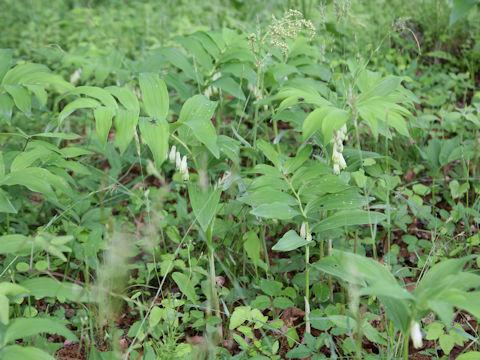
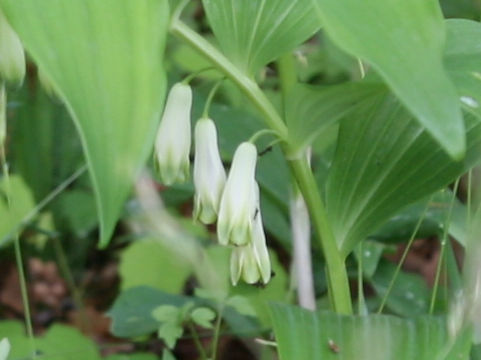
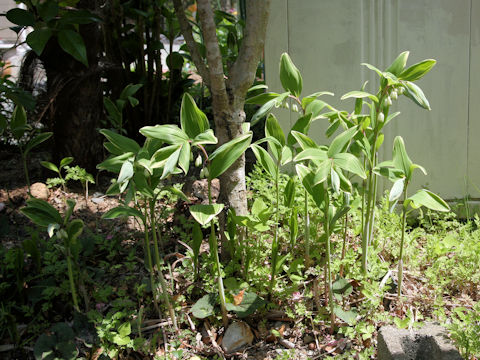
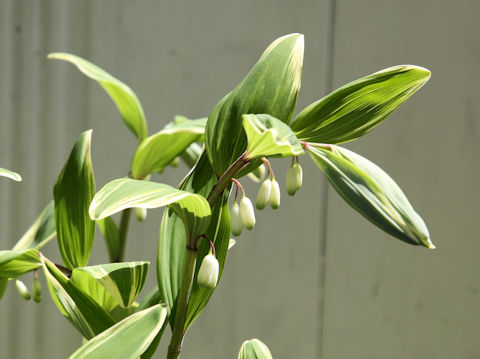
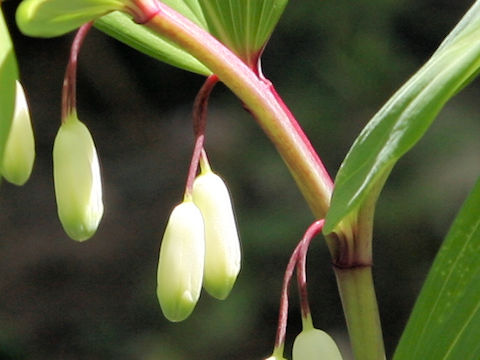
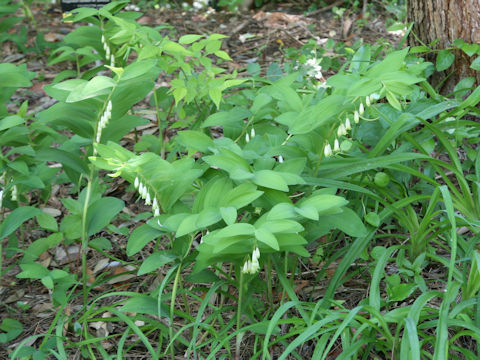
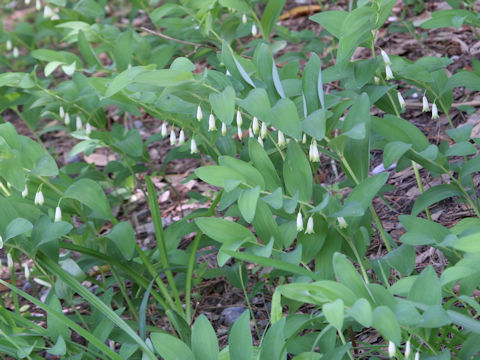
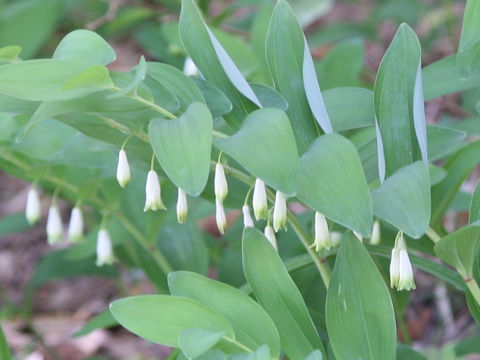
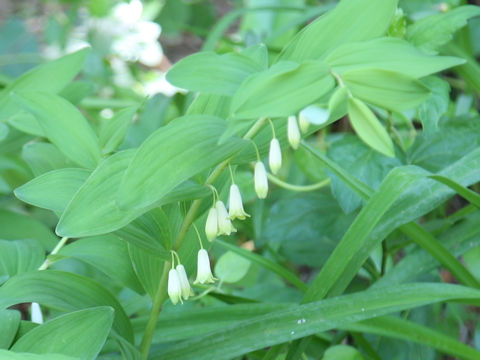
わが国の各地をはじめ、台湾や朝鮮半島、中国に分布しています。山野の草地などに生え、高さは30~60センチになります。茎には稜があり、長楕円形から狭長楕円形の葉が互生します。4月から5月ごろ、葉腋から白色の筒状花を1~2個下垂して咲かせます。若芽や円柱状の根茎は食用にされます。写真の上5枚および中11~12、中16、中19~中21は、園芸品種の「斑入りあまどころ(cv. Variegatum)」。台湾華語では「萎蕤」、中国名では「玉竹(yu zhu)」と呼ばれます。 韓国語では「トゥングルレ(둥굴레)」です。この名前の由来については諸説ありますが、「丸い轡(くつわ)(둥근굴레)」のような根茎からというのが有力です。この根茎を乾燥させて炒ったお茶は「トゥングルレ茶(둥굴레차)」と呼ばれ、韓国で定番の伝統茶となっています。 |
|
|
ユリ科ナルコユリ科の多年草で、学名は Polygonatum odoratum var. pluriflorum (syn. Polygonatum odoratum)。英名は Solomon's seal。 |
|
|
The Solomon's seal (Polygonatum odoratum var. pluriflorum) belongs to Liliaceae (the Lily family). It is a perennial herb that is native throughout Japan, as well as Taiwan, the Korean Peninsula and China. This herb grows in mountain and field grasslands, and can reach 30-60 cm in height. The stem is ridged, and the leaves are oblong to narrow oblong and arranged in alternate. The 1-2 white tubular flowers bloom descending at the axils from April to May. The young shoots and the columnar rootstocks are used as food. The top five and 12-13rd, 17th, 20-22nd photos show the horticultural variety 'Variegatum'. In Taiwanese Chinese, it is called "萎蕤" and "玉竹" (yu zhu) in Chinese. In Korean, it is called "dung-gul-le" (둥굴레). While there are various theories regarding the origin of this name, the most widely accepted one is that it comes from the shape of the rhizome, which resembles a "round bit" (둥근굴레). Tea made from this rhizome, which is dried and roasted, is called "Solomon's seal tea" (둥굴레차) and has become a staple traditional tea in Korea. |
|
|
[上・中1~2] 大阪府四條畷市清滝中町にて、2006年04月22日撮影。 [中3・中4] 長野県松川村川西にて、2006年05月09日撮影。 [中5・中6] 埼玉県さいたま市「田島ヶ原」にて、2010年04月11日撮影。 [中7・中8] 福島県川俣町飯坂「花塚山」にて、2014年05月17日撮影。 [中9・中10] 新潟市秋葉区「新潟県立植物園」にて、2017年05月04日撮影。 [中11・中12] 大分県由布市湯布院町「由布岳」にて、2018年04月27日撮影。 [中13~中15] 宮城県山元町「深山」にて、2020年05月01日撮影。 [中16] アメリカ・アーカンソー州「ホットスプリングス」にて、2014年04月07日撮影。(photo by Jon Suehiro) [中17・中18] 宮城県川崎町支倉にて、2022年05月14日撮影。 [中19~中21] 宮城県大河原町大谷にて、2023年04月22日撮影。 [中22~24・下] 茨城県つくば市「つくば実験植物園」にて、2024年05月11日撮影。 |
|
|

|
Shu Suehiro shu@botanic.jp
|