

|
 あさがお (朝顔)
|
|
|
             |
|

|
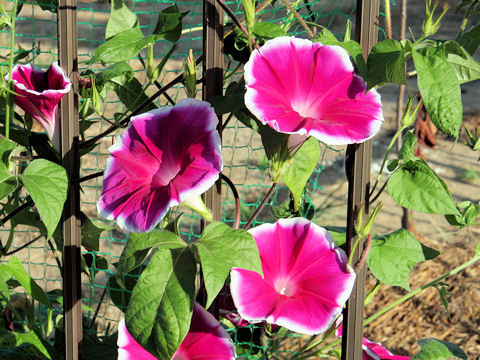
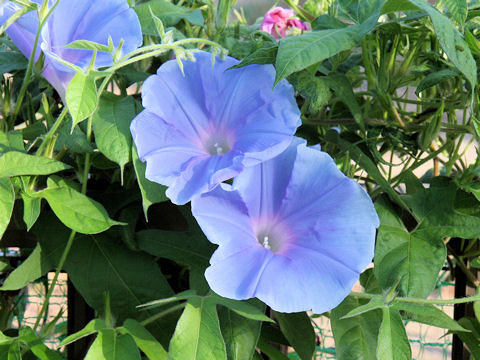
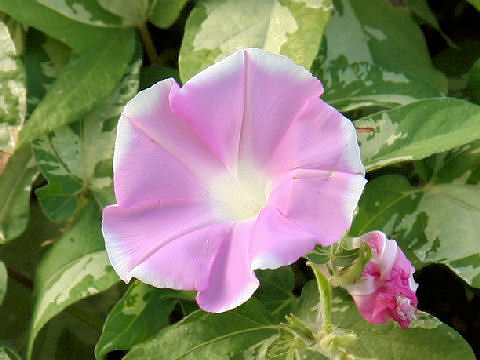
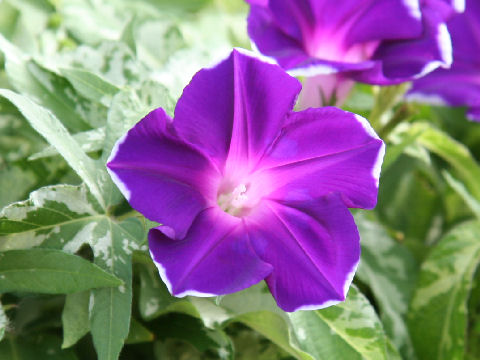
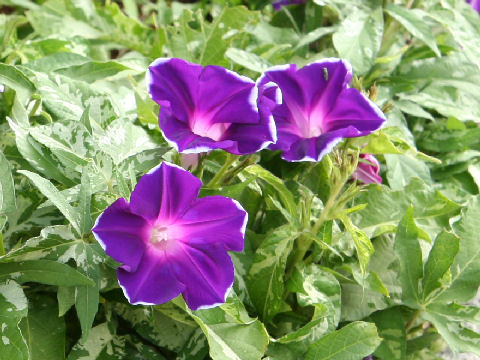
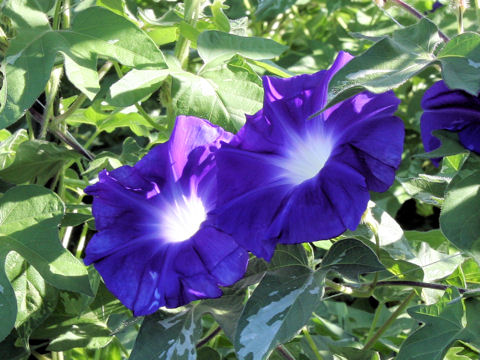
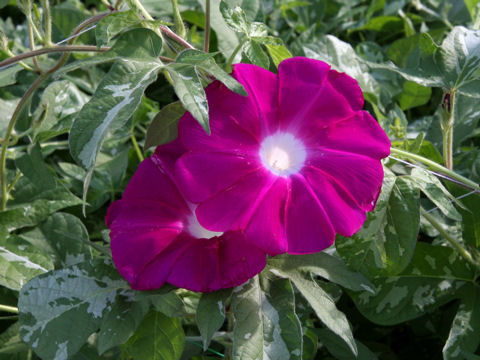
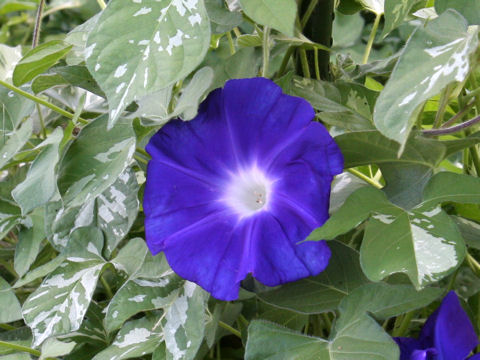
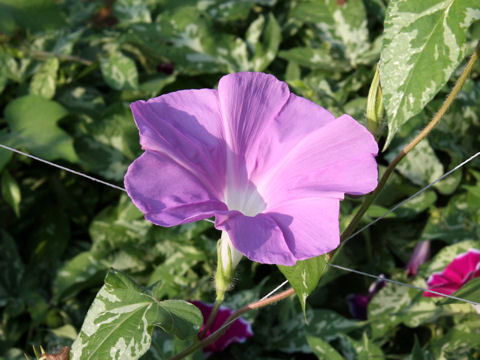
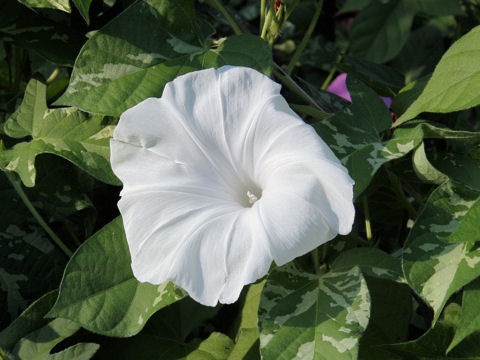
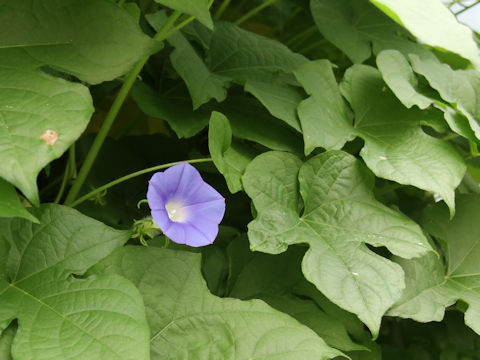
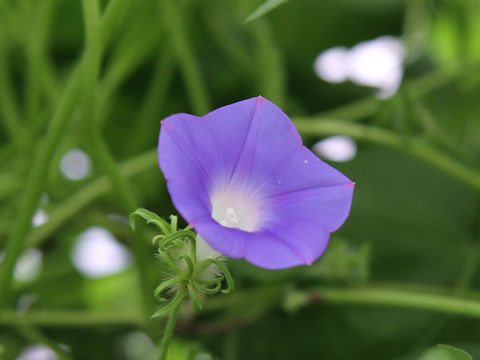
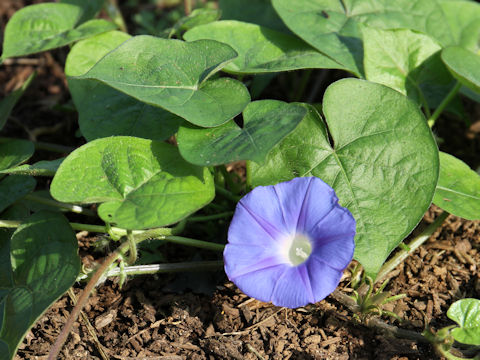
アジアが原産です。わが国へは、今から1200年ほど前、遣唐使によって中国から伝えられました。もともとは薬用で、種子が牽牛子(けんごし)と呼ばれ、下剤や利尿剤として利用されました。茎は蔓性で、長さは3メートル以上になります。渡来した最初のものは、青い丸咲きで3個の尖った翼片をもつ並葉だったと考えられています。花や葉に変化が大きく、7月から8月ごろ、漏斗形の花を咲かせます。台湾華語では「牽牛花」、中国語では「牽牛(qian niu)」と呼ばれます。これは昔、中国で牛を引いて、アサガオの薬効のお礼に行った、という言い伝えに由来します。 韓国語では「ナパルコッ(나팔꽃)」です。これは「ラッパ(ナパル: 나팔)」+「花(コッ: 꽃)」の合成語です。ラッパのような形の花という意味から名付けられています。 写真中10~11・下の品種は、「北京天壇」。 |
|
|
ヒルガオ科サツマイモ属の一年草で、学名は Ipomoea nil。英名は Japanese morning glory。 |
|
|
The Japanese morning glory (Ipomoea nil) belongs to Convolvulaceae (the Bindweed family). It is an annual herb that is native to Asia. It was introduced into Japan via China by Japanese envoy to China in the Tang Dynasty about 1200 years ago. This herb was used as a herbal medicine for laxative or hydragogue. The stem is a trailing vine and can reach up to 3 m long. The leaves are commonly hastate and alternate, and have many variety in their shape. The funnel-shaped flowers come in July through August, and they have many flower colors. In Taiwanese Chinese, it is called "牽牛花", and "牽牛" (qian niu) in Chinese. This originates from an old legend in China about a man who led a cow on a journey to express his gratitude for the medicinal properties of morning glories.BR> In Korean, it's called "na-pal-kkot" (나팔꽃). This is a compound ward consisting of "trumpet" (na-pal: 나팔) and "flower" (kkot: 꽃). It was named for its trumpet-shaped flower. |
|
|
[上・中1] 茨城県神栖市土合西にて、2008年08月08日撮影。 [中2] 大阪府四條畷市清滝中町にて、2006年08月14日撮影。 [中3・中4] 同上にて、2006年08月28日撮影。 [中5] 千葉県香取市大角にて、2010年08月05日撮影。 [中6・中7] 同上にて、2010年08月04日撮影。 [中8・中9] 同上にて、2010年08月17日撮影。 [中10・中11] 同上にて、2013年09月11日撮影。 [下] 同上にて、2015年09月21日撮影。 |
|
|

|
Shu Suehiro shu@botanic.jp
|