

|
 あすひかずら (明日檜葛)
|
|
|
           |
|

|
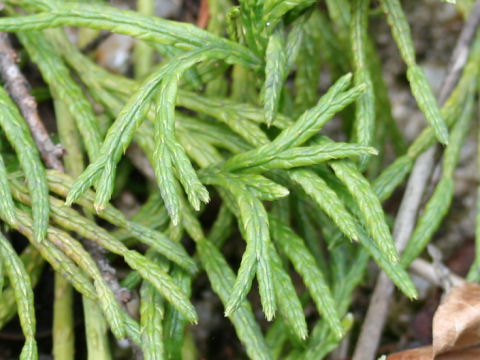
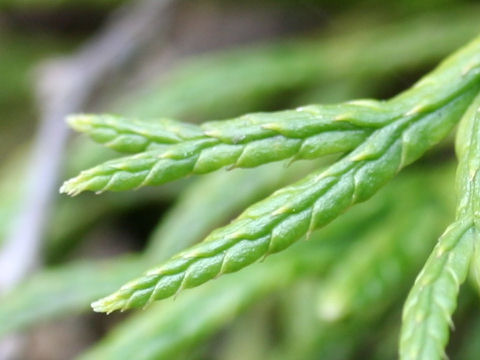
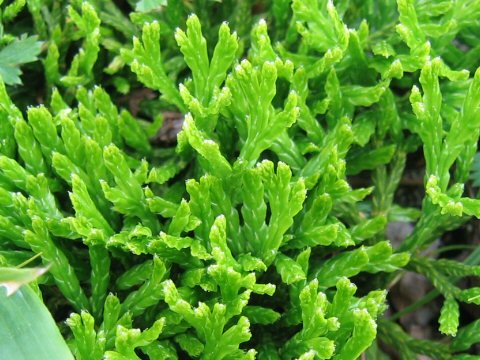
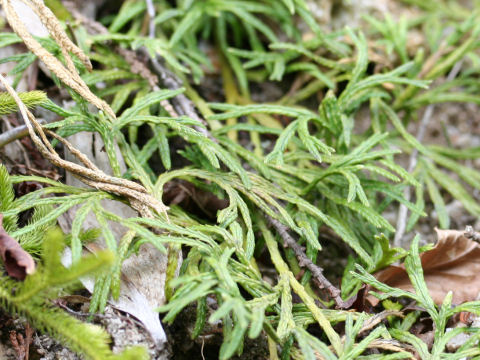
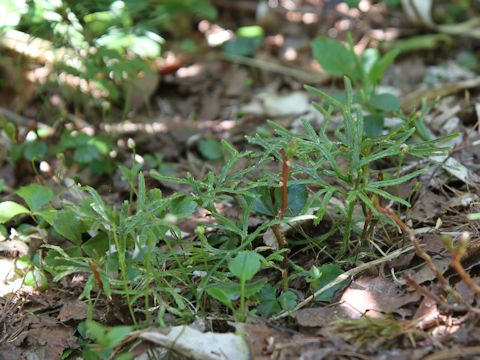
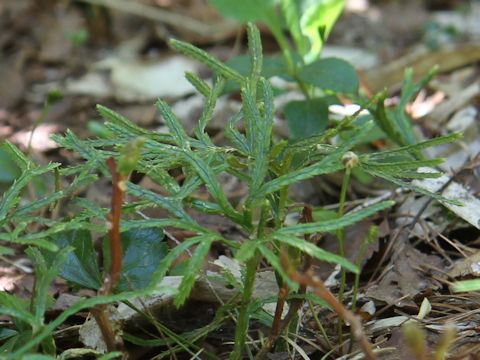
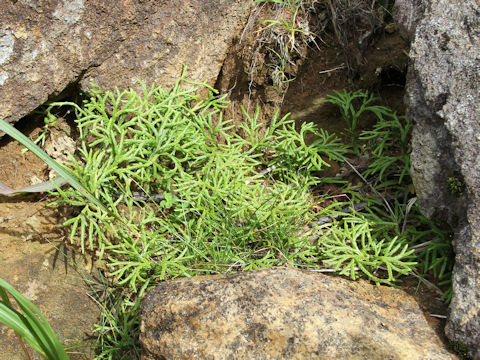
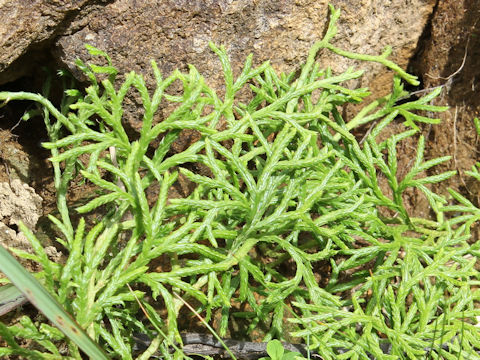
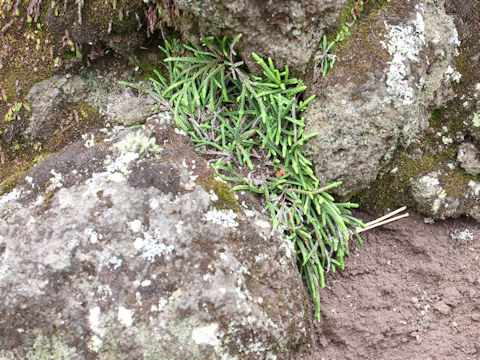
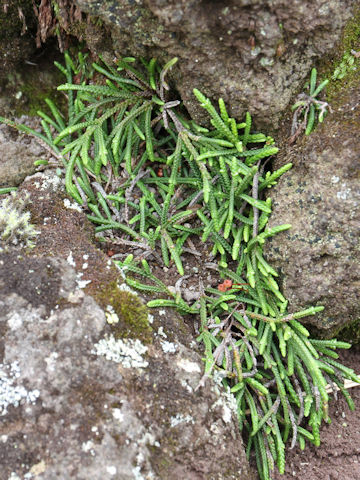
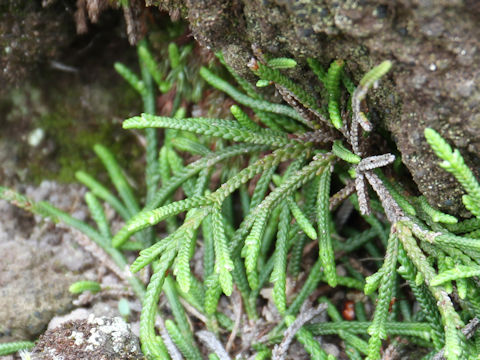
わが国の本州、近畿地方以北から北海道、朝鮮半島や中国、それにヨーロッパや北アメリカに分布しています。山地の草地や茂み、岩礫地などに生えます。茎(主軸)は地面を這い、1メートルほどの長さになります。扁平な側枝は、よく分枝して直立します。小さな葉は茎に圧着していて4列に並びます。和名は、側枝のかたちを樹木の「アスナロ」の小枝に見立てたもの。中国語では「扁枝石松(bian zhi shi song)」と呼ばれます。 韓国語では「ピヌルソクソン(비늘석송)」です。これは「鱗(ピヌル: 비늘)」+「ヒカゲノカズラ(石松・ソクソン: 석송)」の合成語です。 |
|
|
ヒカゲノカズラ科ヒカゲノカズラ属の常緑シダ植物で、学名は Lycopodium complanatum。英名は Ground cedar。 |
|
|
The Ground cedar (Lycopodium complanatum) belongs to Lycopodiaceae (the Club moss family). It is an evergreen fern that is native northward from Kinki-district of Honshu to Hokkaido, as well as the Korean Peninsula, China, Europe and North America. This fern grows in montane grasslands, scrubs and screes. The main stems crawl on the ground and can reach about 1 m long. The lateral branches are flat, much diverged and upright. The small leaves are closely-attached on the stems, and arranged in four rows. The Japanese name is derived from the shape of the side branches, which resemble twigs of the "Asunaro" (Thujopsis dolabrata). It is called "扁枝石松" (bian zhi shi song) in Chinese. In Korean, it's called "pi-nul-seok-song" (비늘석송). This is a compound word consisting of "scale" (pi-nul: 비늘) and "Common club moss" (seok-song: 석송). |
|
|
[上・中1・中3] 長野県安曇野市穂高有明「中房渓谷」にて、2006年06月02日撮影。 [中2] 長野県山ノ内町「東舘山高山植物園」にて、2004年07月03日撮影。 [中4・中5] 福島市町庭坂「家形山」にて、2014年06月01日撮影。 [中6・中7] 福島県二本松市「安達太良山」にて、2014年09月06日撮影。 [中8~9・下] 青森県弘前市「岩木山」にて、2020年07月25日撮影。 |
|
|

|
Shu Suehiro shu@botanic.jp
|