

|
 あやめ (菖蒲)
|
|
|
|
-- もっと見る(Show more)--
-- 閉じる(Close) --
|
|
|
|

|
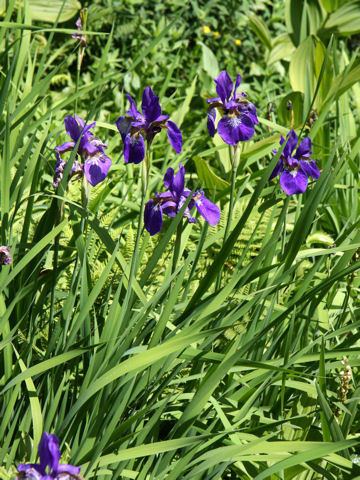
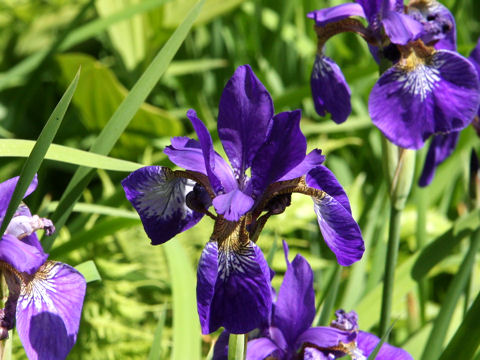
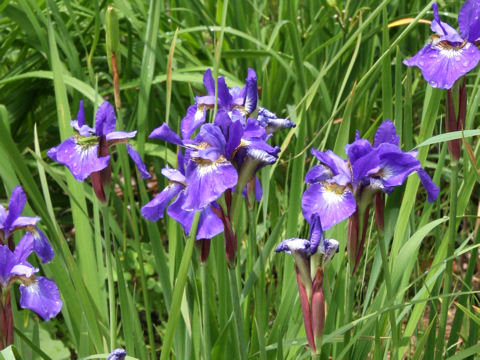
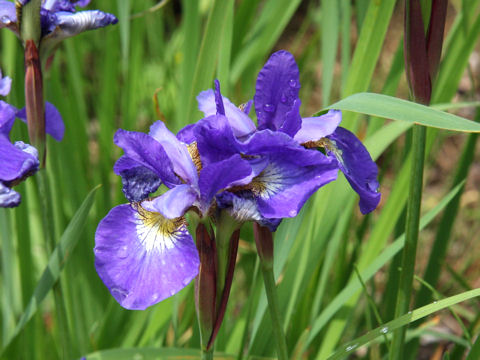
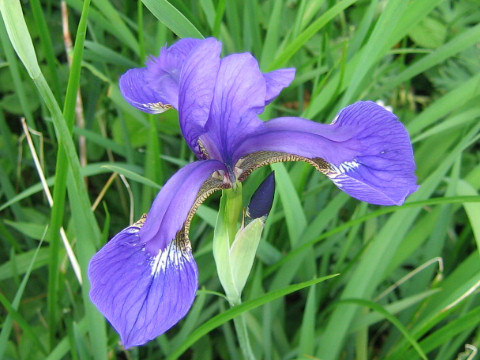
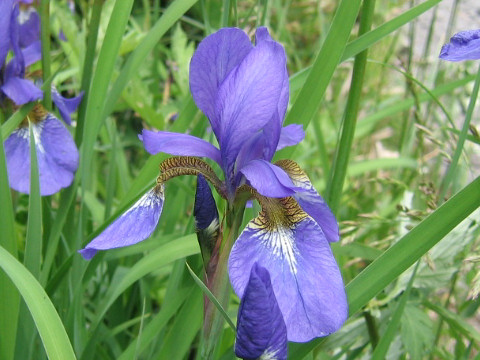
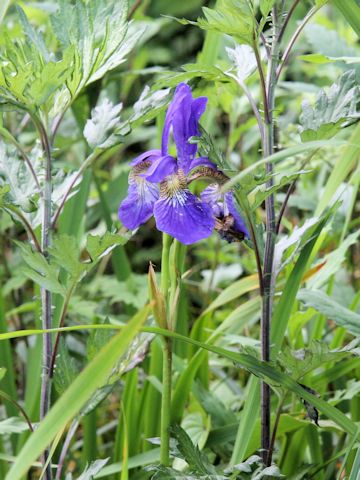
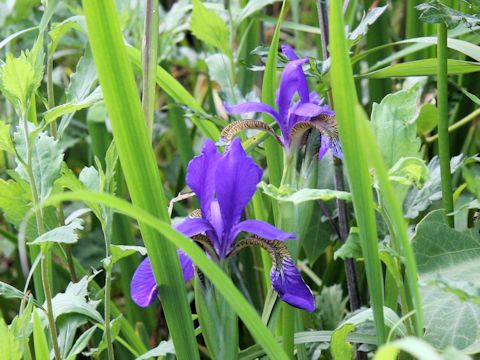
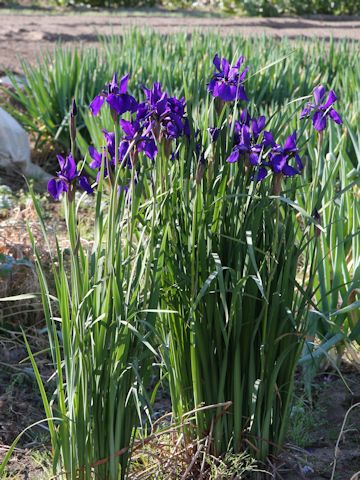
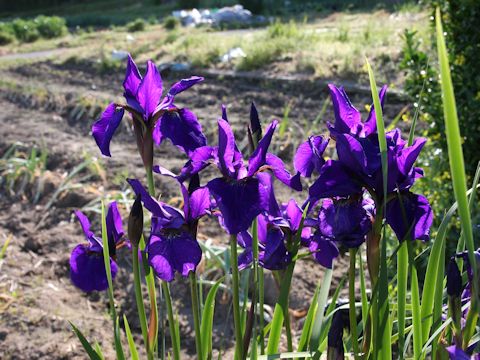
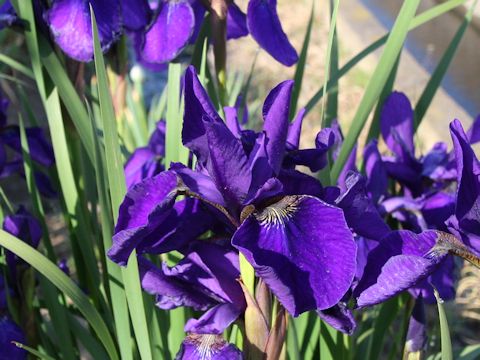
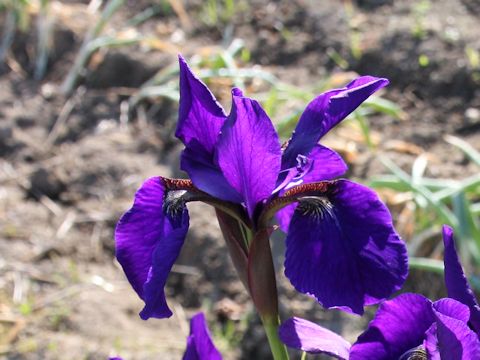
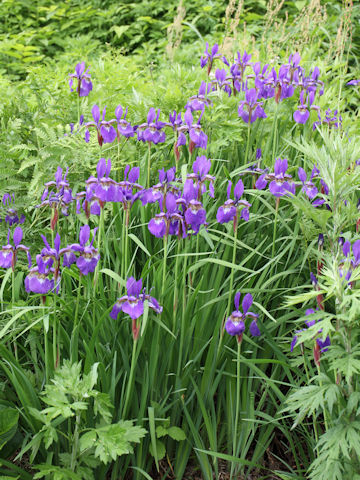
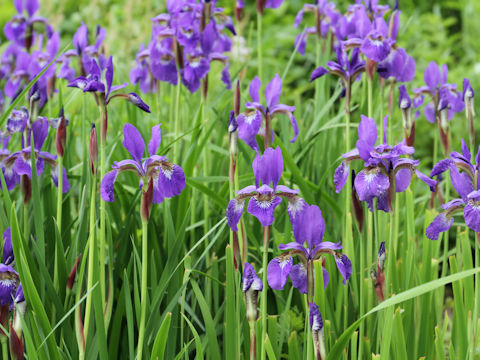
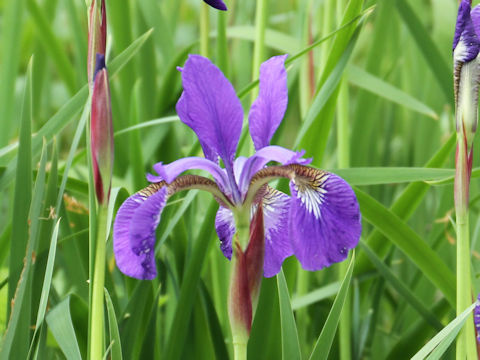
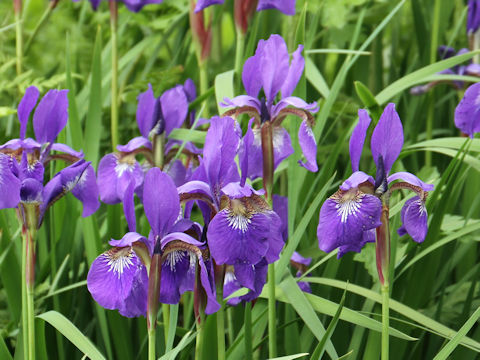
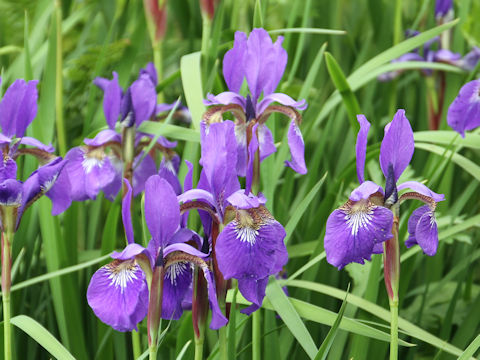
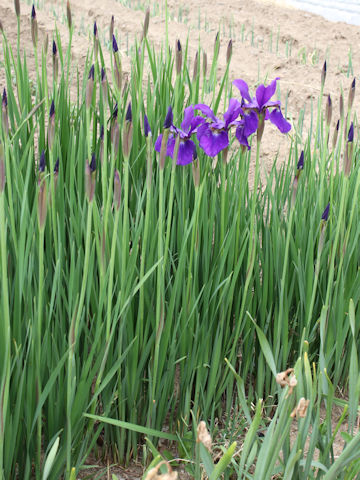
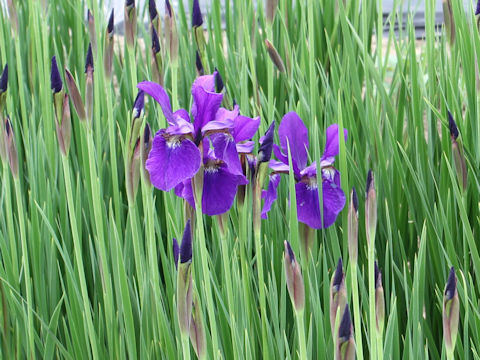
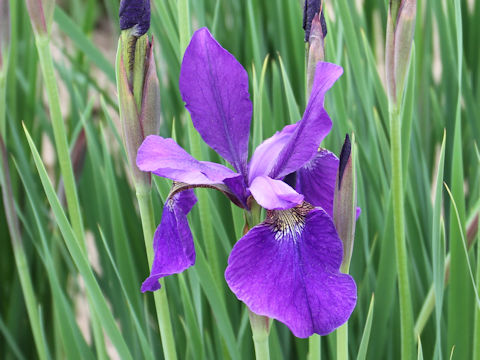
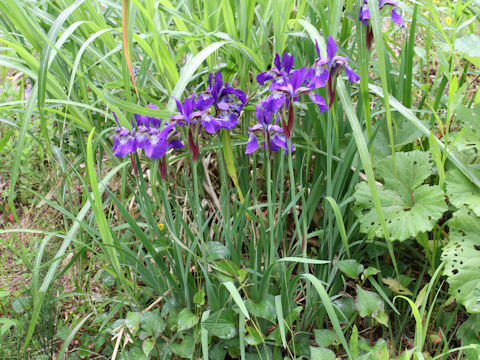
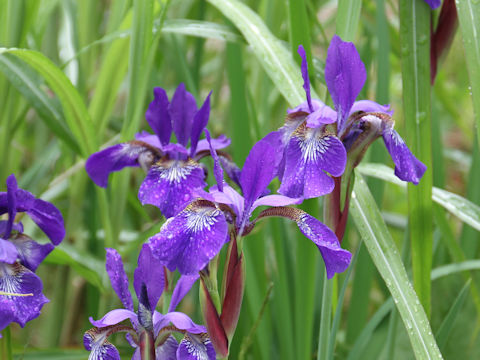
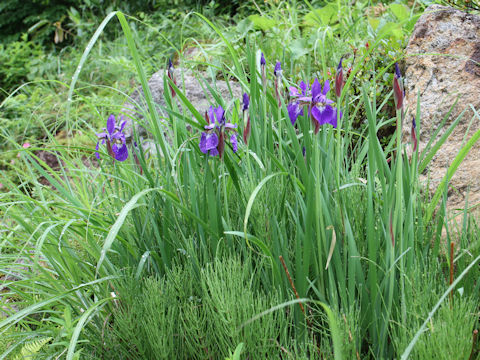
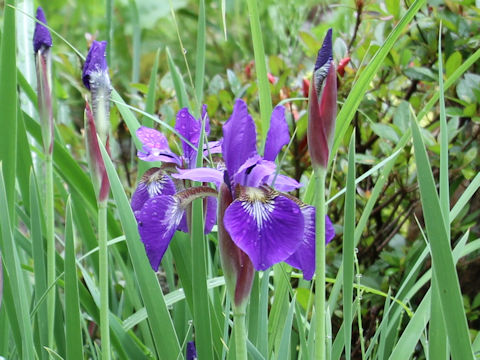
わが国の各地と朝鮮半島、中国東北部それにシベリアに分布しています。やや乾燥した草原に生え。高さは30~60センチになります。5月から7月ごろ、紫色の花を咲かせます。外花被片は大きく下垂し、内花被片は直立します。白い花色の「しろあやめ(白菖蒲)」もあります。和名は、外花被片の基部が黄色く紫色の綾目模様があることから。中国語では「溪荪(xi sun)」と呼ばれます。 韓国語では「プッコッ(붓꽃)」です。これは「筆(プッ: 붓)」+「花(コッ: 꽃)」の合成語です。つぼみの形が書道の筆に似ていることに由来しています。 |
|
|
アヤメ科アヤメ属の多年草で、学名は Iris sanguinea (syn. Iris orientalis)。英名は Iris。 |
|
|
The Iris (Iris sanguinea) belongs to Iridaceae (the Iris family). It is a perennial herb that is native to Japan, as well as the Korean Peninsula, northeastern China and Siberia. This herb grows in aridish grasslands and can reach 30-60 cm in height. The purple or rarely white flowers bloom from May to July. The outer tepals are large, drooping and have yellow nectar guides and purple netted patches on the bases. The inner tepals are small and erect. There is also "Shiro-ayame" (white iris" with white flower color. The Japanese name is derived from the yellowish purple twill pattern at the base of the outer petals. In Chinese, it is called "溪荪" (xi sun). In Korean, it is called "put-kkot" (붓꽃). This is a compound word made up of "brush" (put: 붓) and "flower" (kkot: 꽃). The name comes from the fact that the shape of the bud resembles a calligraphy brush. |
|
|
[上・中1] 長野県山ノ内町「東館山高山植物園」にて、2010年07月25日撮影。 [中2・中3] 茨城県つくば市「つくば実験植物園」にて、2009年05月23日撮影。 [中4・中5] 長野県東御市「湯の丸高原」にて、2005年07月09日撮影。 [中6・中7] 福島県磐梯町「オオルリ公園」にて、2012年06月22日撮影。 [中8~中11] 千葉県香取市久保にて、2013年05月08日撮影。 [中12~中16] 山形県小国町小玉川にて、2017年06月14日撮影。 [中20・中21] 同上にて、2018年06月09日撮影。 [中22・下] 同上にて、2019年06月01日撮影。 [中17~中19] 長野県小海町稲子にて、2018年05月18日撮影。 |
|
|

|
Shu Suehiro shu@botanic.jp
|