

|
 えのきぐさ (榎草)
|
|
|
                 |
|

|
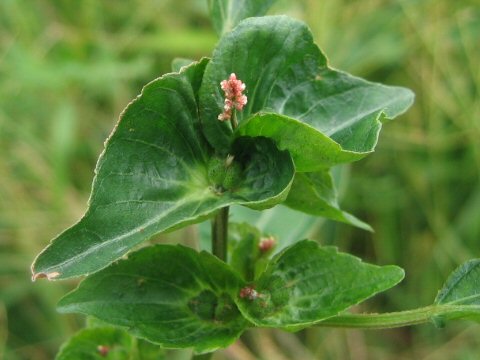
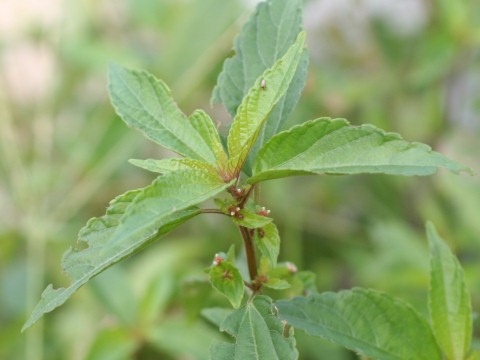
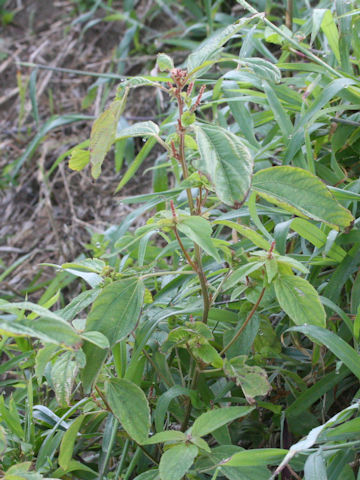
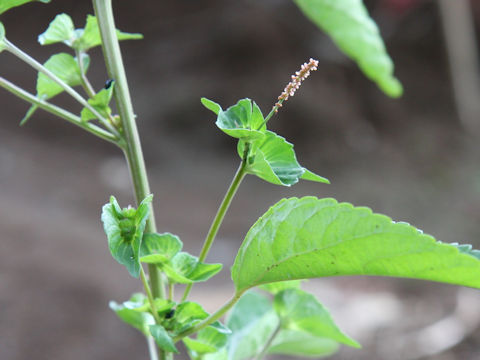
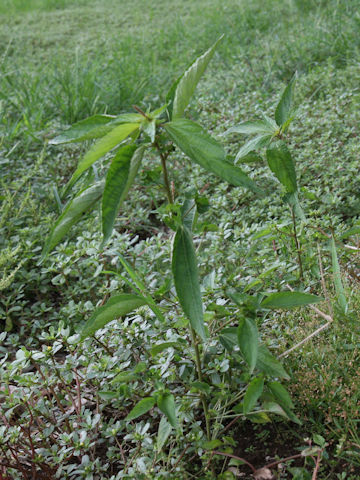
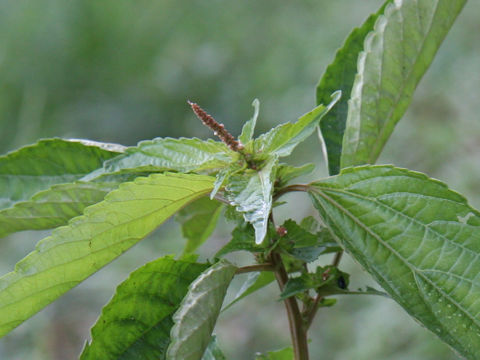
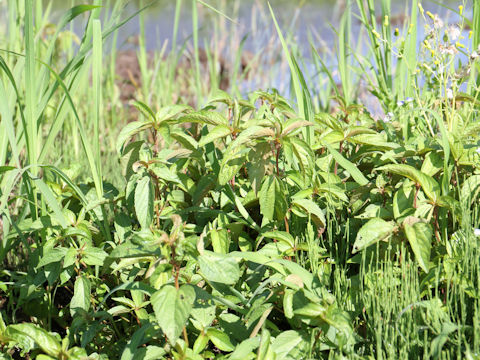
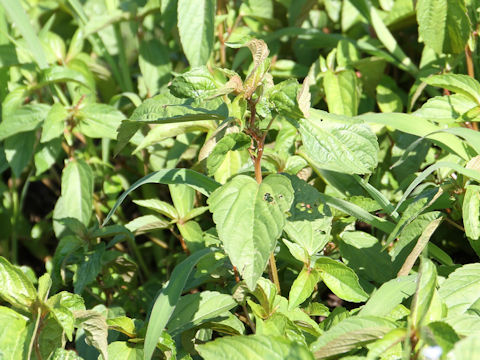
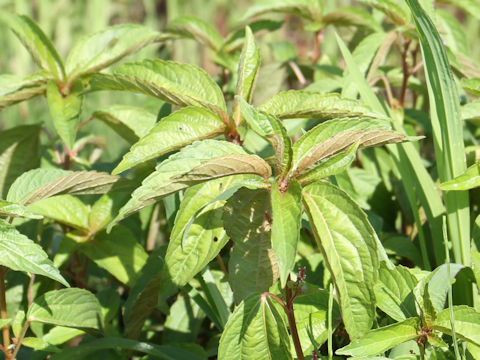
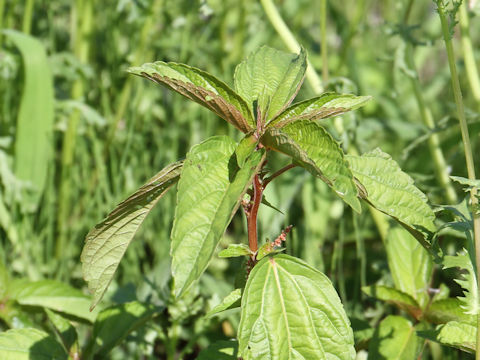
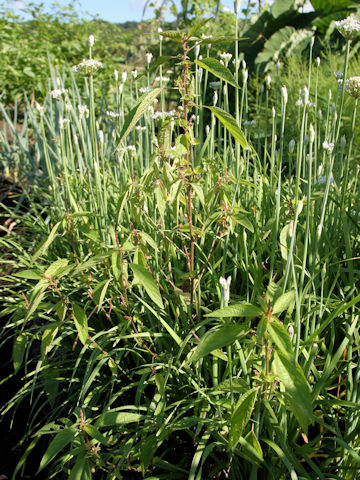
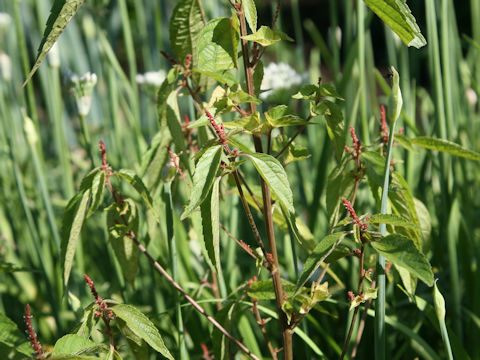
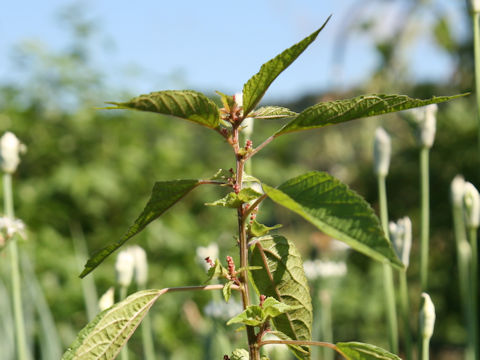
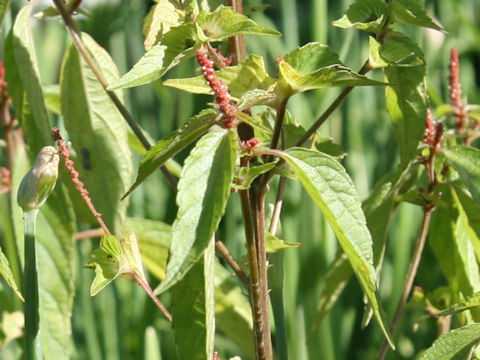
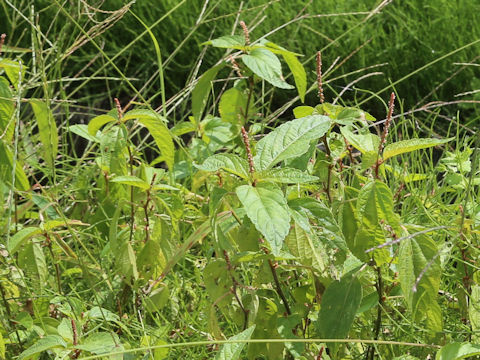
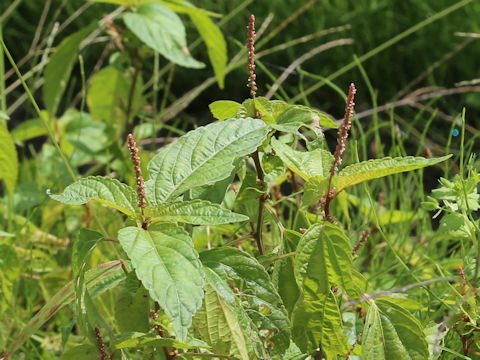
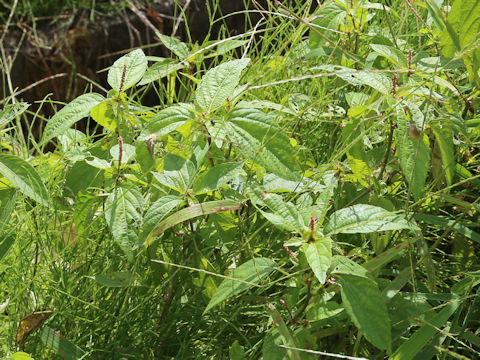
わが国の各地をはじめ東アジアに分布しています。畑や道端などに生え、高さは30~50センチほどになります。葉は「えのき(榎)」に似た長楕円形で、互生します。8月から10月ごろ、編み笠状の苞葉がある雌花序と穂状の雄花序をつけます。別名で「あみがさそう(編み笠草)」とも呼ばれます。台湾華語では「鐵莧菜」、中国語では「鐵莧菜(tie xian cai)」と呼ばれます。 韓国語では「ケプル(깨풀)」です。これは「ゴマ(ケ: 깨)」+「草(プル: 풀)」の合成語です。葉の形が「ゴマ(チャムケ: 참깨)」の葉に似ていることから名付けられました。 |
|
|
トウダイグサ科エノキグサ属の一年草で、学名は Acalypha australis (syn. Acalypha indica var. minima)。英名は Australian acalypha。 |
|
|
The Australian acalypha (Acalypha australis) belongs to Euphorbiaceae (the Spurge family). It is an annual herb that is didtributed from all over Japan to East Asia. This herb grows in fields and roadside, etc, and the height is about 30-50 cm. The leaves are oblong, alternate, and shaped like "Enoki" (Celtis sinensis var. japonica). It will produce female clusters with braided hat-like bracts and spike-like male clusters from August to October. It is also known as "Amigasa-so" (braided hat grass) in Japan. In Taiwanese Chinese, it is called "鐵莧菜", and in Chinese "鐵莧菜" (tie xian cai). In Korean, it is called "kkae-pul" (깨풀). This is a compound word made up of "sesame" (kkae: 깨) and "grass" (pul: 풀). It was named because the shape of its leaves resembles those of the "sesame" (cham-kkae: 참깨) plant. |
|
|
[上] 大阪府四條畷市清滝中町にて、2004年09月05日撮影。 [中1] 同上にて、2005年09月03日撮影。 [中2・中3] 茨城県神栖市土合北にて、2009年09月10日撮影。 [中4・中5] 千葉県香取市大角にて、2012年09月04日撮影。 [中6~中9] 青森県弘前市葛原にて、2018年07月15日撮影。 [中10~中13] 宮城県川崎町支倉にて、2024年09月05日撮影。 [中14~15・下] 宮城県大河原町金ヶ瀬にて、2026年09月17日撮影。 |
|
|

|
Shu Suehiro shu@botanic.jp
|