 |
|

|
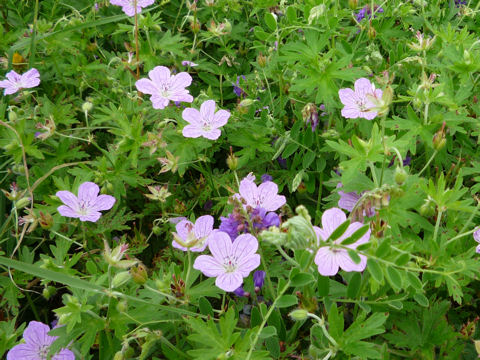
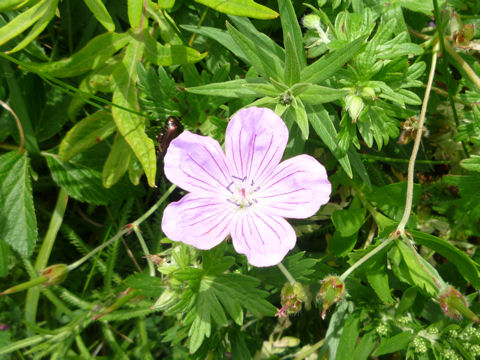
わが国の本州、滋賀県以北から北海道、それに千島諸島に分布しています。海岸の草地や山地に生え、高さは30~80センチになります。葉は掌状に5深裂し、さらに細片に分裂します。7月から8月ごろ、花茎の先に紅紫色の花を咲かせます。花弁が重なり、萼片に密に開出毛があるのが特徴です。
|
|
|
フウロソウ科フウロソウ属の多年草で、学名は Geranium yesoense var. yesoense。英名はありません。
|
|
|
The "Ezo-fuuro" (Geranium yesoense var. yesoense) belongs to Geraniaceae (the Geranium family). It is a perennial herb that is distributed northward from Shiga perefecture of Honshu to Hokkaido, and the Kuril Islands. This herb grows in coastal grasslands or mountains, and can reach 30-80 cm in height. The leaves are five partite palmetely and divided into narrow slips. The magenta flowers bloom on the flowering stalks from July to August. It is defined that tha petals are overlapped and the sepals are covered with dense erect hairs.
|
|
|
北海道北見市常呂町「ワッカ原生花園」にて、2009年08月04日撮影。(photo by Aya Suehiro)
|

 えぞふうろ (蝦夷風露)

 shu@botanic.jp