

|
 いぬびわ (犬枇杷)
|
|
|
              |
|

|
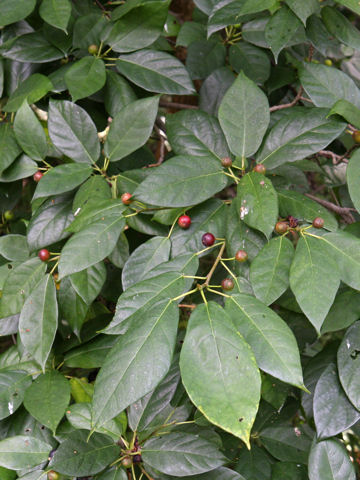
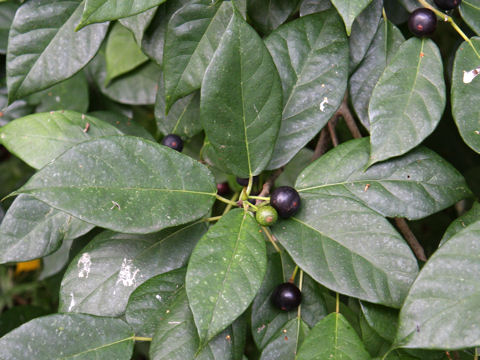
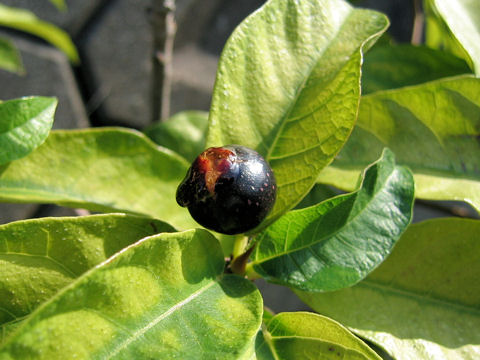
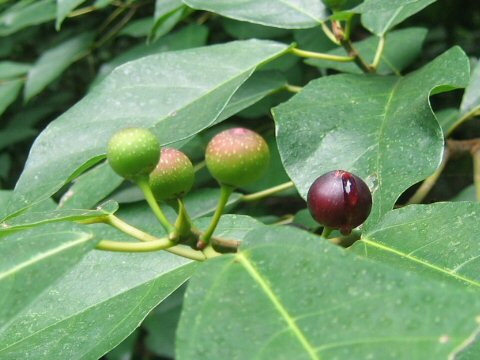
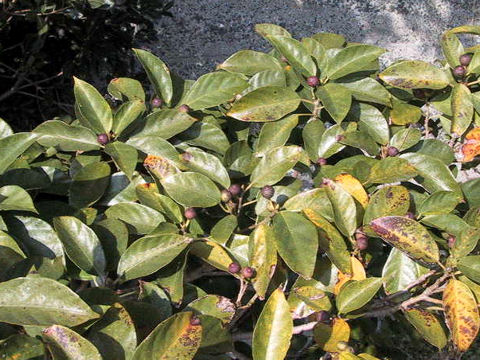
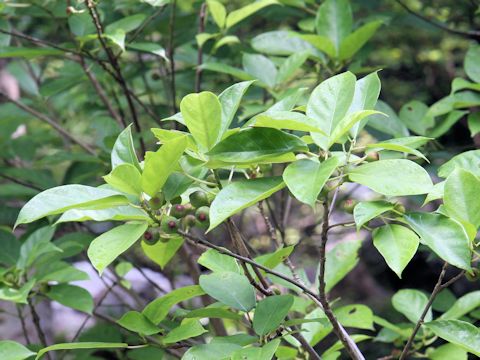
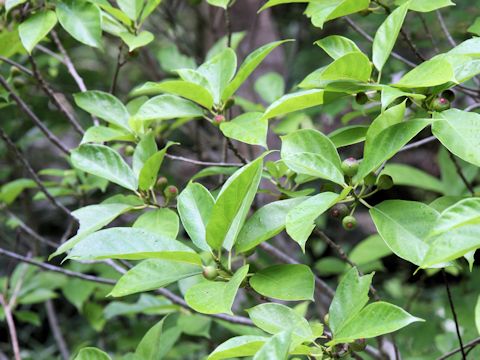
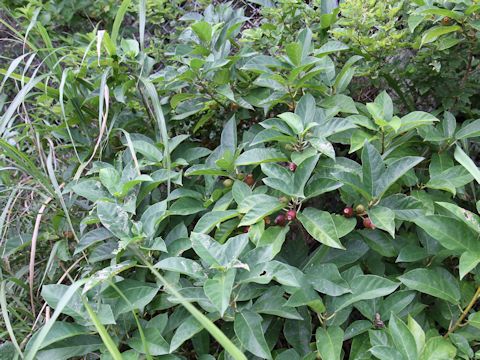
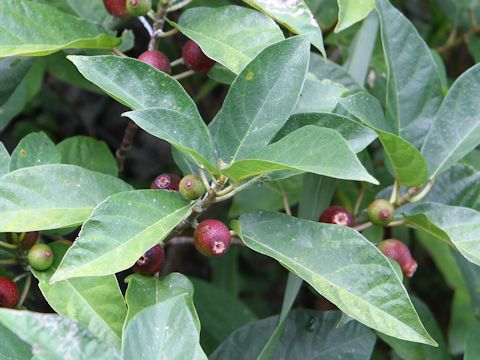
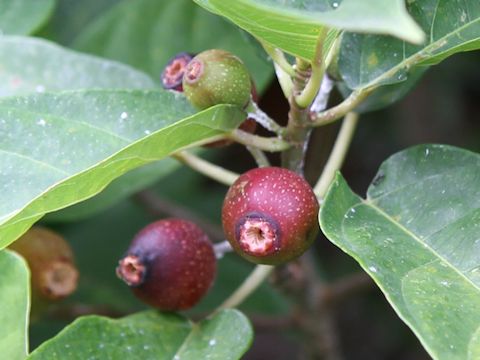
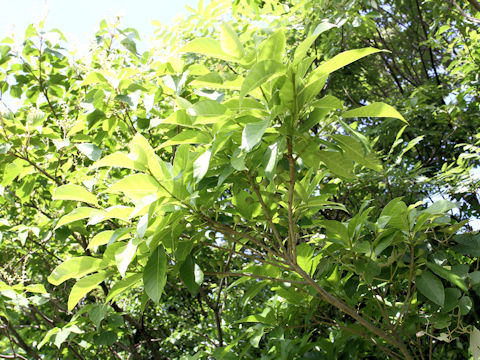
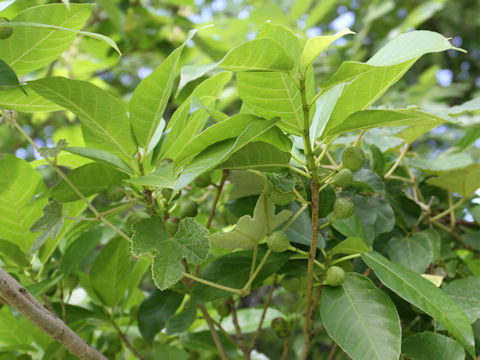
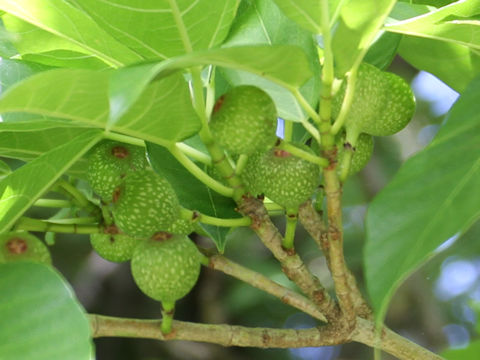
わが国の関東地方以西から四国、九州それに台湾にかけて分布しています。山地や丘陵に生え、高さは3~5メートルになります。葉は卵状楕円形で互生します。枝や葉を傷つけると白い乳汁が出ます。雌雄異株です。4月から5月ごろ、葉腋に花(花嚢)をつけます。秋には「いちじく」を小さくしたような果実(果嚢)が黒紫色に熟し、食用になります。昔は「いぬびわ」のことを「いちじく」と呼んでいたそうです。台湾華語では「假枇杷」と呼ばれます。 |
|
|
クワ科イチジク属の落葉低木で、学名は Ficus erecta。英名はありません。 |
|
|
The "Inu-biwa" (Ficus erecta) belongs to Moraceae (the Mulberry family). It is a small deciduous tree that is distributed westward from Kanto district of Honshu to Shikoku, Kyushu of Japan, as well as Taiwan. This tree grows in mountains and hills, and can reach 3-5 m in height. The leaves are ovate-elliptic and arrnaged in alternate. The white saps ooze when the branches or leaves are injured. It is a dioecious. The flower bloated sacs come in April and May. The fruits are utricles, ripen black-purple in fall, and edible. In the old days, the "Inu-biwa" was called "Ichijiku" (fig). In Taiwanese Chinese, it is called "假枇杷". |
|
|
[上・中1] 東京都文京区「小石川植物園」にて、2009年08月09日撮影。 [中2] 大阪府四條畷市清滝にて、2004年09月25日撮影。 [中3] 大阪府交野市「大阪市大付属植物園」にて、2003年08月24日撮影。 [中4] 愛知県蒲郡市竹野町「竹島」にて、2001年11月24日撮影。 [中5~中7] 三重県松阪市「波瀬植物園」にて、2012年07月09日撮影。 [中8~中10] 静岡県熱海市熱海「錦ヶ浦」にて、2013年08月02日撮影。 [中11~12・下] 鳥取県大山町「むきばんだ史跡公園」にて、2017年06月13日撮影。 |
|
|

|
Shu Suehiro shu@botanic.jp
|