

|
 いぬしで (犬四手) |
|
|
|
-- もっと見る(Show more)--
-- 閉じる(Close) --
|
|
|
|

|
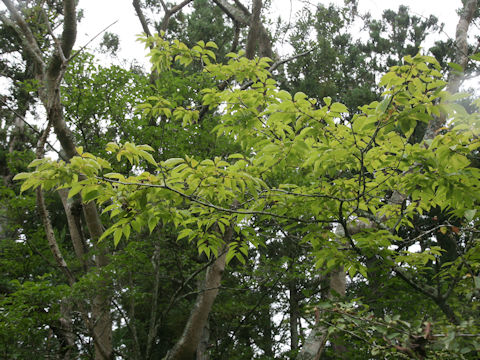
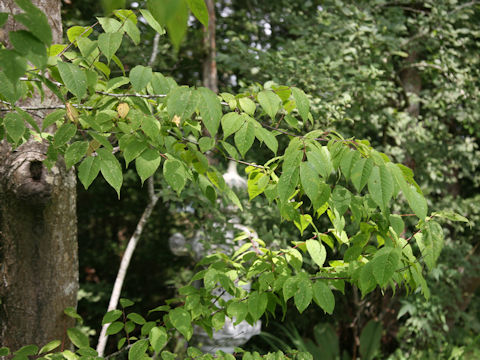
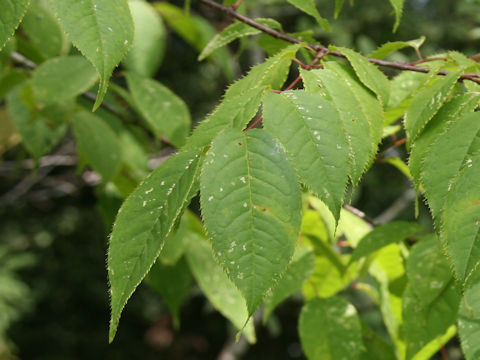
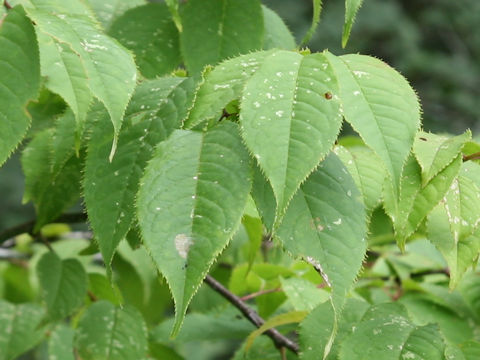
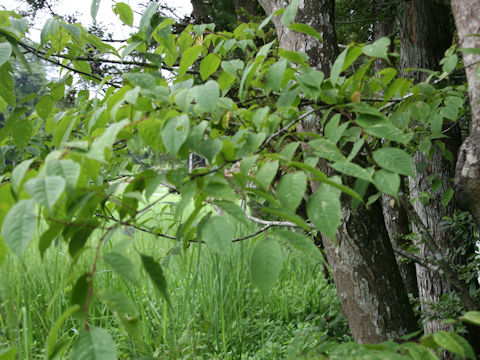
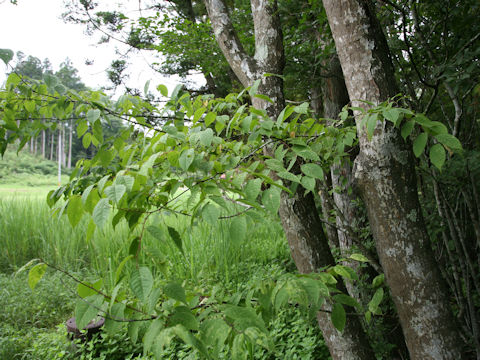
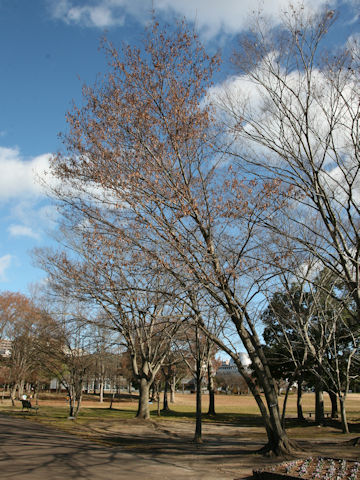
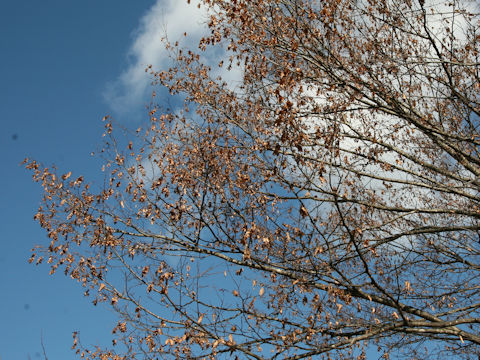
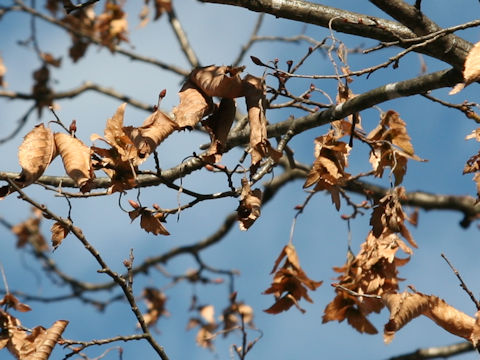
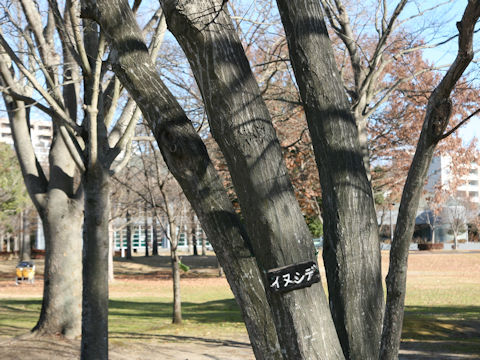
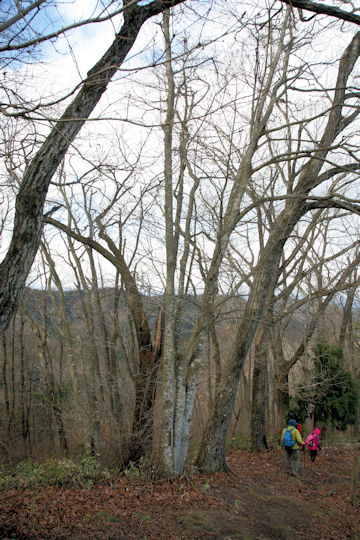
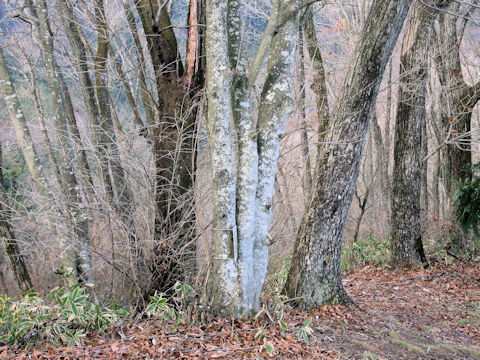
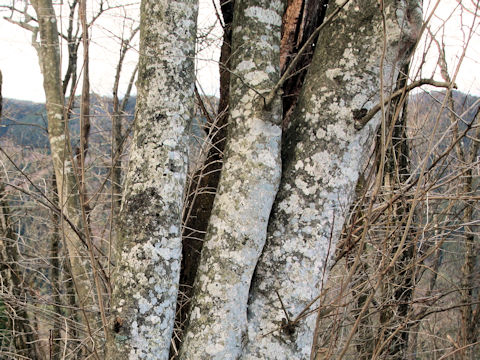
わが国の本州、岩手・新潟県以南から四国・九州、それに朝鮮半島南部や中国の中東部・南東部に分布しています。山地や丘陵の雑木林に生え、高さは15メートルほどになります。樹皮は滑らかで白い模様が目立ち、老木では浅い割れ目が入ります。葉は卵形から卵状長楕円形で、縁には鋭く細かい鋸歯があります。4月から5月ごろ、葉の展開と同時に雄花序と雌花序をだします。果実は堅果で、葉状の果苞がつき、10月ごろに熟します。和名は、近縁種の「アカシデ」などと比べて、材がやや柔らかく建築材などへの利用価値が劣るとされたことから、「役に立たない」という意味合いで「イヌ」が付けられました。中国語では「昌化鵝耳櫪(chang hua e er li)」と呼ばれます。 韓国語では「ケソオナム(개서어나무)」です。これは「犬(ケ: 개)」+「アカシデ(ソオナム: 서어나무)」の合成語です。「ケ(개)」は、何か異なっていたり、少し劣っていることを表す接頭辞です。 |
|
|
カバノキ科クマシデ属の落葉高木で、学名は Carpinus tschonoskii (syn. Carpinus fauriei)。英名は Korean hornbeam。 |
|
|
The Korean hornbeam (Carpinus tschonoskii) belongs to Betulaceae (the Birch family). It is a tall deciduous tree that is distributed southward from Iwate-Niigata prefecture of Honshu to Shikoku, Kyushu of Japan, as well as the southern Korean Penninsula, central-eastern and southeastern regions of China. This tree grows in montane brushes and can reach about 15 m in height. The barks are smooth, whitish figured and furrowed shallowly when aging. The leaves are ovate to ovate-oblong with fine acute toothed edges. The male and female clusters are borne as soon as foliatin from April to May. Th fruits are nuts with leafy bracts and ripen in October. The Japanese name was given the prefix "inu" (meaning "dog"), implying "useless", because its wood is slightly softer than that of closely related species such as "Red-leaved hornbeam" and was therefore considered less suitable for use in construction and other applications. It is called "昌化鵝耳櫪" (chang hua e er li) in Chinese. In Korean, it's called "gae-seo-eo-na-mu" (개서어나무). This is a compound word consisting of "dog" (gae: 개) + "Red-leaved hornbeam" (seo-eo-na-mu: 서어나무). "gae" is a prefix that indicates something is different or slightly inferior. |
|
|
[上・中1・中5] 長野県大町市「ラ・カスタ」にて、2007年07月10日撮影。 [中2~中4] 奈良市川上町「若草山」にて、2006年04月22日撮影。 [中6~中8] 鳥取県大山町「むきばんだ史跡公園」にて、2017年06月13日撮影。 [中9・中10] 宮城県川崎町「みちのく湖畔公園」にて、2018年04月12日撮影。 [中11~中13] 宮城県村田町「浮島の植物群落」にて、2024年08月21日撮影。 [中14~中16] 同上にて、2024年08月22日撮影。 [中17~中20] 宮城県仙台市泉区「七北田公園」にて、2024年12月10日撮影。 [中21~中23] 福島県白河市「天狗山」にて、2024年12月12日撮影。 [中24・下] 宮城県仙台市青葉区「青葉の森緑地」にて、2025年04月09日撮影。 |




|
|

|
Shu Suehiro shu@botanic.jp |