
|

|
 イタリアンたんぽぽ (イタリアン蒲公英)
|
[Index]
[Back]
|
|
|
      |
|

|
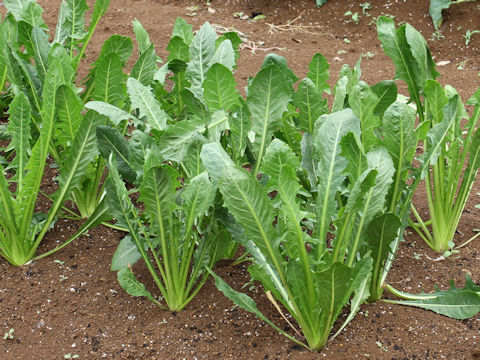
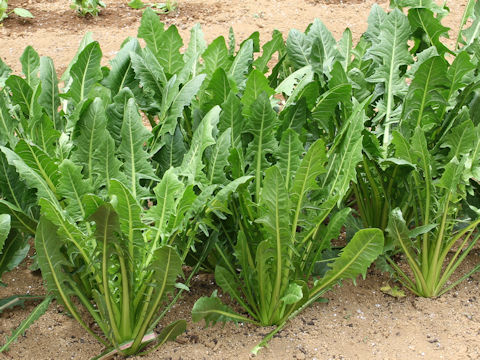
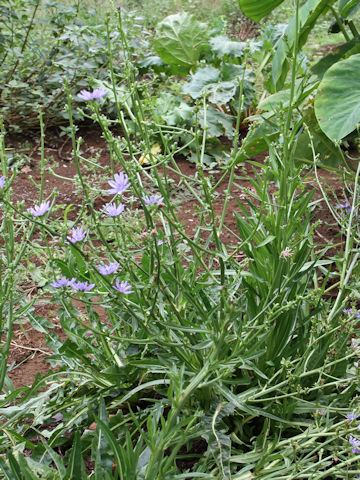
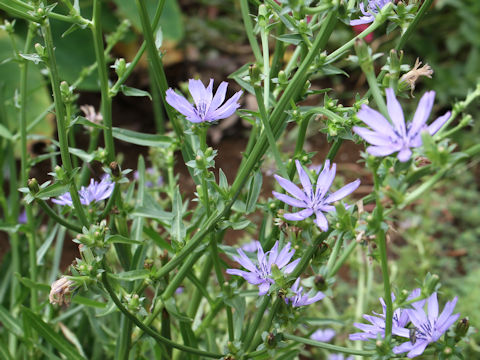
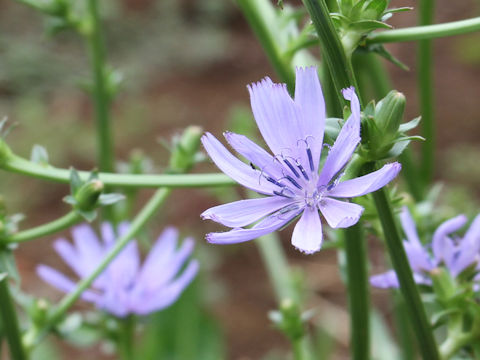
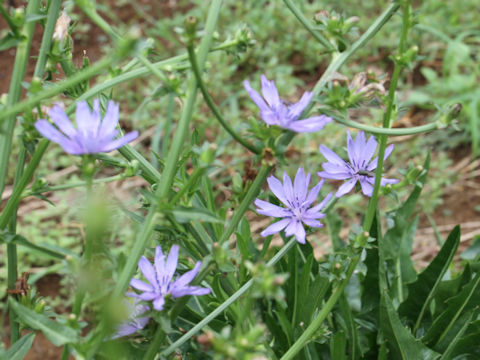
北ヨーロッパが原産のチコリの一変種です。葉は「せいようたんぽぽ(西洋蒲公英)」に似ていますが、異なった品種です。葉や花茎をサラダに利用するイタリアには、いくつかの品種があります。7月から10月ごろ、花茎をだし、明るいブルーの頭花を咲かせます。 |
|
|
キク科キクニガナ属の多年草で、学名は Cichorium intybus。英名は Italian dandelion。 |
|
|
The Italian dandelion (Cichorium intybu) belongs to Asteraceae (the Aster family). It is a variety of Chicory which is native to nothern Europe. Although the leaves are similar to the dandelion (Taraxacum officinale), Italian dandelion is a different species. There are several varieties in Italy where the leaves and flower stalks are used in salads. The bright blue flower-heads bloom at the flower stalks from July until October. |
|
|
[上] 千葉県香取市大角にて、2016年05月28日撮影。 [中1] 同上にて、2016年06月08日撮影。 {中2~4・下] 同上にて、2016年09月14日撮影。 |
|
|

|
Shu Suehiro shu@botanic.jp
|
|