
|

|
 いよかずら (伊予葛) |
[Index]
[Back]
|
|
|
        |
|

|
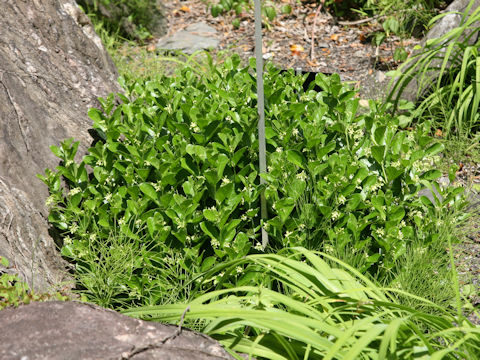
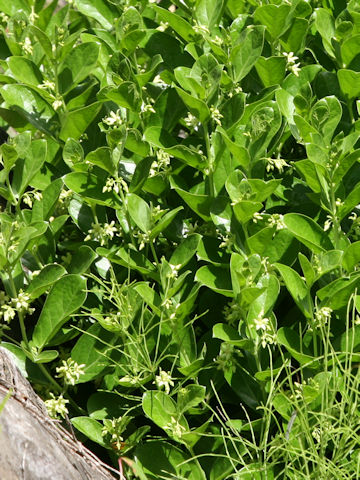
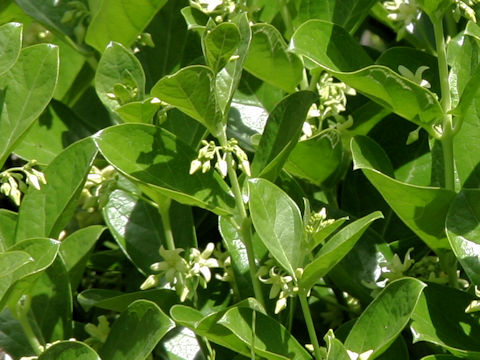
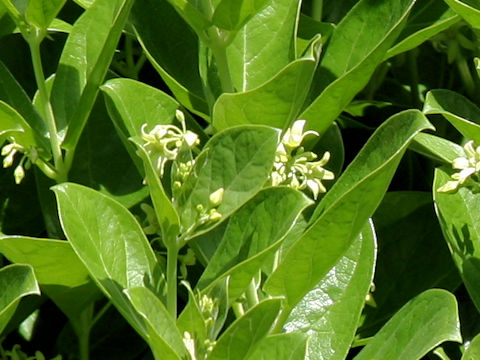
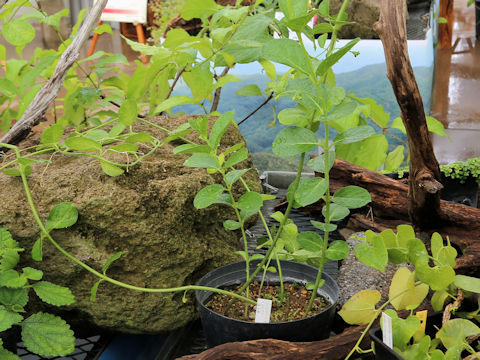
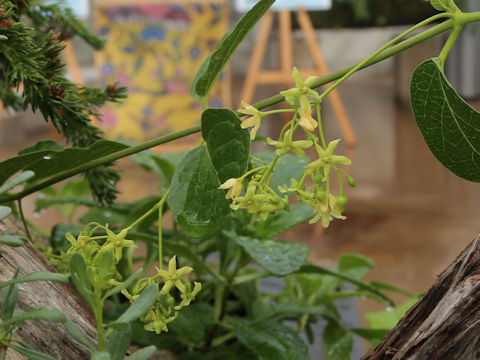
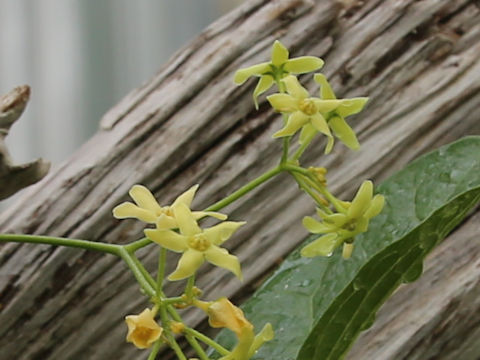
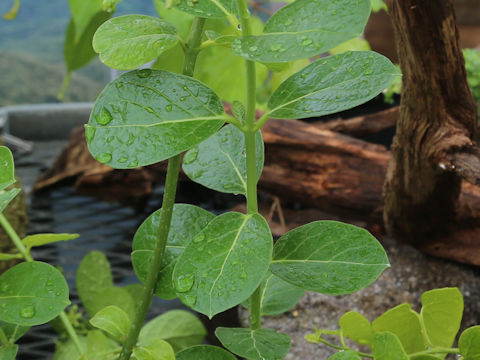
わが国の本州から四国・九州それに朝鮮半島に分布しています。海岸の草地に生え、高さは30~80センチになります。茎は直立し、ふつう分枝しません。葉は楕円形で先端が尖り、対生します。5月から7月ごろ、上部の葉腋に淡黄白色の花を咲かせます。花冠は直径8ミリほどで、先端は5裂し、雄蕊と雌蕊が合着した蕊柱の周りに5個の副花冠があります。果実は長さは4~6センチの袋果です。 韓国語では「トングルミンベンミコッ(덩굴민백미꽃)」です。これは「蔓(トングル: 덩굴)」+「ミン(민)」+「白薇(ペンミ: 백미)」+「花(コッ: 꽃)」の合成語です。「白薇」は漢方薬の生薬で、「ふなばらそう(舟腹草)」の乾燥させた根および根茎をいいます。また「ミン」は「ふなばらそう」とは異なり、花が黄白色である点から付けられたようです。 |
|
|
ガガイモ科カモメヅル属の多年草で、学名は Cynanchum japonicum (syn. Vincetoxicum japonicum)。英名はありません。 |
|
|
The "Iyo-kazura" (Cynanchum japonicum) belongs to Asclepiadaceae (the Milkweed family). It is a perennial herb that is distributed from Honshu to Shikoku, Kyushu in Japan, and the Korean Peninsula. It grows in coastal grasslands and is 30-80 cm tall. The stem is erect and usually unbranched. Pale yellowish-white flowers bloom in the upper leaf axils from May to July. The corolla is about 8 mm in diameter, with five lobes at the tip and five coronas around the gynostemium (connated by stamens and pistils) of the corolla. The fruit is a 4-6 cm long follicle. In Korean, it's called "teong-gul-min-baek-mi-kkot" (덩굴민백미꽃). This is a compound word consisting of "vine" (teong-gul: 덩굴) + "min" (민) + "Bai wei" (paek-mi: 백미) + "flower" (kkot: 꽃). "Bai wei" is a herbal medicine used in traditional Chinese medicine, referring to the dried roots and rhizomes of "Cynanchum atratum". Also, unlike "Cynanchum atratum" the name "min" appears to have been given because its flowers are yellowish white. |
|
|
[上・中1~3] 茨城県つくば市「つくば実験植物園」にて、2024年05月11日撮影。 [中4~6・下] 同上にて、2026年03月28日撮影。 |
|
|

|
Shu Suehiro shu@botanic.jp |
|