 |
|

|
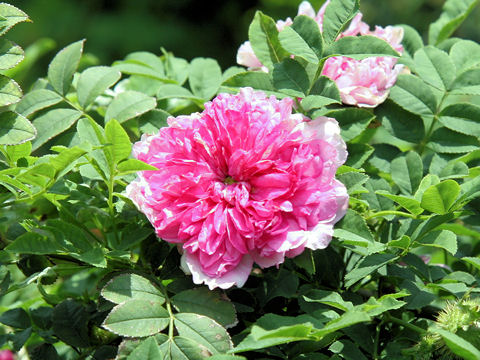
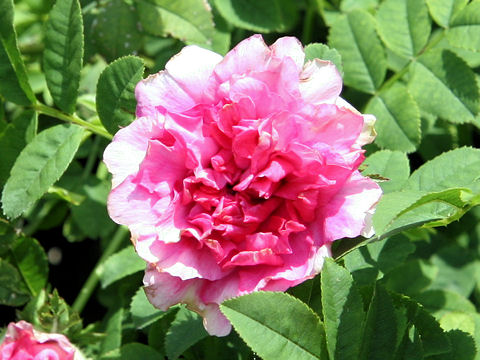
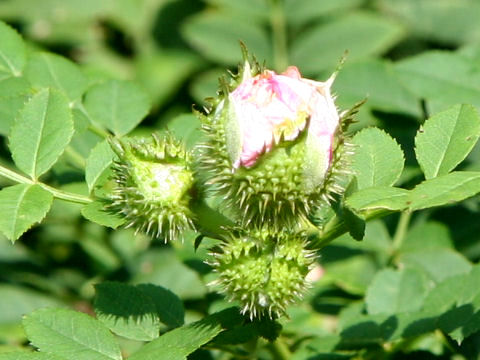
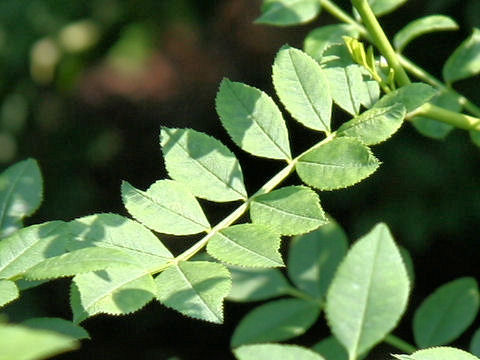
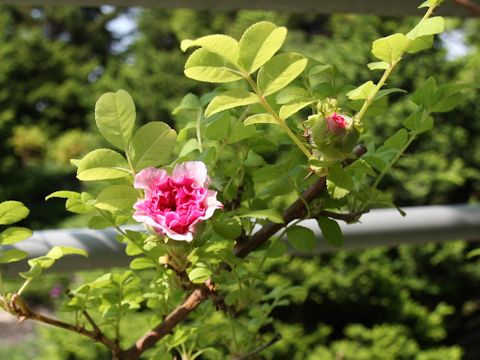
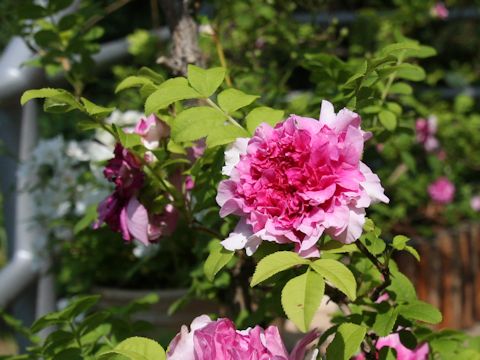
中国中南部の湖南・広西省から貴州省、四川省、雲南省に分布しています。山野に生え、よく分枝して高さは2メートルほどになります。葉は奇数羽状複葉で、楕円形から卵状長楕円形の小葉がつきます。縁には鋭い鋸歯があります。春、枝先に直径8センチほどのピンク色の花を咲かせます。八重咲きで、萼片や花柄には強い棘があります。果実は偽果で黄色く熟し、ビタミンCが多く含まれるため、サプリメントや果実酒などに利用されます。和名は花弁の一部が欠け、十六夜の月に見えることから。別名で「とげなし(刺梨)」とも呼ばれます。中国語では「缫絲花(sao si hua)」です。
|
|
|
バラ科バラ属の落葉低木で、学名は Rosa roxburghii。英名は Chestnut rose、Chinquapin rose、Moss rose。
|
|
|
The Chestnut rose (Rosa roxburghii) belongs to Rosaceae (the Rose family). It is a small deciduous tree that is native to central-southern China; from Hunan-Guangxi touizhou, Shchuan and Yunnan. This tree grows in mountains and fields. It is much-branched and can reach about 2 m in height. The leaves are odd-pinnate compound with elliptic to ovate-oblong leaflets. The leaflet has acute toothed edges. The pink flowers about 8 cm across come at the treminal twigs in spring. They are double-flowered, the sepals and peduncles have strong spines. The false fruits ripen yellow and contain lots of vitamin C. They are used as dietary supplement or fruit wine. The Japanese name comes from the fact that part of the petal is missing, making it look like the moon on the sixteenth night. It is also known as "toge-nashi" (thorn pear). It is called "缫絲花" (sao si hua) in Chinese.
|
|
|
[上・中1] 大阪府枚方市「ひらかたパーク」にて、2007年05月23日撮影。
[中2・中3] 同上にて、2006年07月26日撮影。
[中4・下] 大阪市鶴見区「咲くやこの花館」にて、2013年05月25日撮影。
|

 いざよいばら (十六夜薔薇)

 shu@botanic.jp