 |
|

|
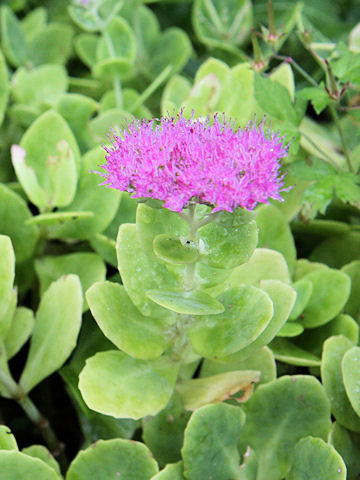
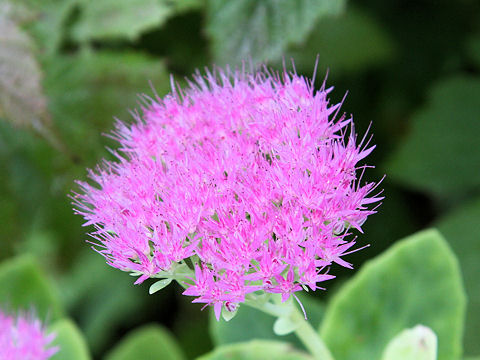
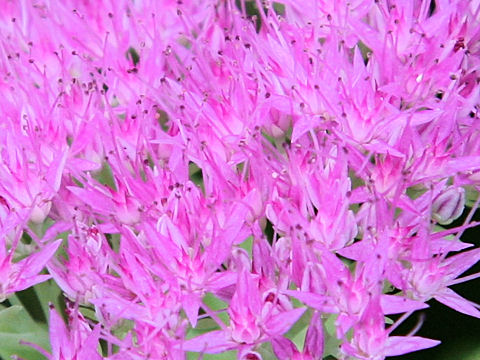
中国や東北部や朝鮮半島が原産です。わが国へは、明治時代中頃に渡来しました。葉は卵形で多肉質、対生またはまれに輪生します。8月から11月ごろ、複散房花序をだし、小さな赤桃色の花を咲かせます。中国語では「長葯八宝(chang yao ba bao)」と呼ばれます。
|
|
|
ベンケイソウ科ムラサキベンケイソウ属の多年草で、学名は Hylotelephium spectabile。英名は Ice plant。
|
|
|
The Ice plant (Hylotelephium spectabile) belongs to Crassulaceae (the Orpine family). It is a perennial herb that is native to northeastern China and the Korean Peninsula. It was introduced into Japan in the middle days of Meiji Era (1868-1912). The leaves are ovate, succulent, opposite rarely whorled. The compound corymbs are borne and bloom small red-pink flowers from August to November. It is called "長葯八宝" (chang yao ba bao) in Chinese.
|
|
|
群馬県前橋市「ぐんまフラワーパーク」にて、2008年09月21日撮影。
|

 おおべんけいそう (大弁慶草)

 shu@botanic.jp