

|
 ばいけいそう (梅恵草)
|
|
|
|
-- もっと見る(Show more)--
-- 閉じる(Close) --
|
|
|
|

|
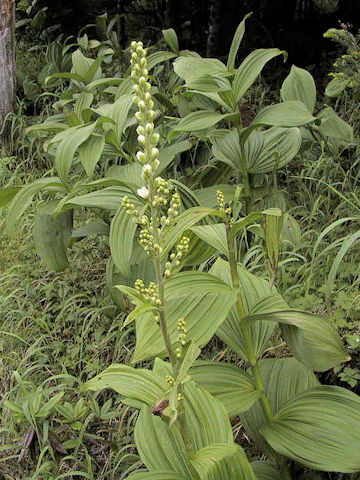
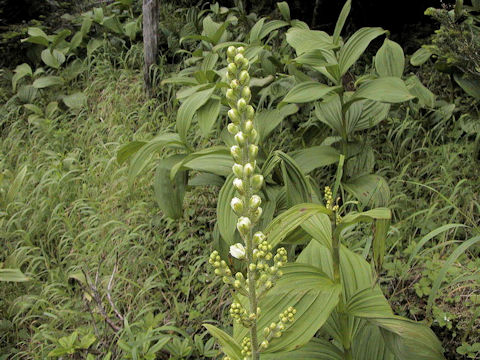
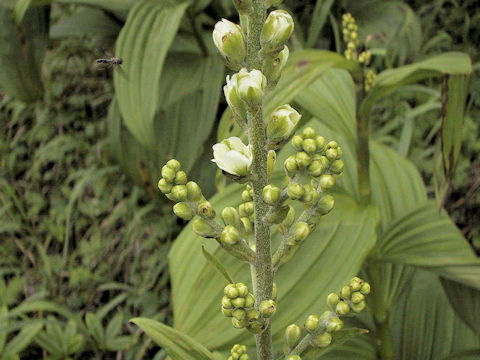
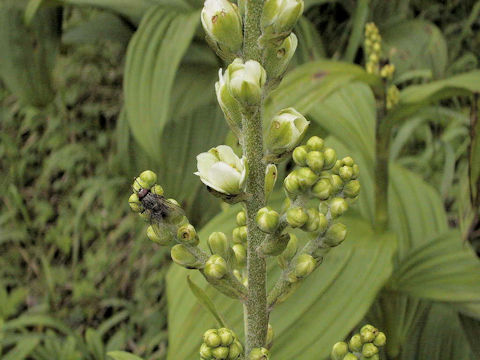
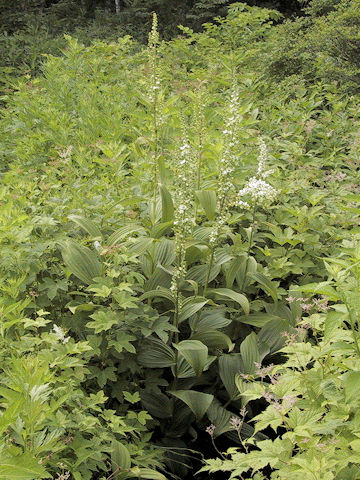
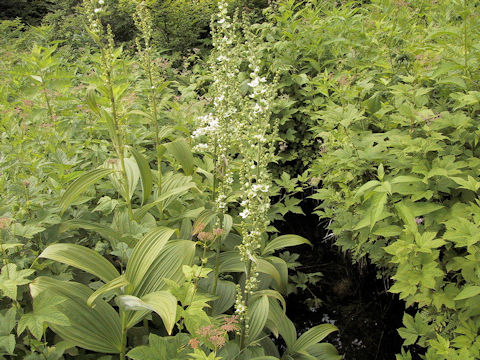
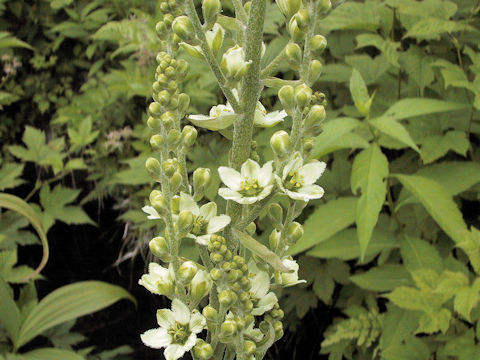
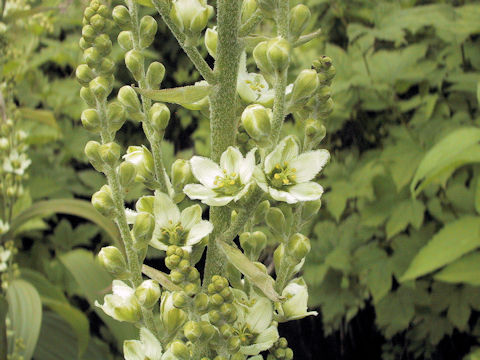
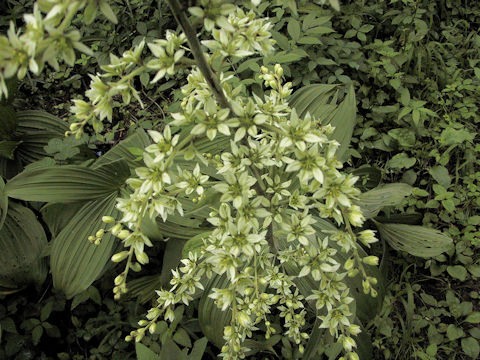
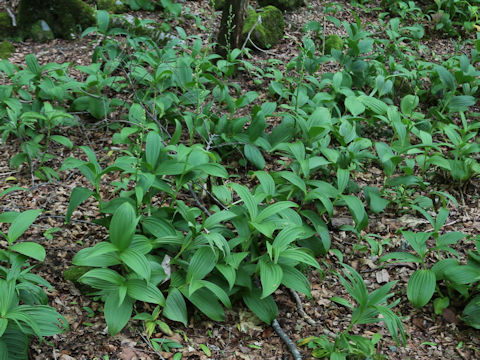
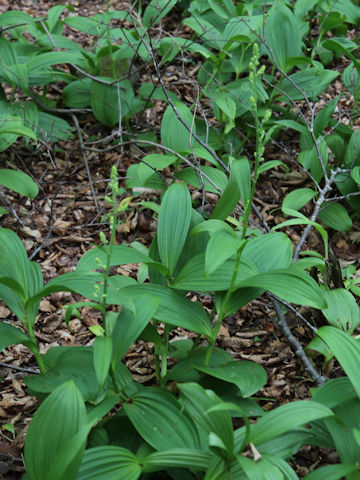
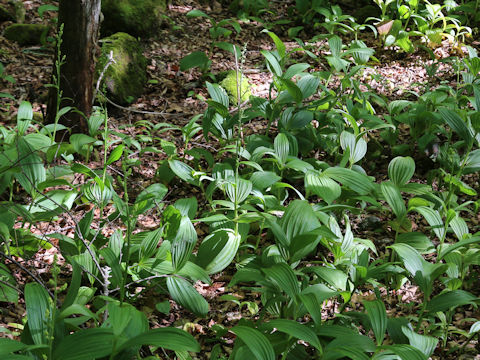
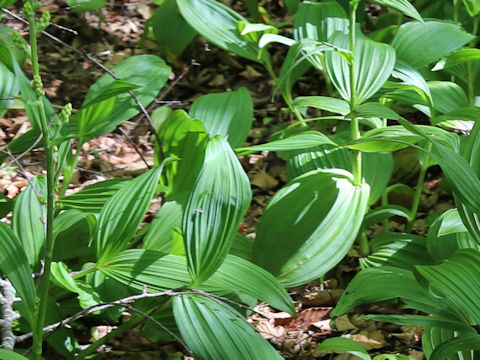
わが国の本州の近畿地方以北から北海道、それに四国や九州、および中国や東シベリア、カムチャッカ半島に分布しています。山地の林内や湿った草原に生え、高さは1~1.5メートルになります。6月から8月ごろ、花茎を伸ばして、円錐花序に緑白色の花を咲かせます。和名は、花が「うめ(梅)」に、葉が「けいらん(恵蘭、しらんの別名)」に似ていることから。有毒植物で、根茎は殺虫剤に用いられます。芽が出たころは「おおばぎぼうし(大葉擬宝珠)」に似ていますが、細かな白い毛が生えるのが特徴です。中国語では「尖被藜芦(jian bei li lu)」と呼ばれます。 |
|
|
ユリ科シュロソウ属の多年草で、学名は Veratrum album ssp. oxysepalum。英名は White false hellebore。 |
|
|
The White false hellebore (Veratrum album ssp. oxysepalum) belongs to Liliaceae (the Lily family). It is a perennial herb that is distributed from the Kinki region of Honshu north to Hokkaido, Shikoku and Kyushu, as well as in China, eastern Siberia, and the Kamchatka Peninsula. It grows in forests and moist meadows in mountainous areas and grows 1 to 1.5 m tall. Its Japanese name comes from the resemblance of its flowers to "ume" (Japanese apricot) and its leaves to "keiran" (another name for "Hyacinth orchid"). A toxic plant, the rhizome is used as an insecticide. When the shoots first emerge, they resemble "Ooba-giboushi", but they are characterized by fine white hairs. In Chinese, it is called "尖被藜芦" (jian bei li lu). |
|
|
[上・中1~3] 長野県茅野市「ピラタス高山植物園」にて、2002年07月21日撮影。 [中4~中8] 長野県木島平村「カヤの平」にて、2003年07月19日撮影。 [中9~中11] 山形県山辺町「山形県県民の森」にて、2017年07月09日撮影。 [中12~中14] 北海道礼文町船泊村鉄府にて、2025年06月10日撮影。 [中15~中17] 北海道礼文町香深村差閉にて、2025年06月11日撮影。 [中18~中22] 北海道礼文町香深村知床にて、2025年06月11日撮影。 [中23~中25] 北海道豊富町西豊富「サロベツ原生花園」にて、2025年06月12日撮影。 [中26~28・下] 大分県九重町「雨ヶ池」にて、2026年05月13日撮影。 |


|
|

|
Shu Suehiro shu@botanic.jp
|