

|
 バオバブ
バオバブ
|
|
|
             |
|

|
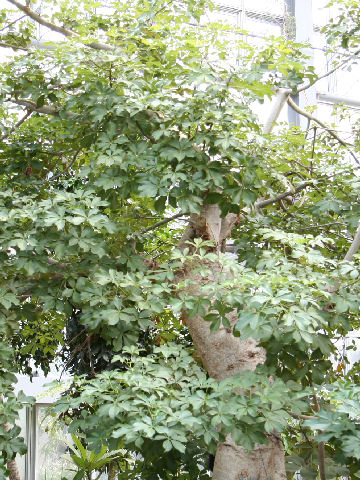
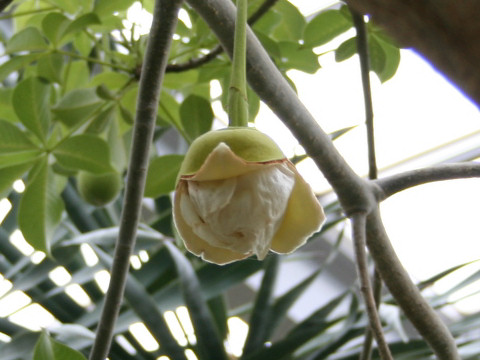
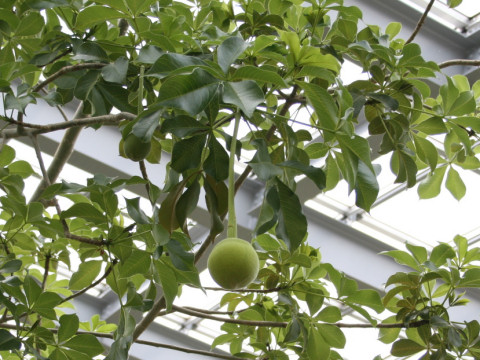
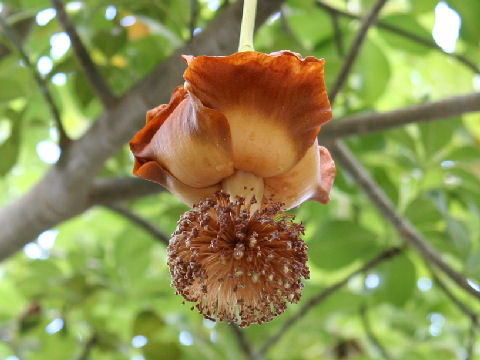
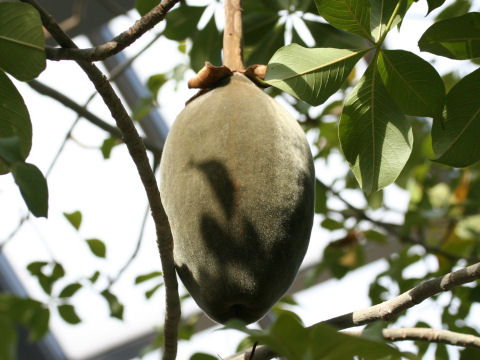
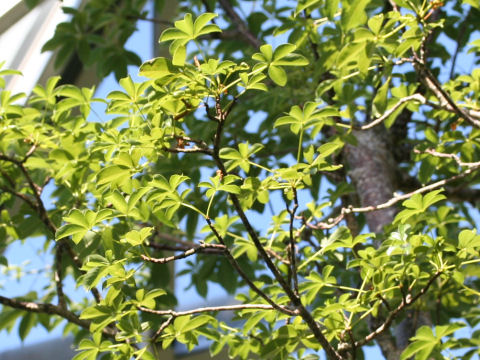
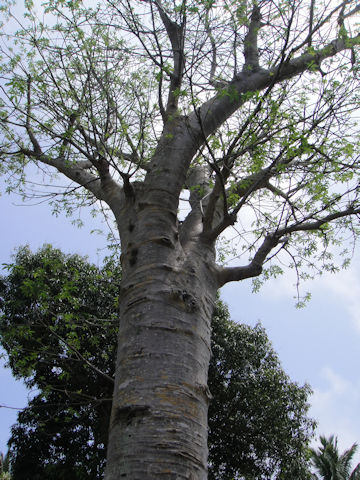
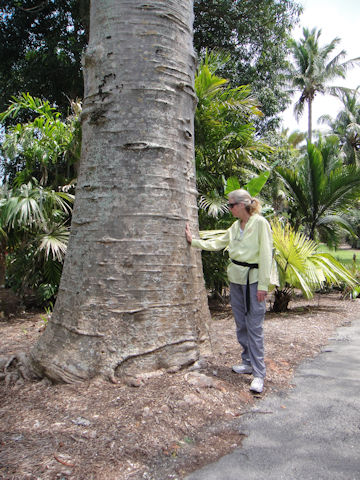
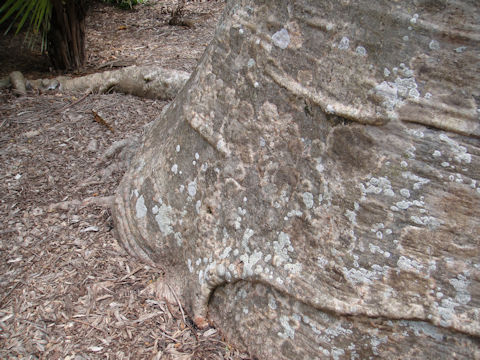
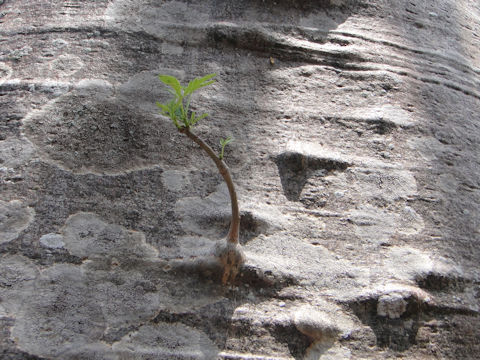
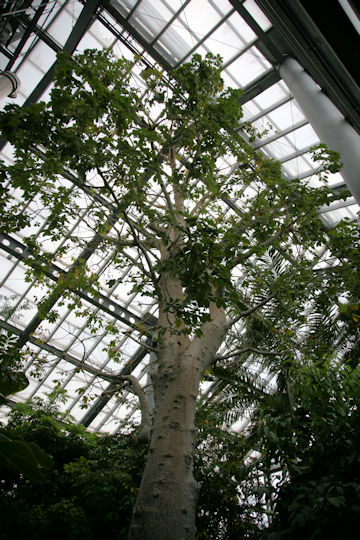
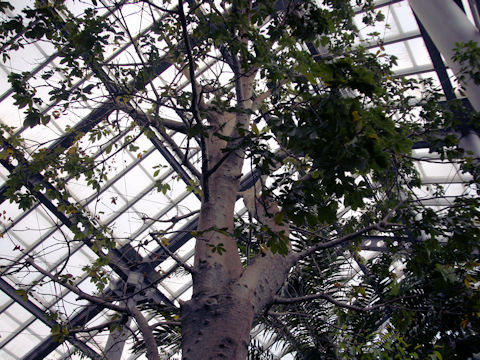
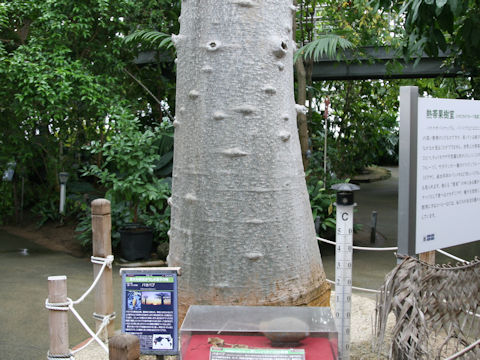
南アフリカ、ボツワナ、ナミビア、モザンビークをはじめアフリカの熱帯地方に分布しています。厚さ5~10センチの樹皮で被われた幹は円筒形で直立し、高さは25メートルほどになります。また根の形状に似た枝をつけるため、逆さの木(upside-down tree)とも呼ばれます。葉は5~7出複葉です。晩春から夏(10月から12月ごろ)、長い花梗を下垂させ、大きく真っ白な花を咲かせます。花は午後遅くから咲きはじめ、一日で萎みます。蝙蝠媒花です。果実は大きな卵形で、果肉は飲料や解熱剤などに利用されます。 アフリカでは、このバオバブの木は神聖なものであり、さまざまな神話や伝説、伝統的慣習に登場します。 強さや回復力、コミュニティの象徴とみなされることが多いバオバブは、アフリカ大陸全体の文化的儀式や民間伝承において重要な役割を果たしています。またサン・テグジュペリの小説「星の王子様」では、バオバブの木は、成長しすぎると星を破裂させてしまう危険な存在として描かれています。 |
|
|
パンヤ科バオバブ属の落葉高木で、学名は Adansonia digitata。英名は Baobab、Cream of Tartar tree。 |
|
|
The Baobab (Adansonia digitata) belongs to the family Bombacaceae. It is a tall deciduous tree that is native to South Africa, Botswana, Namibia, Mozambique, and the tropical areas in Africa. The trunk is cylindrical, erect, covered with 5-10 cm thick bark, and can reach about 25 m in height. The tree is also called the Upside-down tree, because of the branches which resemble the shape of roots. The leaves are pentafoliolate to 7-foliolate. The large white flower blooms at long drooping peduncle from late spring to summer. The flowers last one day, open in the late afternoon and fade at evening. It is a bat-pollinated flower. The fruits are large ovate and the fleshes are used as a material for beverage or anti-fever agent. In Africa, the baobab tree is sacred and appears in a variety of myths, legends, and traditional practices. Often regarded as a symbol of strength, resilience, and community, the baobab plays an important role in cultural rituals and folklore throughout the African continent. In Saint Exupery's novel "The Prince of the Stars", the baobab tree is also portrayed as a dangerous entity that can burst the stars if it grows too large. |
|
|
[上・中3] 京都市左京区「京都府立植物園」にて、2006年10月25日撮影。 [中1・中2] 同上にて、2005年08月16日撮影。 [中4] 同上にて、2006年02月02月撮影。 [中5] 静岡県浜松市「浜松市フルーツパーク」にて、2005年11月19日撮影。 [中6~中9] アメリカ・フロリダ州「フェアチャイルド熱帯植物園」にて、2010年05月01日撮影。(photo by Jon Suehiro) [中10~11・下] 富山市婦中町「富山県中央植物園」にて、2025年03月21日撮影。 |
|
|

|
Shu Suehiro shu@botanic.jp
|