

|
 はらん (葉蘭)
|
|
|
                |
|

|
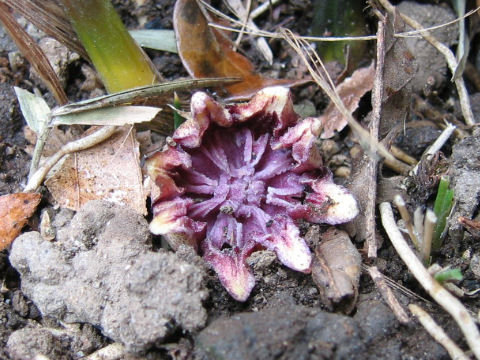
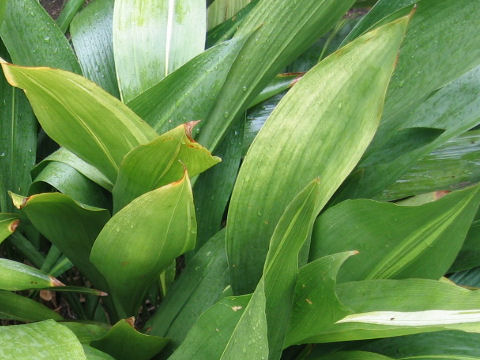
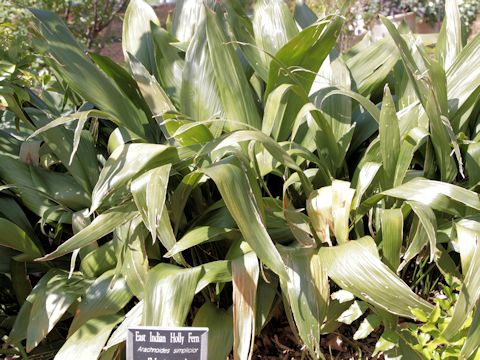
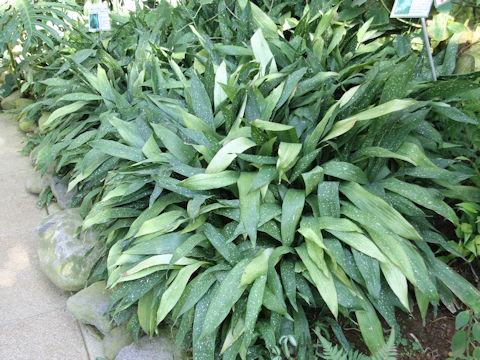
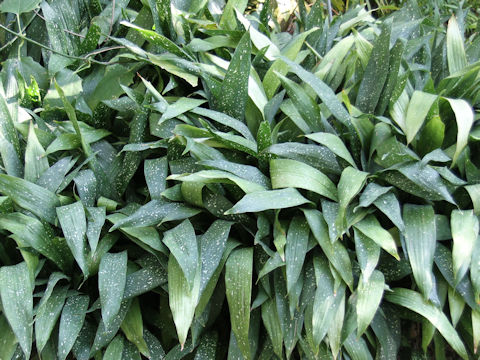
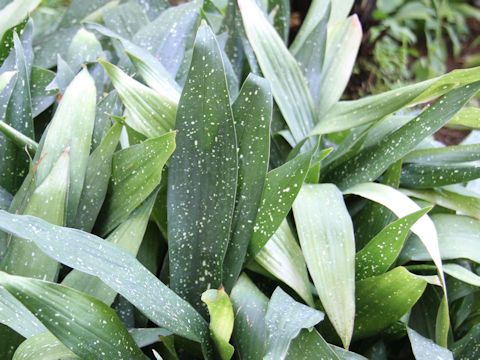
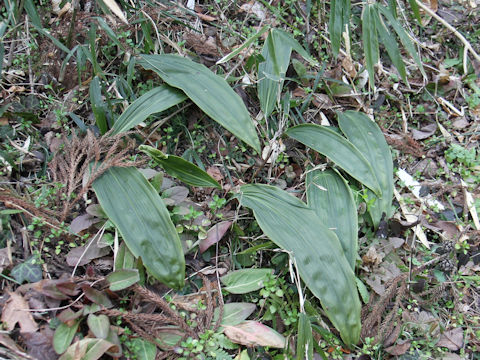
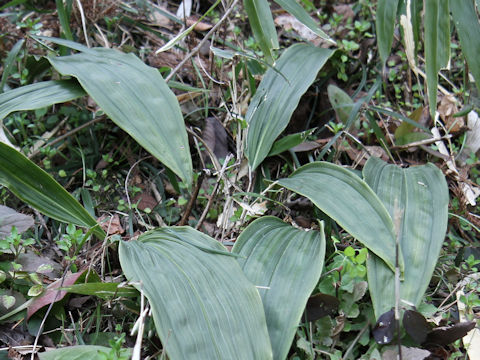
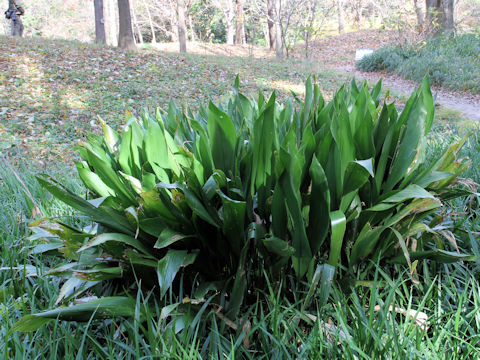
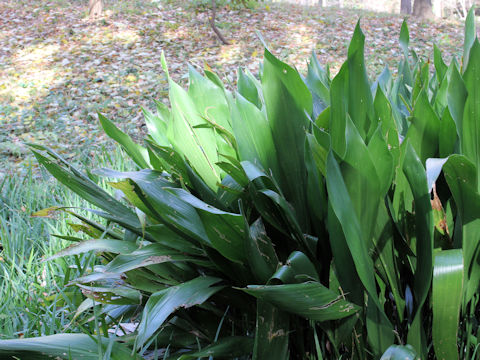
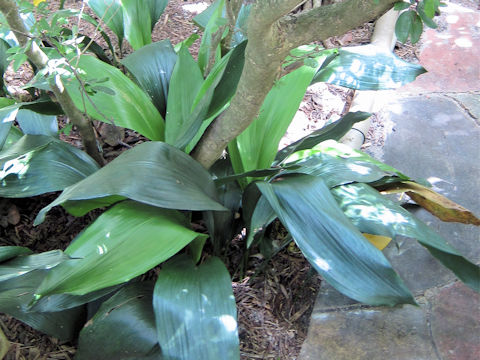
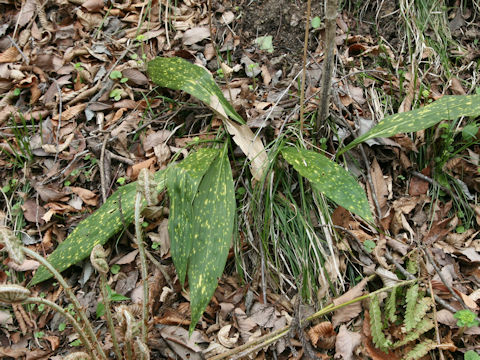
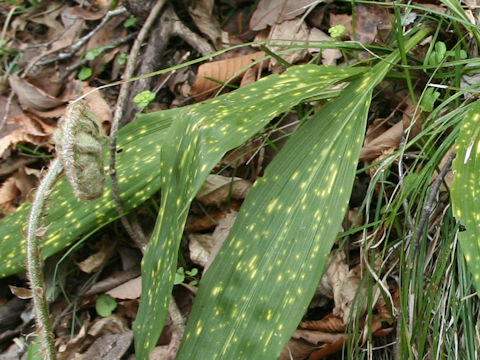
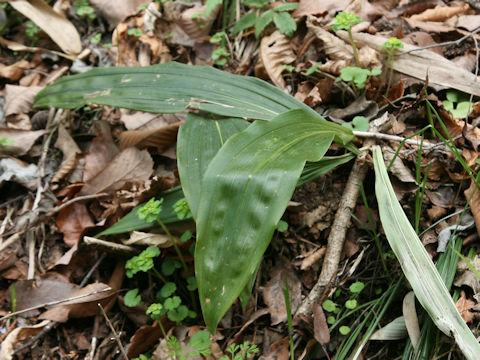
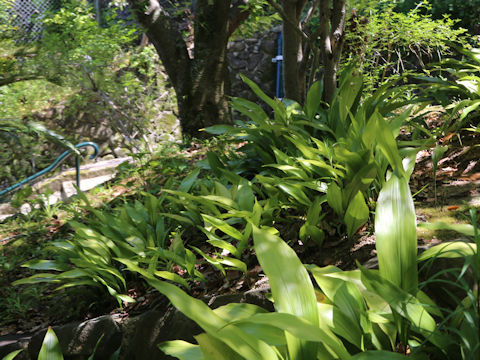
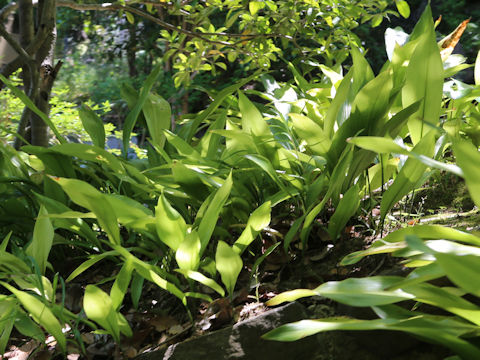
長く中国南部が原産だと言われてきましたが、中国での野生は見つかっておらず、鹿児島大学の迫静男さん他により九州南部の宇治群島、黒島、諏訪之瀬島が本来の野生地であるという報告がなされています。庭の日陰植物としてポピュラーですが、日本料理にも欠かせない素材です。根茎は地中を匍匐し、大きな根生葉を出します。春に、根茎から花柄を伸ばして、紫褐色の花を咲かせます。別名で「ばらん(馬蘭)」とも呼ばれます。写真中3~5、中11~12は、斑入り品種の「ほしはらん(星葉蘭)」。中国語では「蜘蛛抱蛋(zhi zhu bao dan)」と呼ばれます。 |
|
|
ユリ科ハラン属の常緑多年草で、学名は Aspidistra elatior。英名は Iron plant、Barroom plant。 |
|
|
The Iron plant (Aspidistra elatior) belongs to Liliaceae (the Lily family). It is an evergreen perennial herb that has long been said that it is native to southern China, but it has not been found growing wild in China, and Shizuo Sako of Kagoshima University and others have reported that its original habitat is the Uji Islands, Kuroshima, and Suwanose Island in southern Kyushu. It is popular as a shade plant in gardens, but it is also an essential ingredient in Japanese cuisine. The rhizomes creep underground and produce large basal leaves. In spring, peduncles extend from the rhizomes and purple-brown flowers bloom. It is also known as "baran" (horse orchid). Photos 4-6 and 12-13 show a variegated variety called "hoshi-haran" (star leaf orchid). In Chinese, it is called "蜘蛛抱蛋" (zhi zhu bao dan). |
|
|
[上・中1] 大阪府四條畷市清滝中町にて、2005年03月12日撮影。 [中2] アメリカ・テキサス州「ダラス植物園」にて、2008年03月21日撮影。(photo by Jon Suehiro) [中3~中5] 茨城県那珂市「茨城県植物園」にて、2015年02月01日撮影。 [中6・中7] 宮城県利府町「宮城県民の森」にて、2015年03月07日撮影。 [中8・中9] 東京都新宿区「新宿御苑」にて、2019年12月24日撮影。 [中10] アメリカ・フロリダ州「サンケンガーデンズ」にて、2011年05月17日撮影。(photo by Jon Suehiro) [中11~中13] 宮城県仙台市青葉区「青葉の森緑地」にて、2025年04月09日撮影。 [中14・下] 長崎市南山手町「グラバー園」にて、2026年05月11日撮影。 |
|
|

|
Shu Suehiro shu@botanic.jp
|