 |
|

|
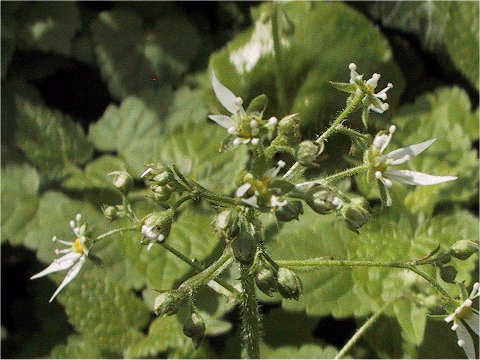
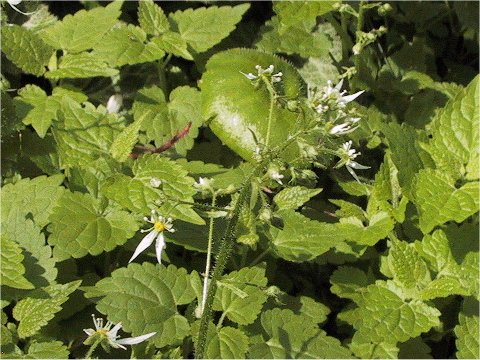
わが国の本州、関東地方から近畿地方までの限られた地域に分布しています。山地の渓谷沿いや岩場など湿ったところに生えます。葉は円形で、全体に緑色をしていて、白い腺毛に被われています。4月から5月ごろ、花茎を伸ばして白色の小さな花を咲かせます。基部には黄色の模様があります。
|
|
|
ユキノシタ科ユキノシタ属の多年草で、学名は Saxifraga nipponica。英名はありません。
|
|
|
The "Haru-yukino-shita" (Saxifraga nipponica) belongs to Saxifragaceae (the Saxifrage family). It is a perennial herb that is distributed in a limited area from the Kanto region to the Kinki region of Honshu in Japan. It grows in moist places such as along canyons and rocky areas in mountainous regions. The leaves are round and greenish all over, covered with white glandular hairs. The base of the flower has yellow mottles.
|
|
|
長野県伊那市西春近「かんてんぱぱガーデン」にて、2003年04月27日撮影。
|

 はるゆきのした (春雪の下)

 shu@botanic.jp