 |
|

|
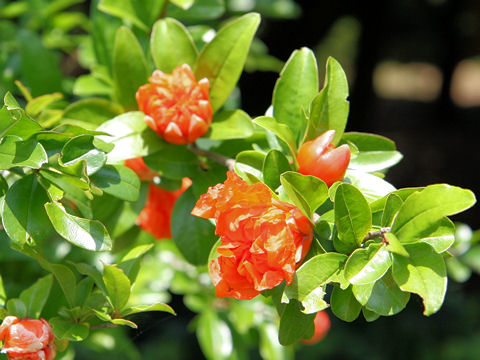
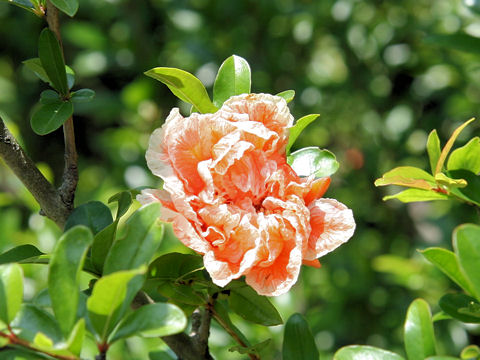
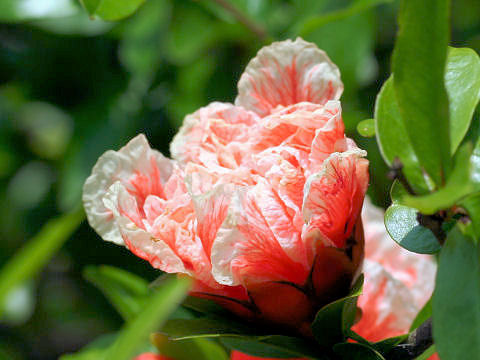
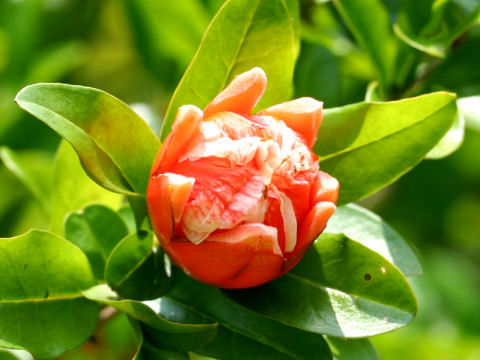
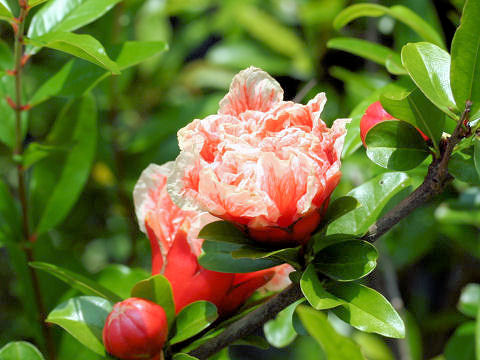
地中海東部から北西インドが原産の「ざくろ」の園芸品種です。高さは5~6メートルになり、長楕円形の葉が対生します。6月ごろ、枝先に朱赤色や白覆輪の八重咲きの花を咲かせます。ふつうは結実しません。別名で「やえざくろ(八重石榴)」とも呼ばれます。
|
|
|
ザクロ科ザクロ属の落葉小高木で、学名は Punica granatum cv. Pleniflora。英名は Double pomegranate。
|
|
|
The Double pomegranate (Punica granatum cv. Pleniflora) belongs to Punicaceae (the Pomegranate family). It is a semi-tall decidous tree that is a cultivar of Pomegranate; native to the eastern Mediterranean through north-west India. This tree can reach 5-6 m in height, and the oblong leaves are opposite. It produces double-flowers, scarlet-red or scarlet with white variegated margin in June. This cultivar is usually sterile.
|
|
|
[上・中1] 大阪府交野市「大阪市大付属植物園」にて、2007年06月21日撮影。
[中2~中4] 同上にて、2006年06月21日撮影。
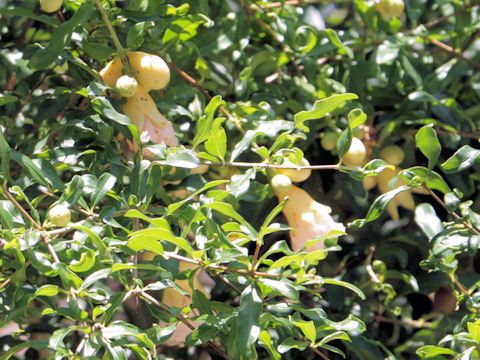
[下] アメリカ・テキサス州オースティン市にて、2008年08月02日撮影。(photo by Jon Suehiro)
|

 はなざくろ (花石榴)

 shu@botanic.jp