 |
|

|
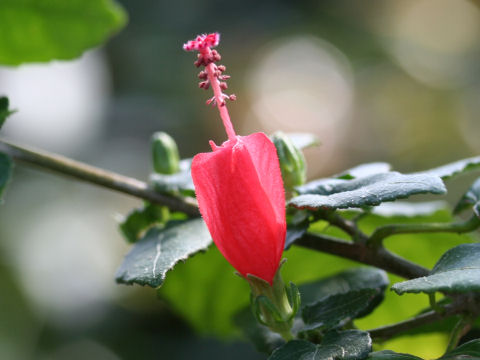
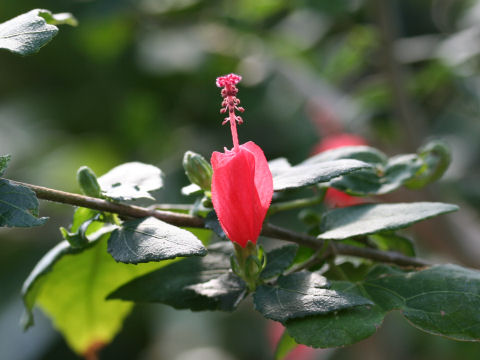
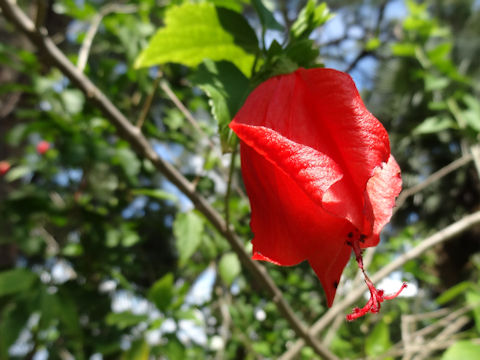
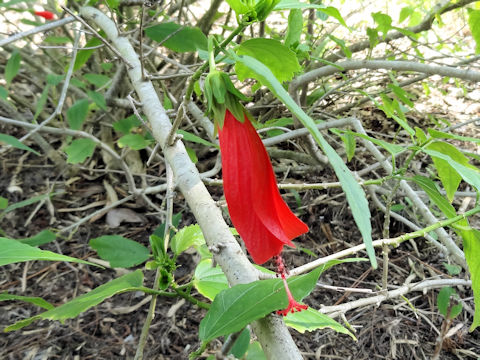
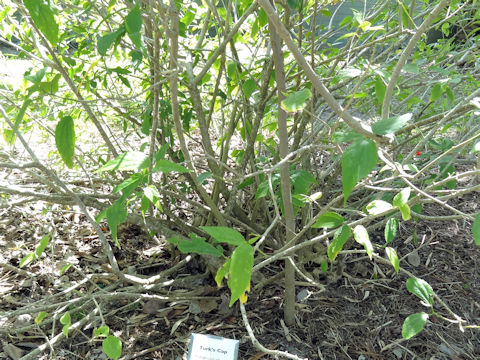
メキシコから中央アメリカ、南アメリカに分布しています。熱帯雨林やマツ林などに生え、高さは3メートルほどになります。葉は浅く3裂し、毛が生えています。夏から秋にかけて、小さな赤い花を上向きに咲かせます。花弁が開かず花柱が突き出すのが特徴です。別名で「ひめぶっそうげ(姫仏桑華)」とも呼ばれます。
|
|
|
アオイ科ヒメフヨウ属の常緑低木で、学名は Malvaviscus arboreus。英名は Turk's cap。
|
|
|
The Turk's cap (Malvaviscus arboreus) belongs to Malvaceae (the Mallow family). It is a small evergreen tree that is distributed from Mexico to Central America and South America. This tree grows in tropical rainforests and pine forests, and up to about 3 m in height. The leaves are shallow 3 fissures and covered with hairs. The small red flowers come upwards from summer to fall. They are characterized by the fact that the petal does not open and the style protrudes from the corolla.
|
|
|
[上・中1] 大阪市鶴見区「咲くやこの花館」にて、2006年03月03日撮影。
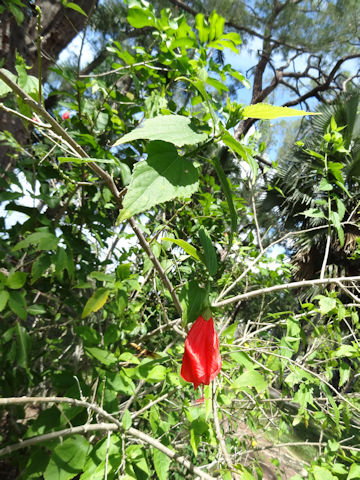
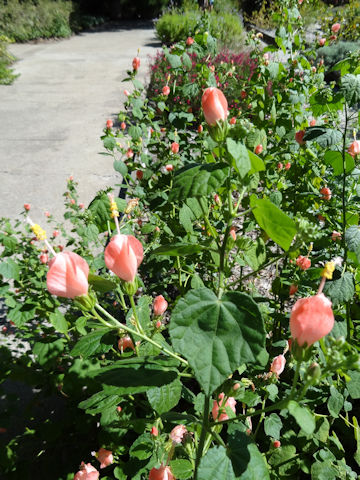
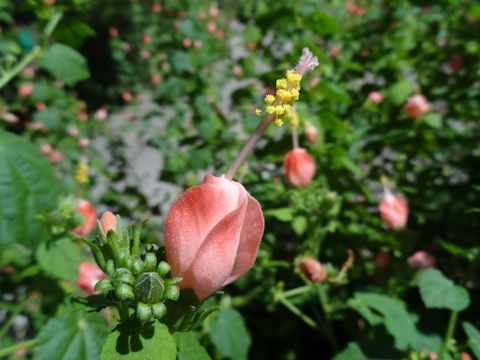
[中2~中5] アメリカ・フロリダ州「エジソン&フォード・ウィンター・エステート」にて、2011年09月28日撮影。(photo by Jon Suehiro)
[中6・下] アメリカ・テキサス州「フォートワース植物園」にて、2011年10月15日撮影。(photo by Jon Suehiro)
|

 ひめふよう (姫芙蓉)

 shu@botanic.jp