 |
|

|
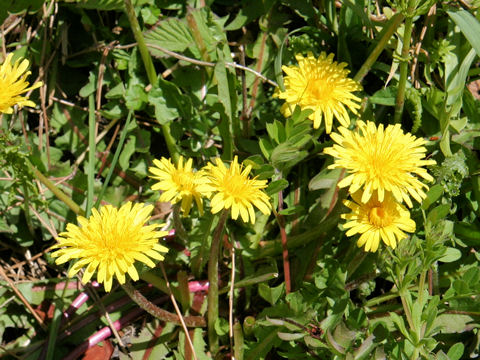
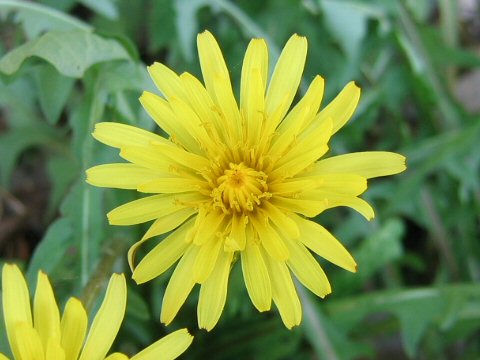
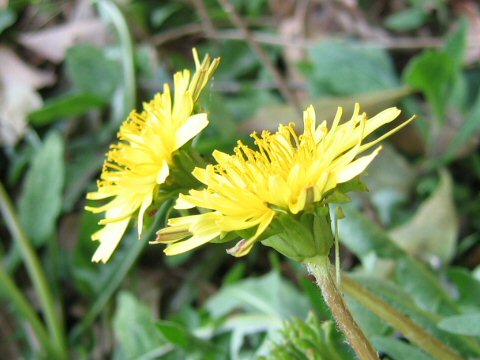
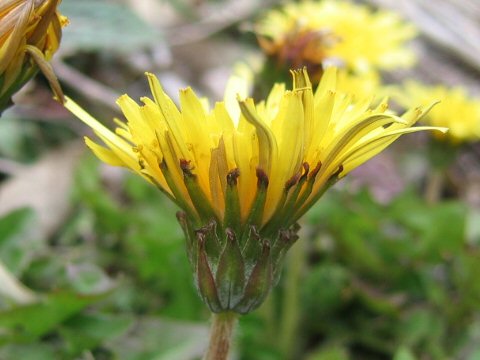
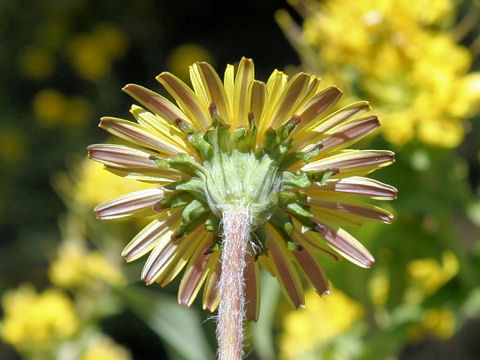
わが国の本州、千葉県から和歌山県の太平洋側に分布しています。根生葉は羽状に浅く裂け、多種に比べて幅広です。2月から5月ごろ、花茎を伸ばして黄色い頭花を咲かせます。総苞の外片には角状突起がありますが、「せいようたんぽぽ」のように反り返りません。また外片の長さは内片の3分の2くらいあります。別名で、「とうかいたんぽぽ(東海蒲公英)」とも呼ばれます。
|
|
|
キク科タンポポ属の多年草で、学名は Taraxacum longeappendiculatum。英名はありません。
|
|
|
The "Hiroha-tampopo" (Taraxacum longeappendiculatum) belongs to Asteraceae (the Aster family). It is a perennial herb that is distributed to the Paciffic Ocean Side of Honshu; from Chiba prefecture west to Shizuoka prefecture. The basal leaves are divided into shallow lobes pinnately and wider than other species. The flower stalks are borne and bloom yellow flower heads in February to May. The outer involucal bracts have cornus and are not recurved. The outer involucal bracts is two third parts of the inner involucal bracts.
|
|
|
[上・下] 静岡県浜松市「浜松フラワーパーク」にて、2007年03月14日撮影。
[中1・中2] 愛知県豊橋市「葦毛湿原」にて、2004年04月10日撮影。
[中3] 愛知県旭町浅谷にて、2005年04月02日撮影。
|

 ひろはたんぽぽ (広葉蒲公英)

 shu@botanic.jp