 |


|

|
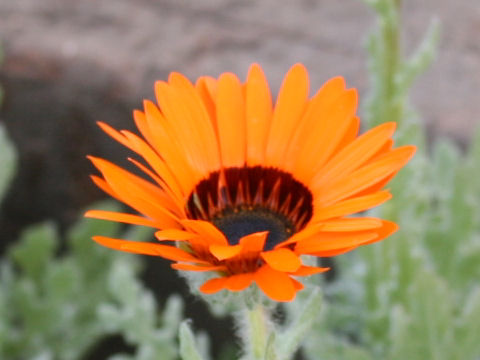
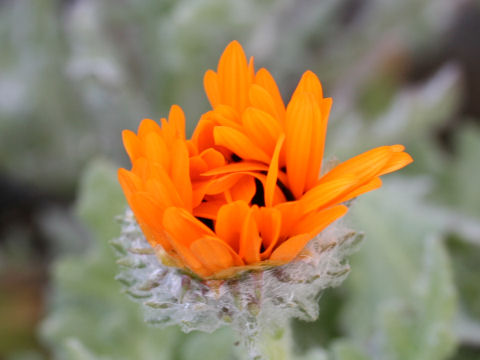
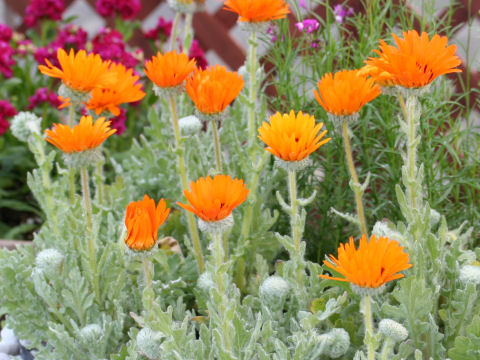
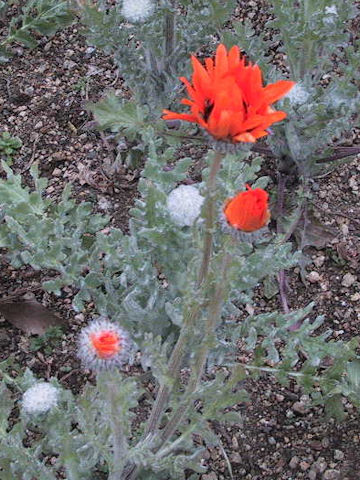
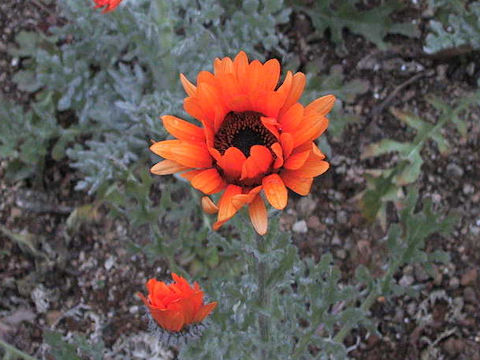
南アフリカが原産です。半耐寒性の一年草で、3月から5月ごろに開花します。黄橙色の花弁に黒い蛇の目をつけた頭花で、和名では「かんざきじゃのめぎく(寒咲き蛇の目菊)」と呼ばれます。花は、天候によって多少の開閉運動をするそうです。
|
|
|
キク科ペニジウム属の一年草で、学名は Venidium fastuosum。英名は Cape daisy、Monarch of the veldt。
|
|
|
The Cape daisy (Venidium fastuosum) belongs to Asteraceae (the Aster family). It is an annual herb that is native to South Africa. It is a semi-cold tolerant annual herb that blooms from March to May. The flower-heads have yellow-orange petals with black snake eyes and are called "Kanzaki-janome-giku" in Japanese. The flowers are said to have some opening and closing movements depending on the weather.
|
|
|
{上・中1~2] 京都市左京区「京都府立植物園」にて、2006年02月02日撮影。
[中3・中4] 兵庫県姫路市手柄「手柄山温室植物園」にて、2002年01月15日撮影。
[中5] スイス・ベルン州インターラーケン「シーニゲプラッテ高山植物園」にて、2007年06月27日撮影。(photo by Jon Suehiro)
[中6・下] アメリカ・カリフォルニア州サンディエゴ市「バルボア公園」にて、2007年03月23日撮影。(photo by Jon Suehiro)
|

 ベニジウム (寒咲き蛇の目菊)

 shu@botanic.jp