
|

|
 クランベ・マリティマ (浜菜)
|
[Index]
[Back]
|
|
|
|
-- もっと見る(Show more)--
-- 閉じる(Close) --
|
|
|
|

|
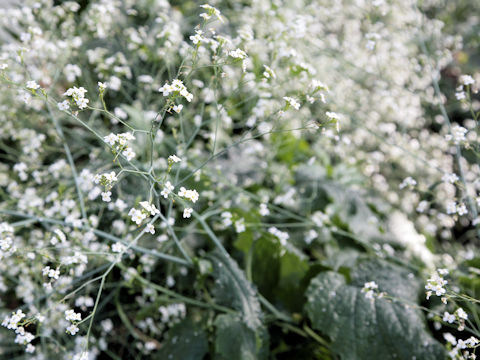
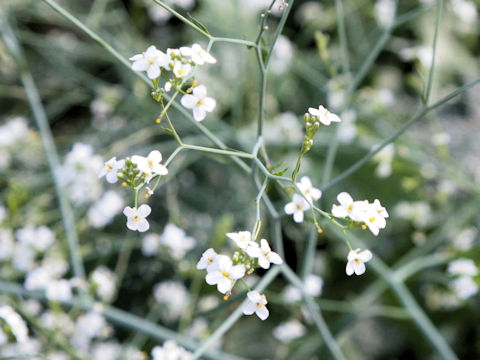
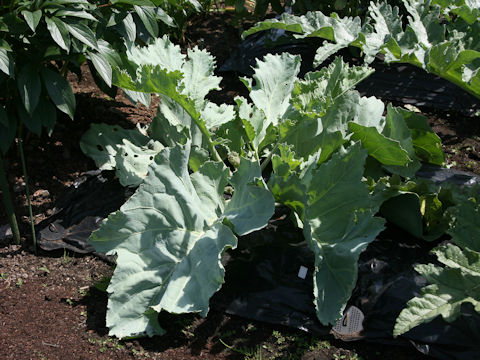
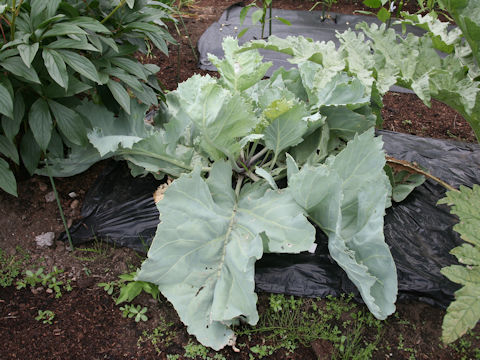
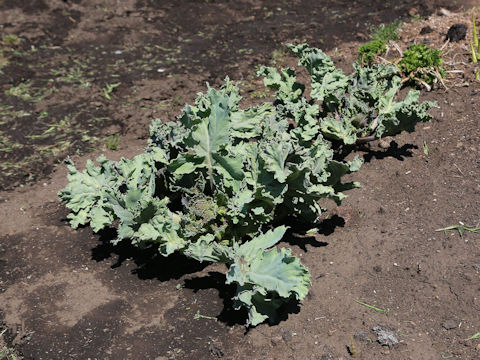
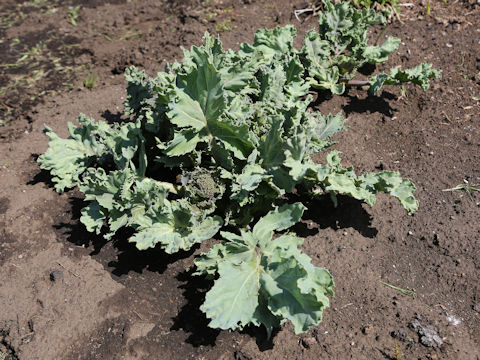
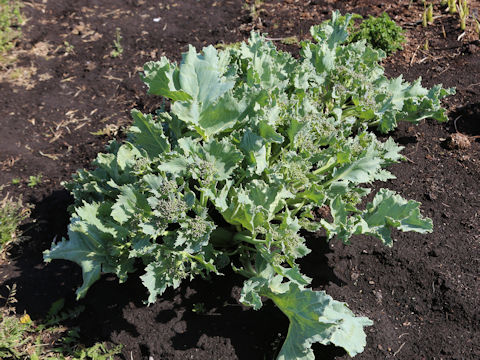
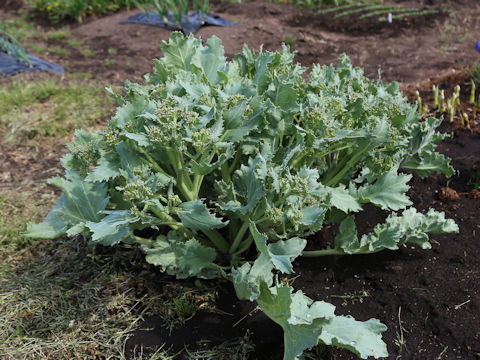
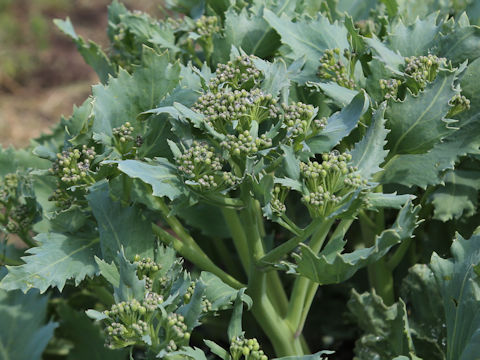
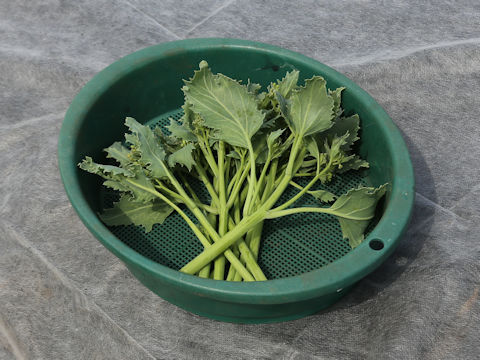
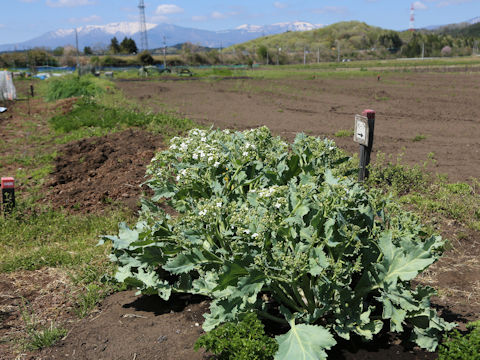
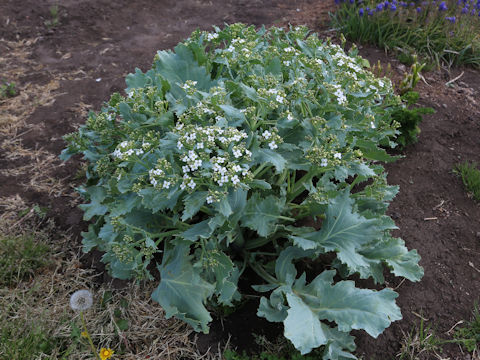
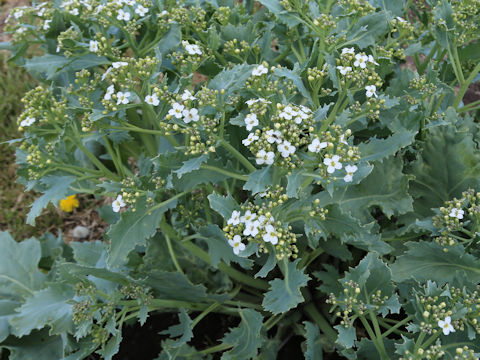
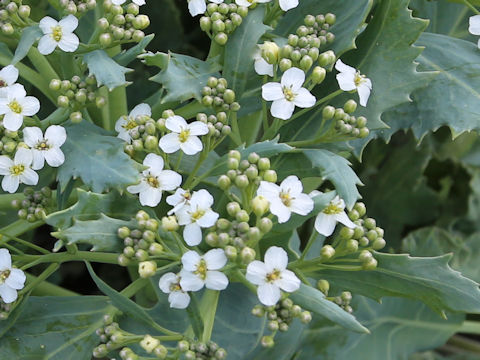
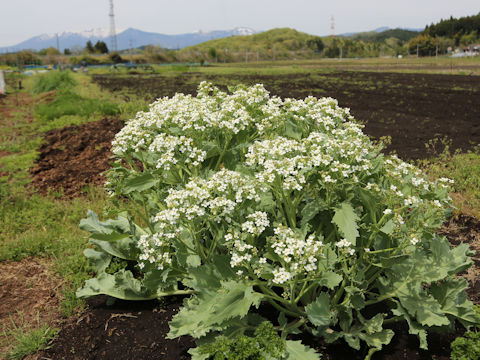
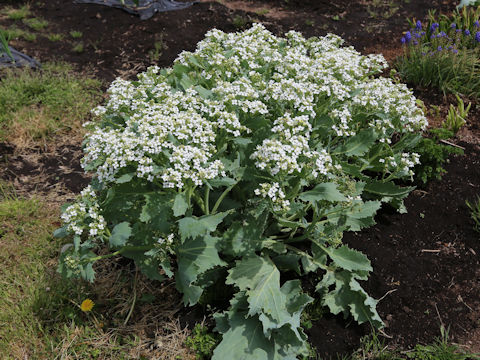
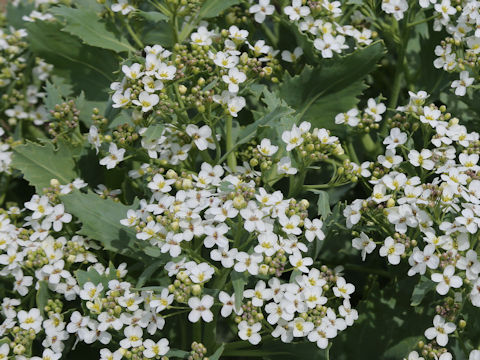
ヨーロッパが原産ですが、不連続な2つの沿岸地域に限定されます。ウクライナからルーマニア、ブルガリア、トルコの黒海沿岸と、フランス北部とイギリス諸島からバルト海沿岸までの地域です。耐塩性があり、海岸の砂地や岩礫地に生え、高さは75センチほどになります。葉はケールの変種でなめらかなコラードに似ていて、大きくて青緑色、大きく分裂して縁は波打ちます。春にはたくさんの白花を咲かせます。この植物はキャベツと近縁で、18世紀の初頭、イギリスで初めて野菜として栽培されました。いまでもイギリスでは多くの農家によって商業的に栽培されています。和名では「はまな(浜菜)」と呼ばれます。わが国へは明治時代のはじめに渡来しましたが、今でもほとんど栽培されていません。 ふつうは春に種子をまくか、株分けで殖やして、土寄せするか暗所で栽培し、多肉質の葉柄を軟白して、これを食用とします。または春先にでた若芽を利用します。レシピとしては、茹でたりバターで炒めて供されることが多いです。 |
|
|
アブラナ科クランベ属の多年草で、学名は Crambe maritima。英名は Sea kale、Crambe。 |
|
|
The Sea kale (Crambe maritima) belongs to Brassicaceae (the Mustard family). It is a perennial herb that is native to Europe, but is restricted to two discontinuous coastal regions. The Black Sea coast from Ukraine to Romania, Bulgaria, and Turkey, and from northern France and the British Isles to the Baltic Sea coast. It is salt-tolerant and grows in sandy or rocky gravel on the coast, reaching a height of about 75 cm. The leaves resemble smooth collards, a variant of kale, and are large, blue-green, heavily divided with wavy edges. It produces many white flowers in the spring. This plant is closely related to cabbage and was first cultivated as a vegetable in England in the early 18th century. It is still grown commercially in England by many farmers. It is called "Hamana" in Japanese. It was introduced to Japan in the early Meiji period (1868-1912), but it is still rarely cultivated today. Typically, seeds are sown in the spring, or the plant is propagated by division; it is then grown either by mounding soil around the base or in a shaded area to blanch the fleshy petioles, which are then harvested for consumption. Alternatively, the young shoots that emerge in early spring are used. In terms of recipes, they are often served boiled or sauteed in butter. |
|
|
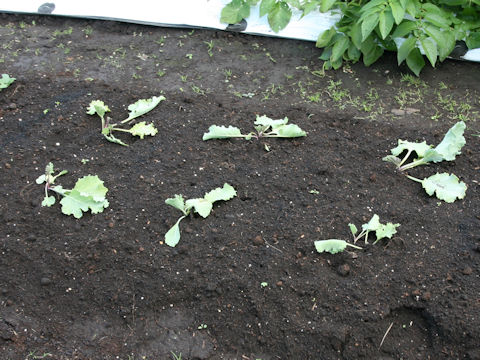
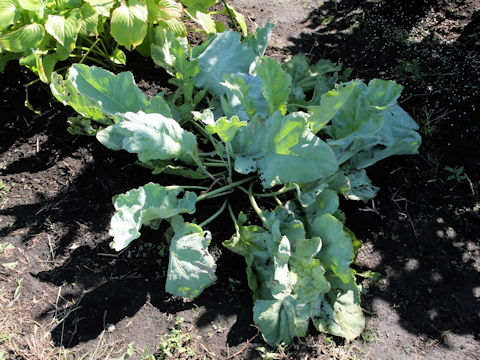
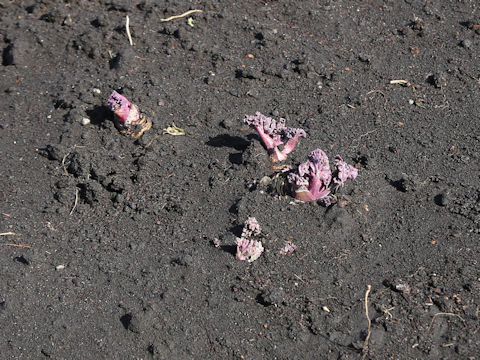
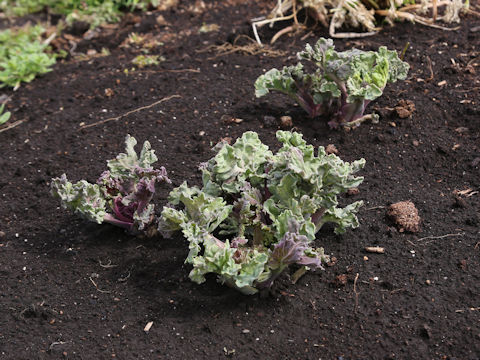
[上・中1] イギリス・リッチモンド・アポン・テムズ「キューガーデン」にて、2008年03月03日撮影。(photo by Jon Suehiro) [中2] 宮城県川崎町支倉にて、2024年06月08日撮影。 [中3] 同上にて、2024年06月17日撮影。 [中4] 同上にて、2024年11月03日撮影。 [中5] 同上にて、2025年09月19日撮影。 [中6] 同上にて、2026年03月15日撮影。 [中7] 同上にて、2026年04月01日撮影。 [中8] 同上にて、2026年04月08日撮影。 [中9] 同上にて、2026年04月09日撮影。 [中10] 同上にて、2026年04月17日撮影。 [中11~中13] 同上にて、2026年04月20日撮影。 [中14~中17] 同上にて、2026年04月25日撮影。 [中18~19・下] 同上にて、2026年04月30日撮影。 |
|
|

|
Shu Suehiro shu@botanic.jp
|
|