
|

|
 かんこくかぼちゃ (韓国南瓜)
|
[Index]
[Back]
|
|
|
      |
|

|
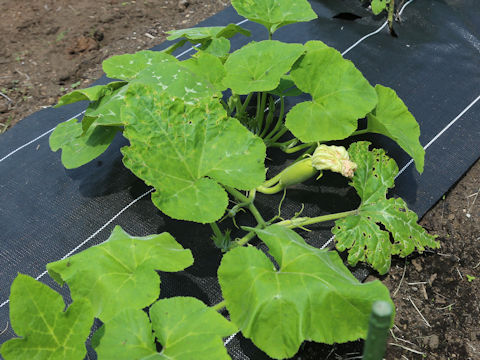
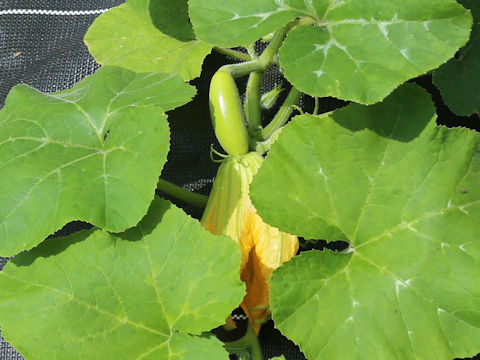
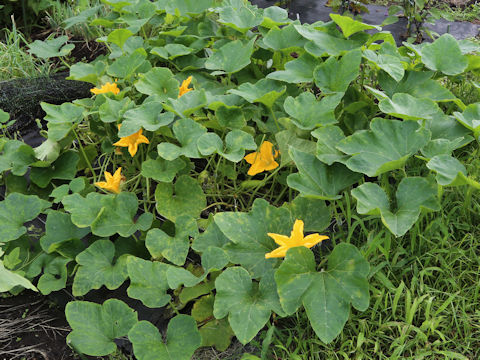
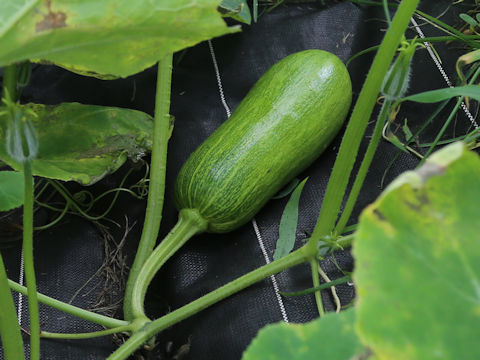
主な産地は韓国ですが、わが国でも一部の地域で栽培されています。「ズッキーニ」に似ていますが、「にほんかぼちゃ」などと同じ種類に分類されます。未熟な果実を若採りして食べるのが特徴で、皮は薄く滑らか、果肉は柔らかくほんのりとした甘味があります。ふつう開花後7~10日たち、長さ18~20センチ、300~500グラムになったころに収穫します。別名で「ちょうせんズッキーニ(朝鮮ズッキーニ)」とも呼ばれます。韓国語では「エホバㇰ(애호박)」ですが、「エ(애)」は「未熟な」や「幼い」を意味し、「ホバㇰ(호박)」は「かぼちゃ」をさします。韓国料理においては、チゲ(鍋料理)やスープの副材料として四季を通して使われるほか、主材料としてもナムル(和えもの)やポックム(炒めもの)、ジョン(衣焼き)など、さまざまに調理されます。 |
|
|
ウリ科カボチャ属の一年草で、学名は Cucurbita moschata。英名は Korean squash、Korean zucchini。 |
|
|
The Korean squash (Cucurbita moschata) belongs to Cucurbitaceae (the Gourd family). It is an annual herb. Although South Korea is the main producing region, it is also cultivated in certain areas of Japan. While it resembles a "zucchini", it is classified in the same category as "Japanese squash". It is typically harvested and eaten while still young; it has thin, smooth skin and soft flesh with a subtle sweetness. It is typically harvested 7 to 10 days after flowering, when it reaches a length of 18-20 cm and weighs 300 to 400 grams. In Korean, it is called "aehobak" (애호박), where "ae" (애) means "immature" or "young", and "hobak" (호박) refers to "squash"". In Korean cuisine, it is used year-round as a secondary ingredient in jjigae (stews) and soups, and is also prepared in various ways as a main ingredient, such as in namul (seasoned vegetable dishes), bokkeum (stir-fries), and jeon (piccata). |
|
|
[上・中1] 宮城県川崎町支倉にて、2026年07月01日撮影。 [中2・中3] 同上にて、2026年07月11日撮影。 [中4・下] 同上にて、2026年07月30日撮影。 |
|
|

|
Shu Suehiro shu@botanic.jp
|
|