 |
|

|
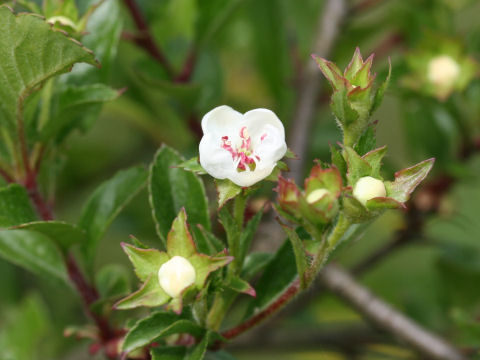
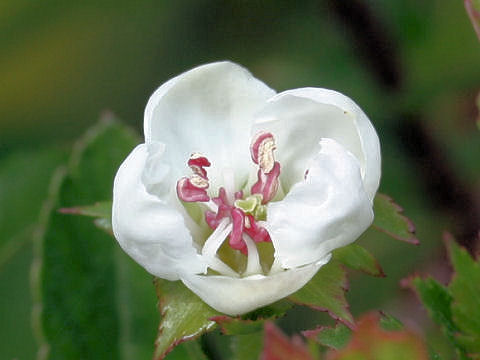
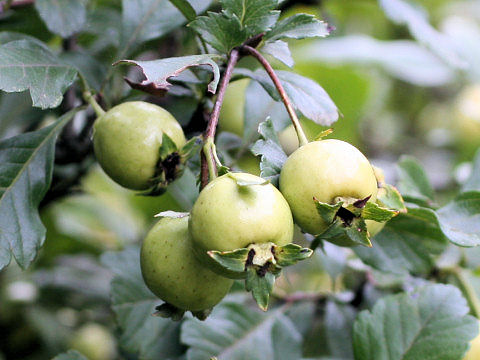
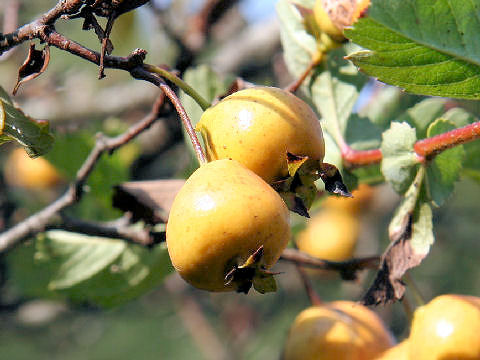
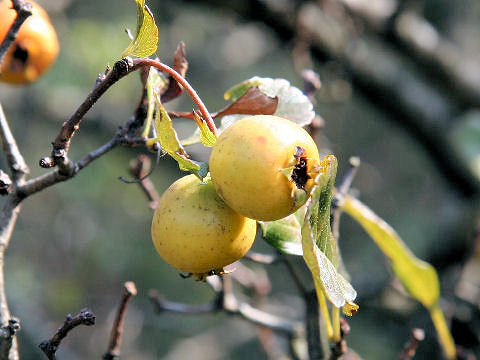
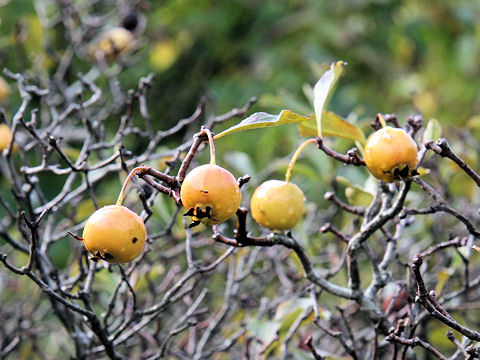
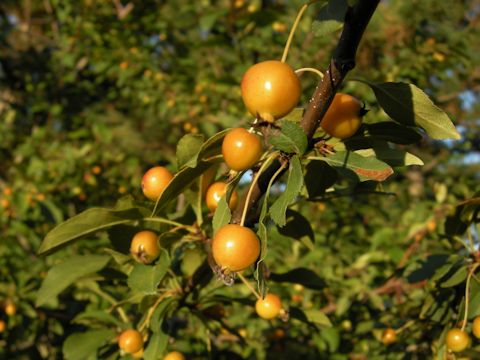
中国やモンゴルが原産です。わが国へは江戸時代の中頃に薬用として渡来しました。数多く分枝し、小枝には棘があります。くさび形または広倒卵形の葉は互生します。5月から6月ごろ、白色の5弁花を咲かせます。果実は9月から10月ごろ、黄色く熟します。中国語では「野山楂 (ye shan zha)」と呼ばれます。
|
|
|
バラ科サンザシ属の落葉低木で、学名は Crataegus cuneata。英名は Chinese hill haw。
|
|
|
The Chinese hill haw (Crataegus cuneata) belongs to Rosaceae (the Rose family). It is a small deciduous tree that is native to China. It was introduced into Japan as a herbal medecine in the middle days of Edo Era (1603-1868). This tree is much branched and has spines on the twigs. The leaves are cuneatic or broad obovate and alternate. The white 5-petaled flowers come in May through June. The fruits are ripen in yellow in September to October. It is called "野山楂" (ye shan zha) in Chinese.
|
|
|
[上・中1] 大阪府交野市「大阪市大付属植物園」にて、2006年05月06日撮影。
[中2] 同上にて、2005年09月14日撮影。
[中3・中4] 同上にて、2006年11月03日撮影。
[中5] 同上にて、2007年11月10日撮影。
[下] アメリカ・ワシントンDC「アメリカ国立植物園」にて、2009年09月14日撮影。(photo by Jon Suehiro)
|
|

 きみのさんざし (黄実の山査子)

 shu@botanic.jp