

|
 くさねむ (草合歓)
|
|
|
|
-- もっと見る(Show more)--
-- 閉じる(Close) --
|
|
|
|

|
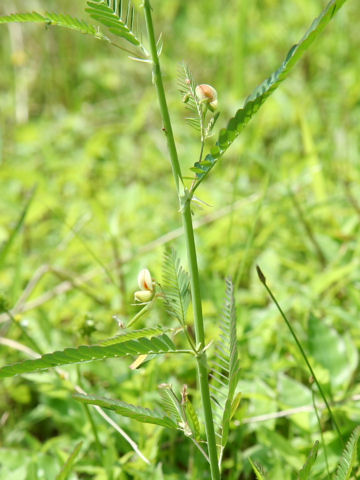
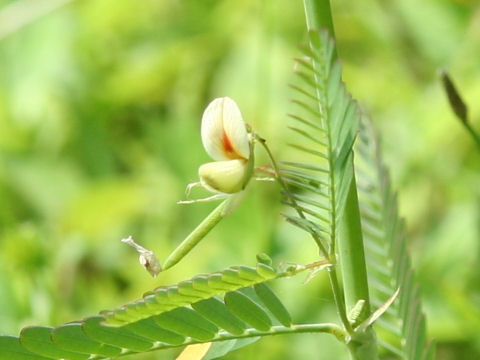
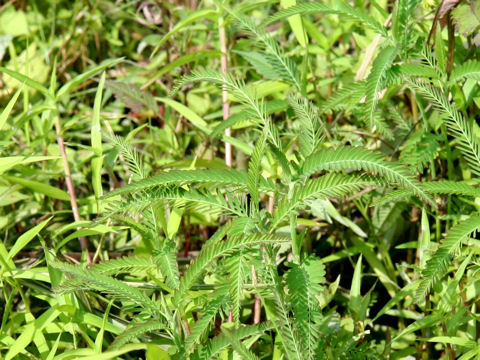
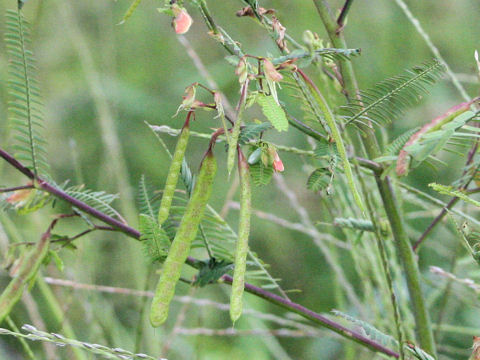
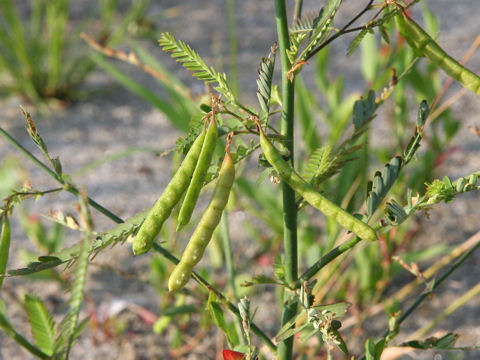
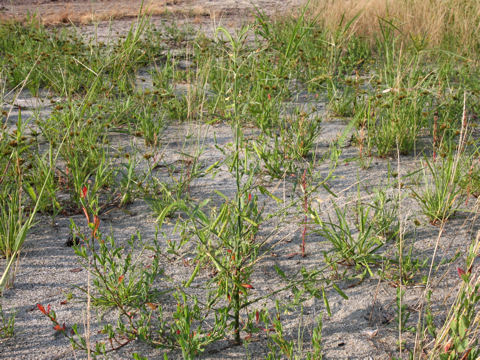
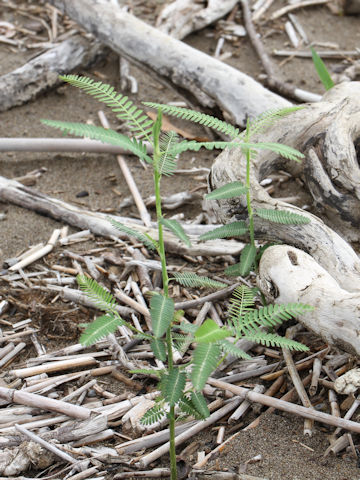
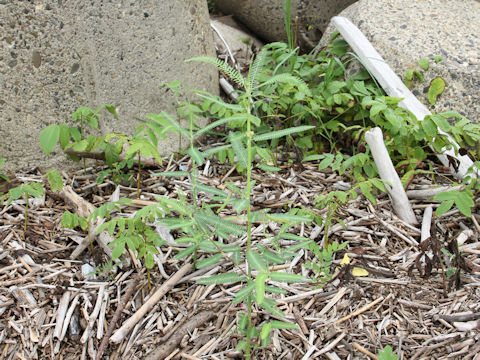
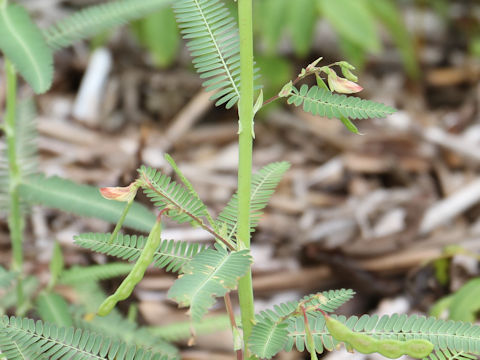
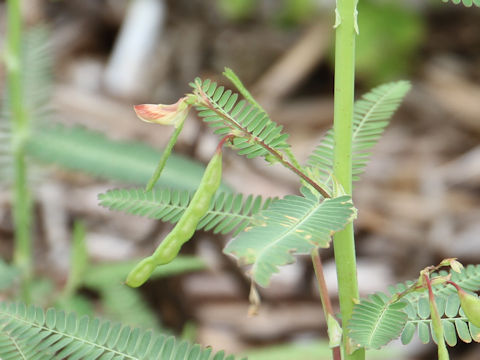
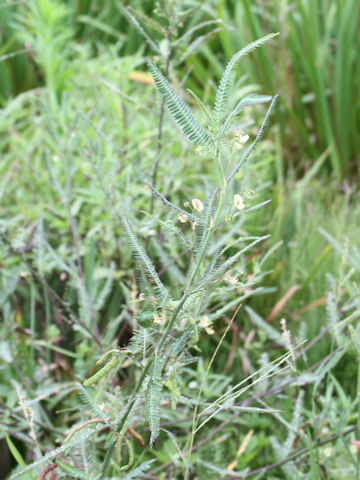
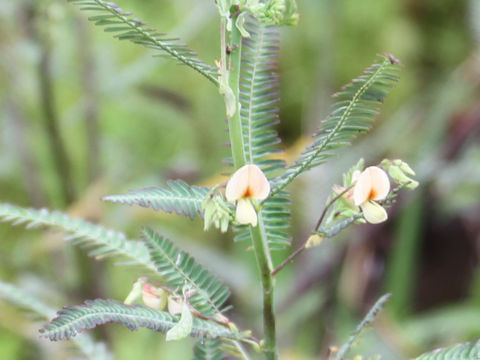
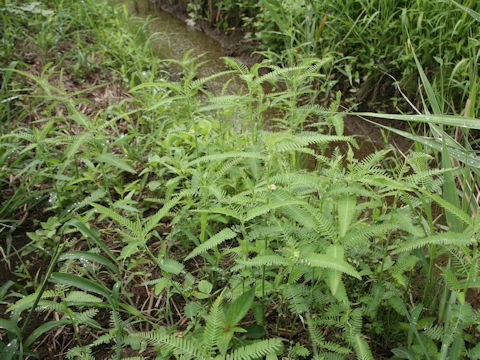
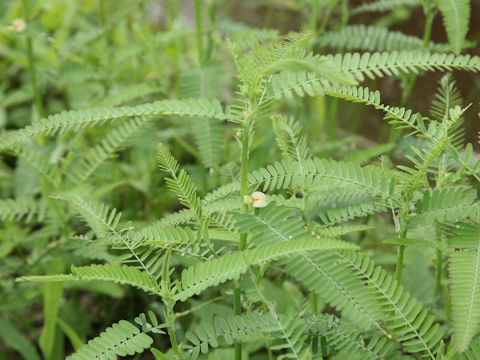
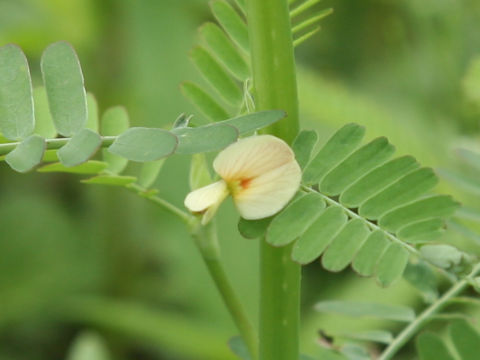
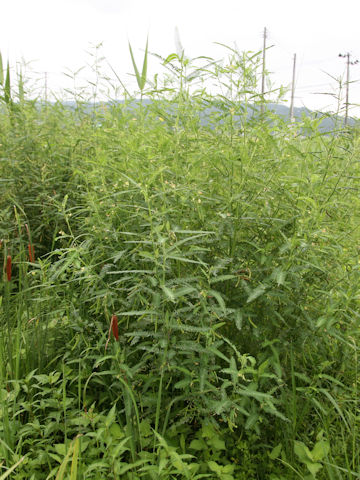
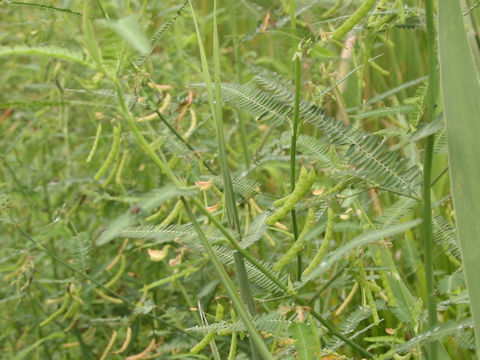
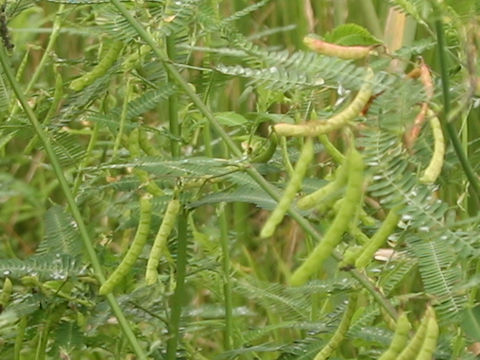
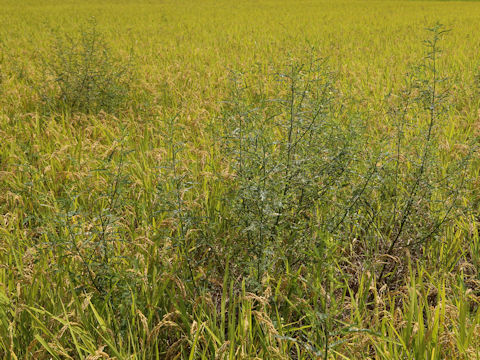
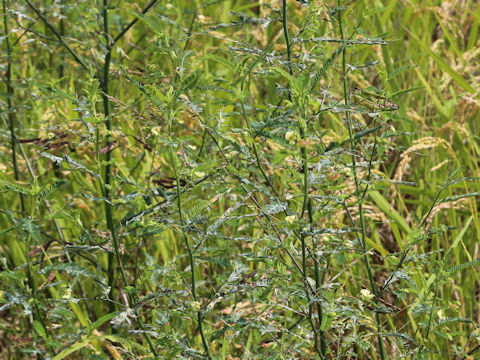
わが国の各地をはじめ、ユーラシア大陸からアフリカ、オーストラリアの暖帯から熱帯地域に広く分布しています。水田や河岸などの湿地に生え、高さは50~100センチになります。葉は偶数羽状複葉で、線状長楕円形の小葉が20~30対つきます。7月から10月ごろ、葉腋から花序をだし、淡黄色の蝶形花を咲かせます。「ねむのき(合歓木)」と同じように、暗くなると小葉を閉じます。台湾華語では「合萌」、中国語では「合萌(he meng)」と呼ばれます。 韓国語では「チャギプル(자귀풀)」です。これは「ネムノキ(チャギ: 자귀)」+「草(プル: 풀)」の合成語です。葉の形がネムノキ(チャギナム: 자귀나무)に似ていて、夜になると葉が互いに向き合って重なり合う睡眠運動をする草であることに由来しています。 |
|
|
マメ科クサネム属の一年草で、学名は Aeschynomene indica。英名は Indian jointvetch。 |
|
|
The Indian jointvetch (Aeschynomene indica) belongs to Fabeceae (the Pea family). It is an annual herb that is native throughout Japan, as well as in the temperate to tropical areas of Eurasian Continent, Africa and Australia. This herb grows in wet rice fields or stream banks, and can reach 50-100 cm in height. The leaves are pari-pinnate compound with 20-30 linear-oblong leaflets. The flowering stalks are borne on the axils, and the pale yellow papilionacenous flowers bloom from July to October. The leaflets close at night. In Taiwanese Chinese, it is called "合萌" and in Chinese "合萌" (he meng). In Korean, it's called "ja-gwi-pul" (자귀풀). This is a compound word consisting of "mimosa" (ja-gwi: 자귀) + "grass" (pul: 풀). The name comes from the fact that the leaves resemble those of the mimosa (ja-gwi-na-mu: 자귀나무), and the plant exhibits a "sleep movement" at night, with the leaves facing each other and overlapping. |
|
|
[上・中1~2] 大阪府四條畷市下田原にて、2006年07月15日撮影。 [中3] 茨城県神栖市矢田部にて、2009年09月15日撮影。 [中4・中5] 宮城県松島町松島にて、2010年08月08日撮影。 [中6~中9] 新潟県上越市「船見公園海岸」にて、2018年08月11日撮影。 [中10・中11] 新潟県阿賀野市水原「瓢湖」にて、2018年08月24日撮影。 [中12~中14] 宮城県村田町「浮島の植物群落」にて、2024年08月21日撮影。 [中15~中17] 同上にて、2024年08月22日撮影。 [中18・下] 宮城県大河原町金ヶ瀬にて、2026年09月17日撮影。 |
|
|

|
Shu Suehiro shu@botanic.jp
|