

|
 くわい (慈姑)
|
|
|
          |
|

|
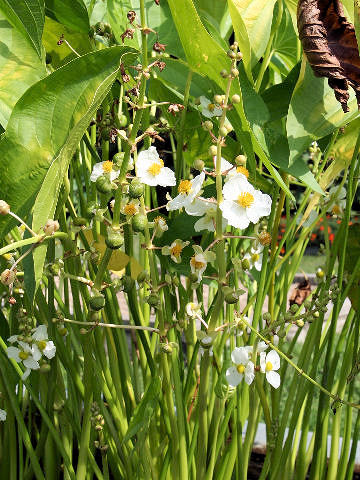
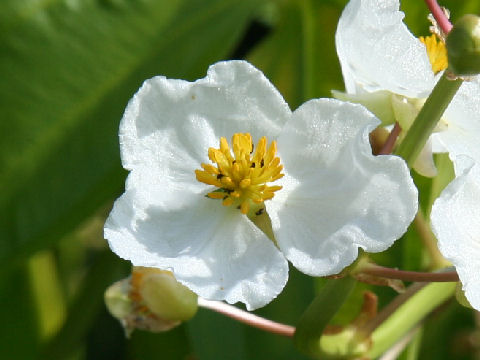
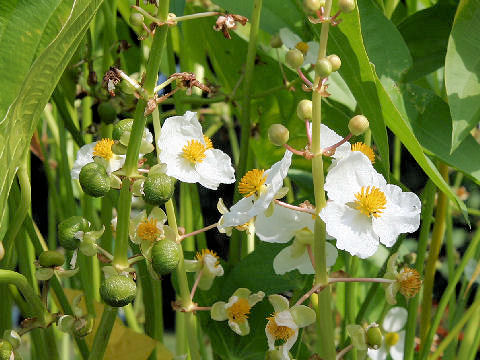
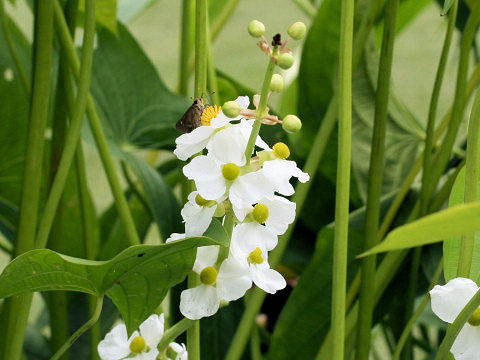
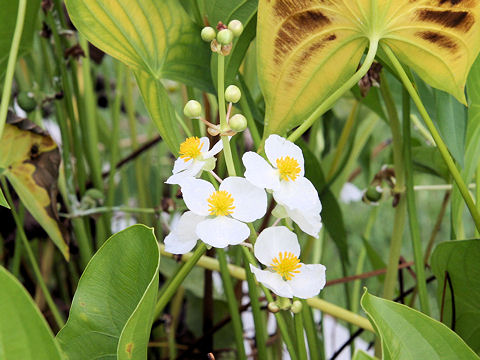
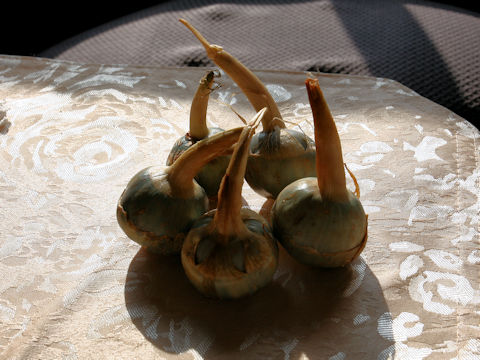
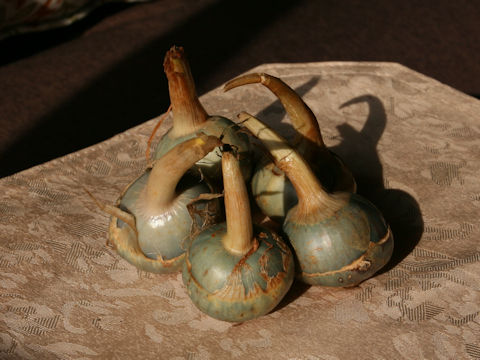
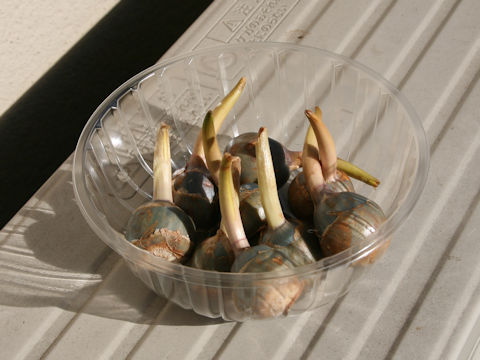
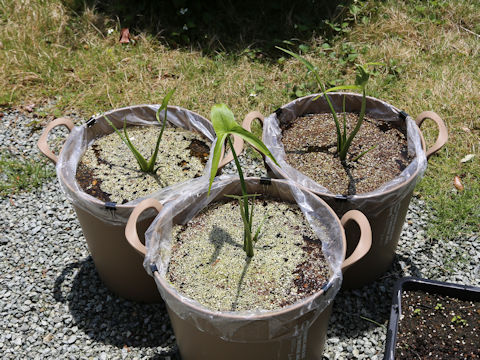
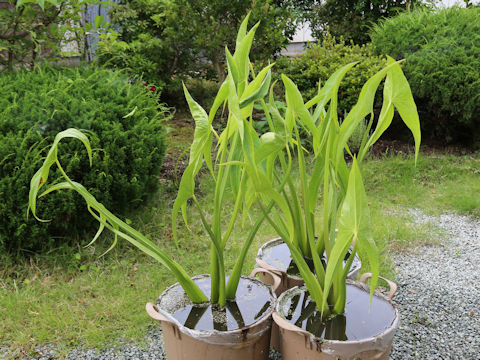
中国が原産ですが、現在では世界中に広く野生化しています。わが国へは、弥生時代に渡来したものと考えられています。高さは1メートルくらいになり、葉柄は長くて鏃形の大きな葉を垂直につけます。地下茎の先端には、球形から楕円形の塊茎ができます。これが食用になりますが、食べるのは中国と日本だけです。品種としては、塊茎が青藍色の「あおくわい(青慈姑)」と灰白色の「しろくわい(白慈姑)」があります。中国語では「華夏慈姑(hua xia ci gu)」と呼ばれます。 写真上・中1~4の品種は「しろくわい」、 中5~8・下は「あおくわい」。 |
|
|
オモダカ科オモダカ属の多年草で、学名は Sagittaria trifolia ssp. leucopetala (syn. Sagittaria trifolia cv. Caerulea)。英名はありません。 |
|
|
The "Kuwai" (Sagittaria trifolia ssp. leucopetala) belongs to Alismataceae (the Water-plantain family). It is a perennial herb that is native to China and naturalized widely around the world nowadays. It was introduced into Japan in Yayoi Era (2300-1700 years ago). This herb can reach about 1 m in height. The leaves are arrowhead-shaped with long petioles. The caudices are round to elliptic and edible, though they are used for food in a few areas; Japan and China. It is called "華夏慈姑" (hua xia ci gu) in Chinese. |
|
|
[上・中1~2] 大阪府交野市「大阪市大付属植物園」にて、2006年09月29日撮影。 [中3] 同上にて、2005年09月14日撮影。 [中4] 同上にて、2007年09月25日撮影。 [中5・中6] 宮城県仙台市宮城野区にて、2020年12月29日撮影。 [中7] 宮城県大河原町大谷にて、2025年12月20日撮影。 [中8] 同上にて、2026年06月01日撮影。 [下] 同上にて、2026年07月06日撮影。 |
|
|

|
Shu Suehiro shu@botanic.jp
|