

|
 みやまくろすげ (深山黒菅) |
|
|
      |
|

|
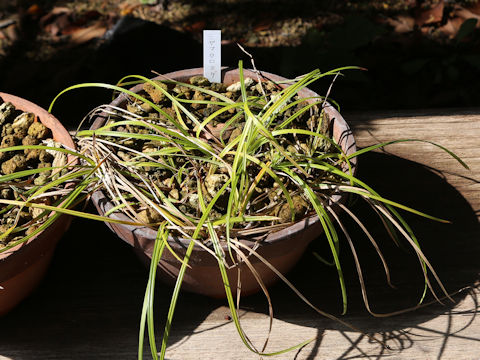
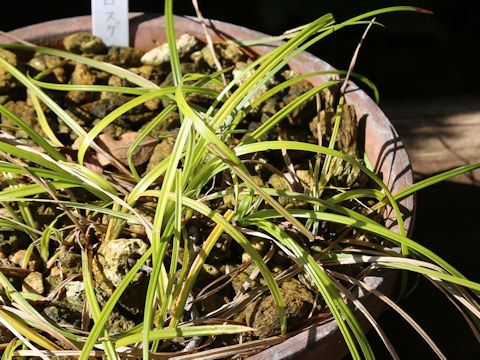
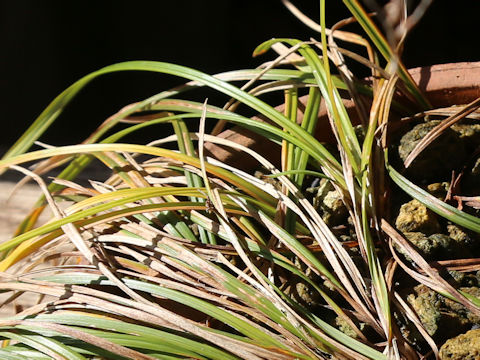
わが国の中部地方以北から北海道、それに千島列島、サハリン、カムチャッカ半島に分布しています。高山帯の草地や砂礫地に生え、高さは12~25センチになります。6月から7月ごろ、多数の小花からなる小穂を2~5個つけます。鱗片は濃紫褐色から黒紫色をしています。別名で「えぞたぬきらん(蝦夷狸蘭)」とも呼ばれます。 |
|
|
カヤツリグサ科スゲ属の多年草で、学名は Carex flavocuspis。英名はありません。 |
|
|
The "Miyama-kuro-suge" (Carex flavocuspis) belongs to Cyperaceae (the Sedge family). It is a perennial herb that is found from the Chubu region and northward in Honshu, Hokkaido in Japan, as well as the Kuril Islands, Sakhalin, and the Kamchatka Peninsula. This herb grows in alpine grasslands and screes, and can reach 12-25 cm in height. The 2-5 spikelets are borne on the upper stems from June to July. The scales are dark purplish-brown to blackish-purple. It is also known by the alternative name "Ezo-tanuki-ran" (Ezo raccoon orchid). |
|
|
[上・中1~2] 岐阜県高山市丹生川町「乗鞍岳」にて、2007年07月31日撮影。 [中3~4・下] 北海道札幌市中央区「北海道大学植物園」にて、2026年09月30日撮影。 |
|
|

|
Shu Suehiro shu@botanic.jp |