

|
 ソラナム・シシンブリイフォリウム (針茄子)
|
|
|
           |
|

|
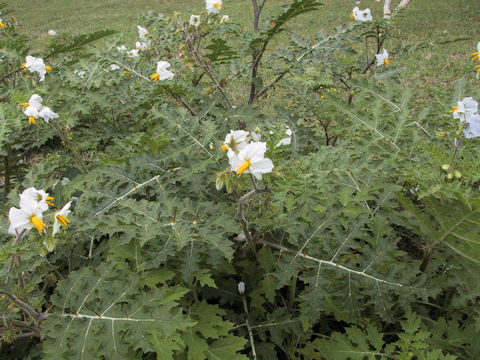
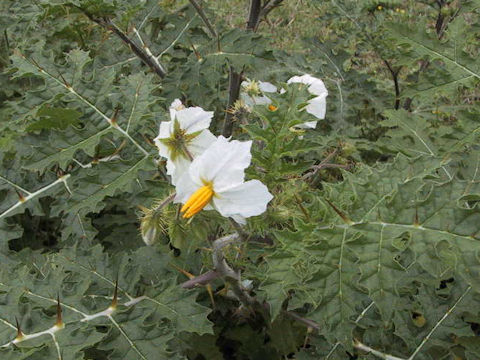
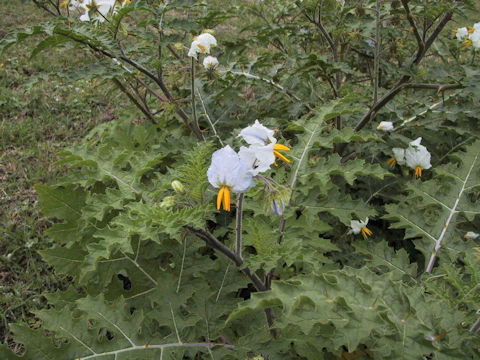
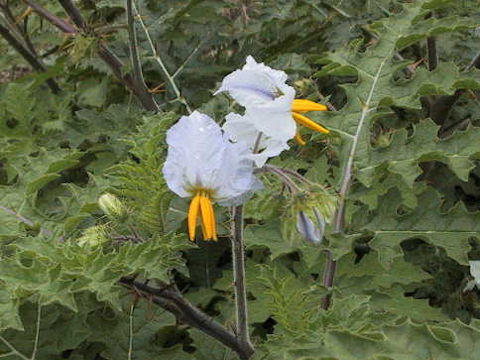
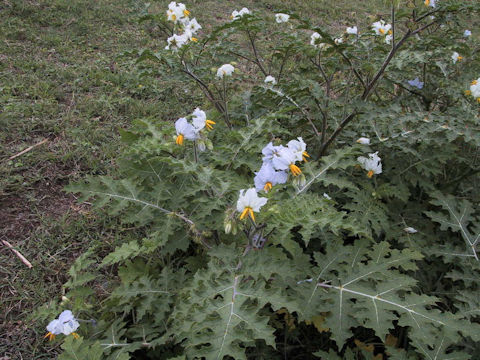
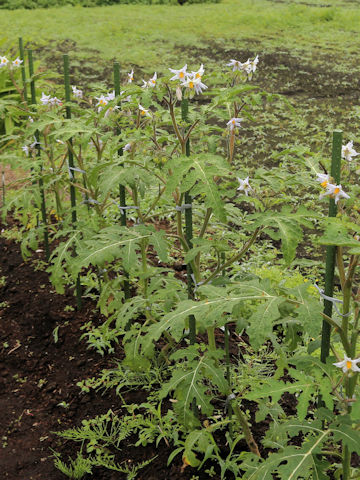
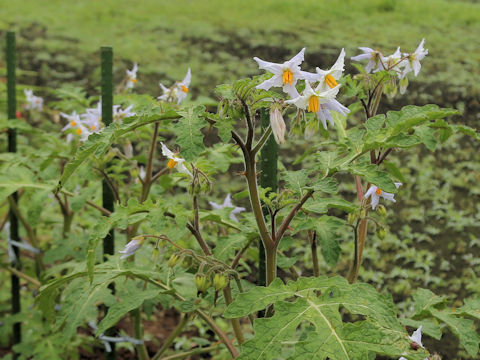
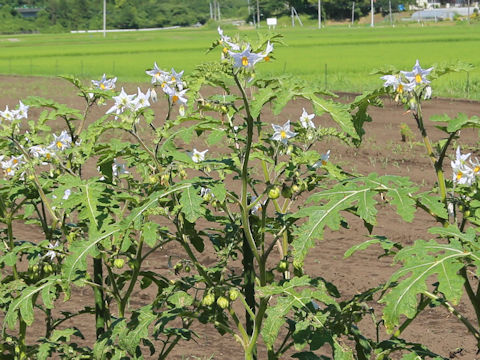
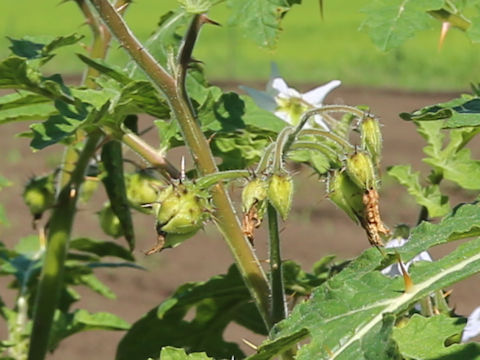
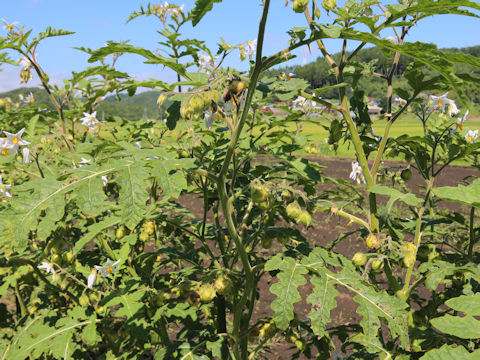
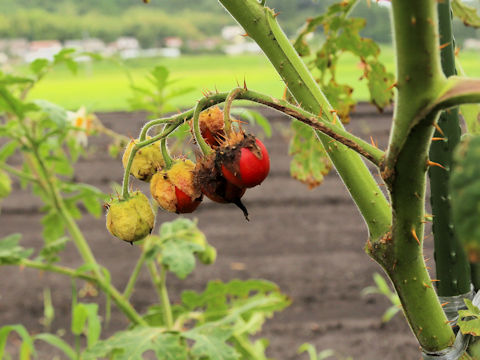
南アメリカが原産の「なす」の仲間で、耕作地に生える雑草です。この草は、ボーア戦争(1899~1902)のときにイギリス軍によって、馬の飼い葉に害になる植物として紹介されました。現在では世界中に広がっています。わが国へは江戸時代末期に観賞用として渡来しました。高さは、90センチほどになり、茎や葉脈の上にオレンジ色の鋭い棘があります。夏から秋にかけて青みがかった白い花を咲かせますが、明るい黄色の雄しべが目立ちます。花後には果実ができ、赤く熟します。標準和名は「はりなすび(針茄子)」です。 近年、「ライチトマト」という名前で、家庭菜園でも栽培されるようになってきました。「わるなすび」と酷似していますが、果実に毒性はなく、熟した果実はフレッシュな甘さとフルーティーな酸味が特徴です。 |
|
|
ナス科ナス属の一年草で、学名は Solanum sisymbriifolium (syn. Solanum linnaeanum)。英名は Wild tomato、Sticky nightshade。 |
|
|
The Wild tomato (Solanum sisymbrifolium) belongs to Solanaceae (the Nightshade family). It is an annual herb that is a member of the "nightshade" native to South America, it is a weed that grows on cultivated land. This herb was introduced by the British Army during the Boer Wars (1899-1902) as a plant that is harmful to horse fodder. It is now spread all over the world. It was introduced to Japan in the late Edo period (1603-1867) as an ornamental plant. It is about 90 cm high and has sharp orange spines on its stems and veins. The bluish white flowers come in summer and fall, but the bright yellow stamens stand out. After the flowers, fruits are formed and ripen red. In recent years, this variety has become popular in home gardens under the name "Lychee tomato". Although it closely resembles the "Horse nettle", the fruit is not toxic, and when ripe, it is characterized by a fresh sweetness and a fruity tartness. |
|
|
[上・中1~4] 兵庫県神戸市灘区六甲山町「六甲山牧場」にて、2002年09月08日撮影。 [中5・中6] 宮城県川崎町支倉にて、2026年07月05日撮影。 [中7・中8] 同上にて、2026年07月15日撮影。 [中9] 同上にて、2026年08月06日撮影。 [下] 同上にて、2026年08月15日撮影。 |
|
|

|
Shu Suehiro shu@botanic.jp
|