

|
 ちょろぎ (草石蚕)
|
|
|
        |
|

|
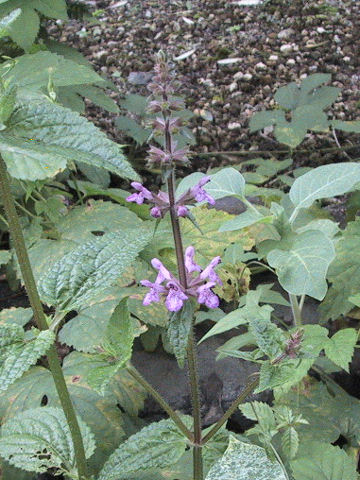
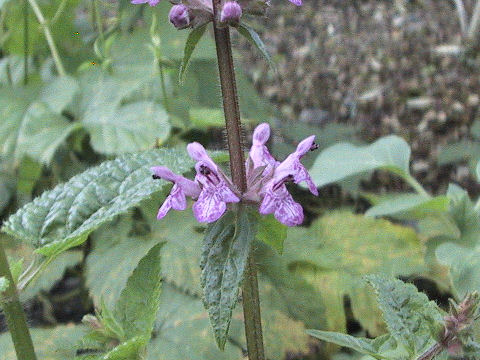
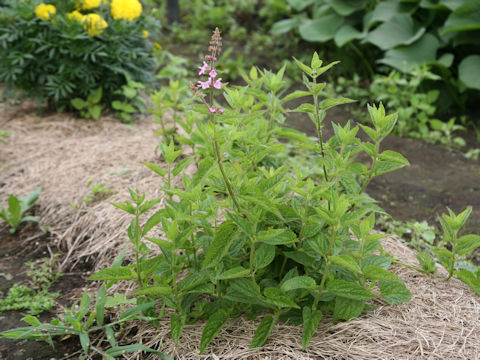
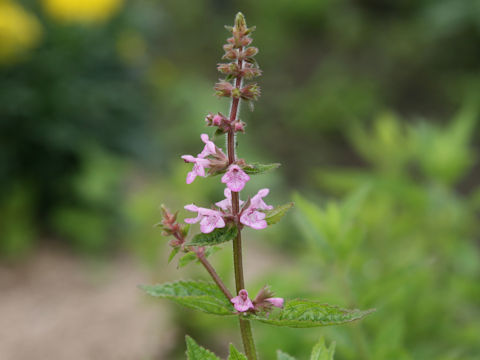
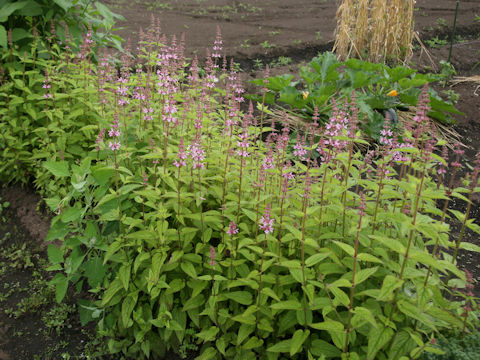
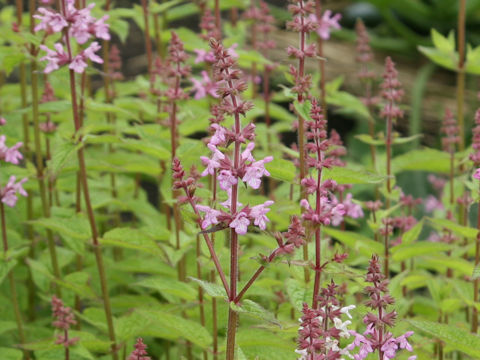
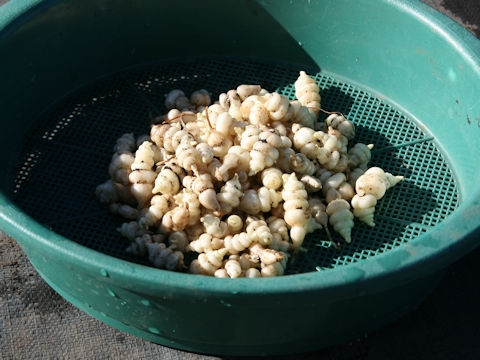
中国の中北部が原産です。わが国へは江戸時代に渡来しました。かたちは「いぬごま」に似ていますが、巻き貝のような塊茎を食用とするために栽培されています。わが国では、お正月のおせち料理や漬物、和え物、吸い物などに利用されますが、ヨーロッパでは、クリーム煮やサラダにされるそうです。夏から秋にかけて、長い穂状花序をだして、紅紫色の花を咲かせます。中国語では「甘露子(gan lu zi)」と呼ばれます。 和名の由来には諸説があります。渦巻き状の形が長くねじれていることから「長老木」などが転じて「ちょろぎ」になったという説や、朝鮮語の「チロンイ(ミミズ)」が転じたという説などがあります。また「草石蚕(くさいさご)」という表記は、根茎の形がトビケラの幼虫の腹に似ていることから。 韓国語では「チョソクチャム(초석잠)」です。これは「草(チョ: 초)」+「石(ソク: 석)」+「蚕(チャム: 잠)」の合成語です。草の下で石のように硬く、蚕の姿や繭に似た塊茎があるということから名付けられました。 |
|
|
シソ科イヌゴマ属の多年草で、学名は Stachys sieboldii。英名は Chinese artichoke。 |
|
|
The Chinese artichoke (Stachys sieboldii) belongs to Lamiaceae (the Mint family). It is a perennial herb that is native to central-northern China. This herb was introduced into Japan in Edo Era (1603-1867). It is cultivated for edible whelked tubers. The tubers are used as traditional New Year dishes, pickled vegetables, marinated foods or Japanese soups in Japan. They are also used as cream stewings or salads in Europe. The long spikes are borne and bloom magenta flowers from summer to fall. In Chinese, it is called "甘露子" (gan lu zi). There are several theories regarding the origin of its Japanese name. One theory suggests it derives from "chorogi", which evolved from terms like "長老木" (meaning long twisted tree) due to its long, spiraling shape. Another theory proposes it comes from the Korean word "chinroni" (meaning earthworm). Additionally, the name "kusa-isago" is used because the shape of its rhizome resembles the abdomen of a caddisfly larva. In Korean, it's called "cho-seok-cham" (초석잠). This is a compound word consisting of "grass" (cho: 초) + "stone" (seok: 석) + "silkworm" (cham: 잠). It was named for the tubers found beneath the grass, which are as hard as stones and resemble silkworms or cocoons. |
|
|
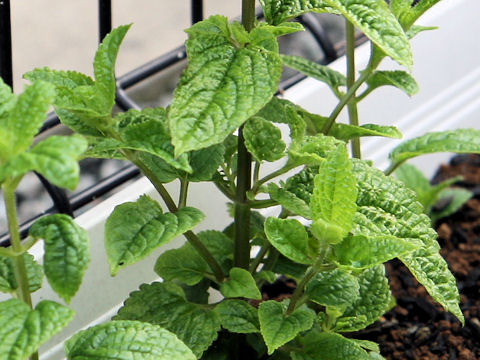
[上・中1] 京都市左京区「京都府立植物園」にて、2003年07月06日撮影。 [中2] 大阪府四條畷市清滝中町にて、2007年06月21日撮影。 [中3・中4] 宮城県川崎町支倉にて、2022年08月02日撮影。 [中5・中6] 同上にて、2023年07月04日撮影。 [下] 同上にて、2023年12月04日撮影。 |
|
|

|
Shu Suehiro shu@botanic.jp
|