 |
|

|
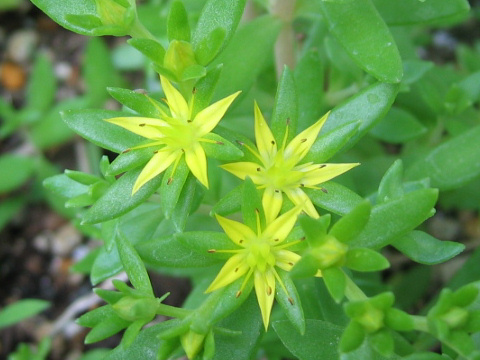
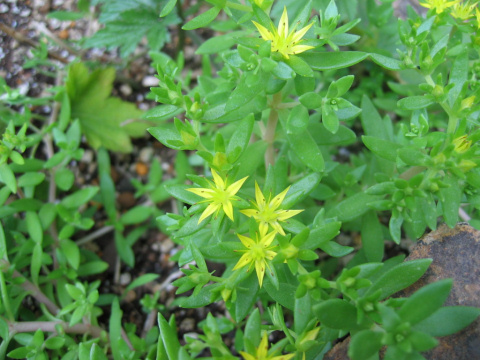
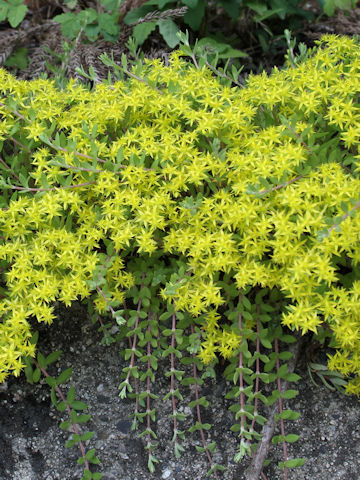
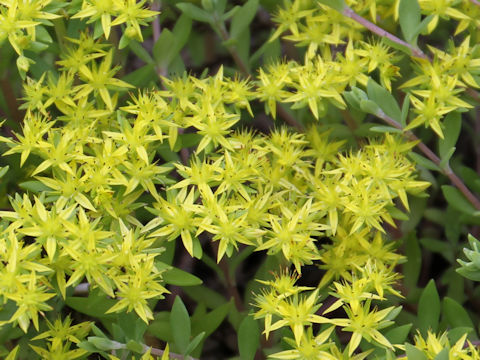
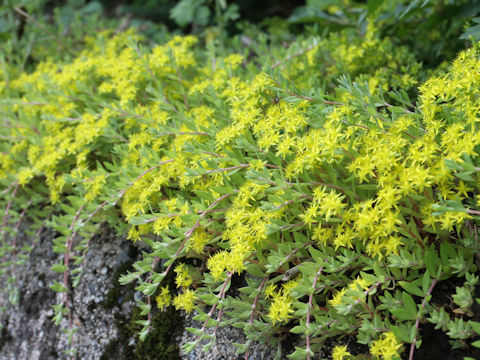
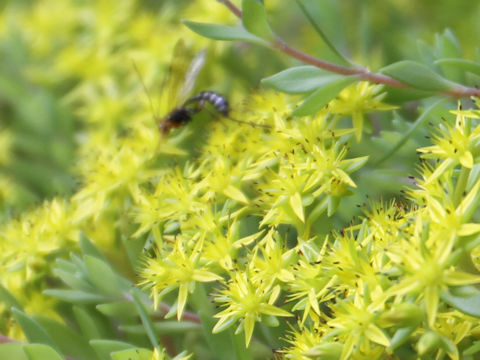
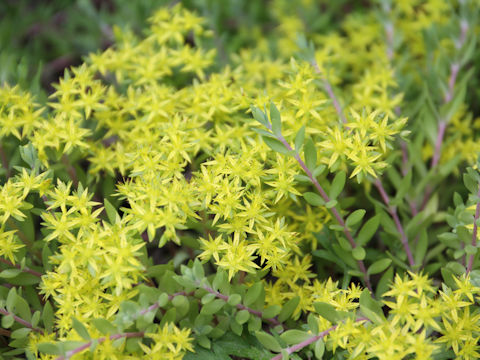
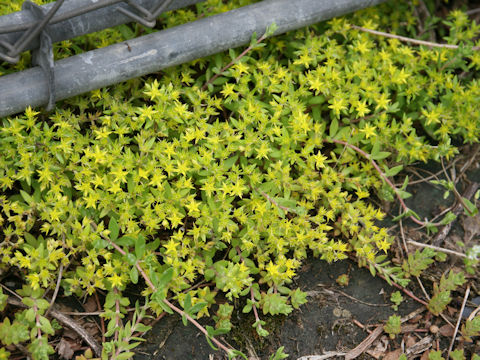
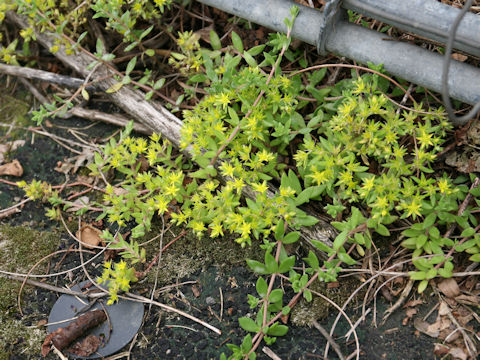
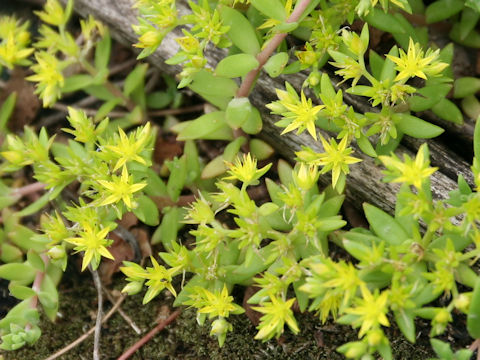
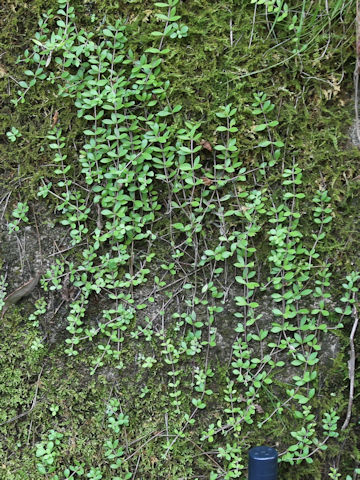
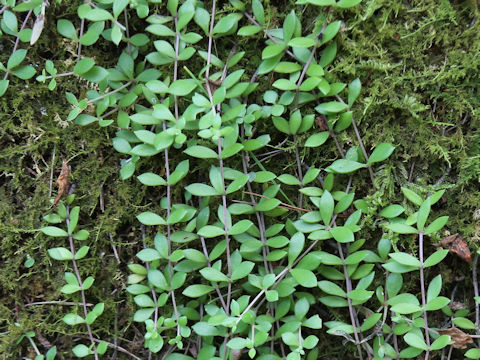
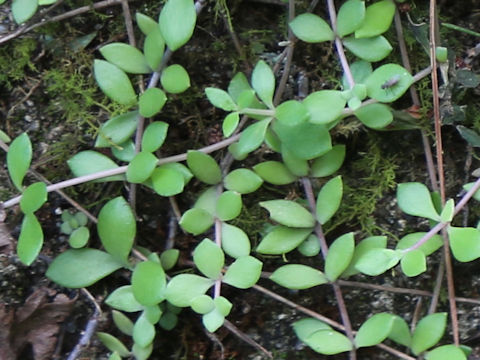
朝鮮半島や中国東北部が原産です。わが国へも古くから帰化していたものと考えられています。都市近郊に多く、石垣や河原などに生えます。茎は紅色を帯び、花をつけない茎は地面を這います。6月から7月ごろ、黄色い花を咲かせます。中国語では「垂盆草(chui pen cao)」と呼ばれます。
韓国語では「トルナムル(돌나물)」です。「石(돌)」+「ナムル(나물)」の合成語です。韓国では春を告げる食材として、センチェ(生菜: 생채)やムルキムチ(水沈菜: 물김치)として親しまれています。
|
|
|
ベンケイソウ科マンネングサ属の常緑多年草で、学名は Sedum sarmentosum。英名は Stringy stonecrop。
|
|
|
The Stringy stonecrop (Sedum sarmentosum) belongs to Crassulaceae (the Orpine family). It is native to the Korean Peninsula and northeastern China. It is considered to have been naturalized to Japan for a long time. Many in the suburbs of the city, they grow in stone walls and river beds. The stems get reddish and the stems with no flowers crawl the ground. Yellow flowers will bloom from June to July. It is called "垂盆草" (chui pen cao) in Chinese.
In Korean, it's called "Dolla-namul" (돌나물). It's a compound word made up of "stone" (돌) and "namul" (나물). In Korea, it is popular as a ingredient that heralds the arrival of spring, often served as "saengchae" (Fresh salad: 생채) or "mul-kimchi" (Water kimchi: 물김치).
|
|
|
[上・中1] 長野市松代温泉にて、2005年06月10日撮影。(photo by Yoko Kitagawa)
[中2~中6] 山形県小国町玉川にて、2017年06月15日撮影。
[中7~中9] 宮城県川崎町支倉にて、2021年06月07日撮影。
[中10~11・下] 宮城県仙台市太白区秋保町馬場「秋保大滝植物園」にて、2026年08月25日撮影。
|

 つるまんねんぐさ (蔓万年草)

 shu@botanic.jp