 |
|

|
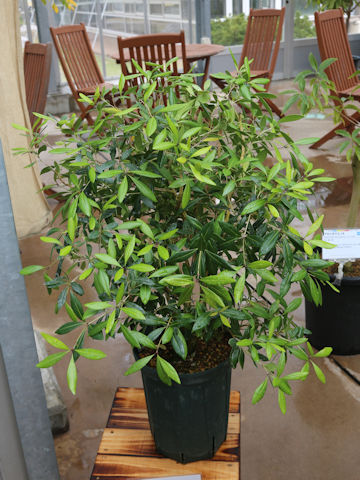
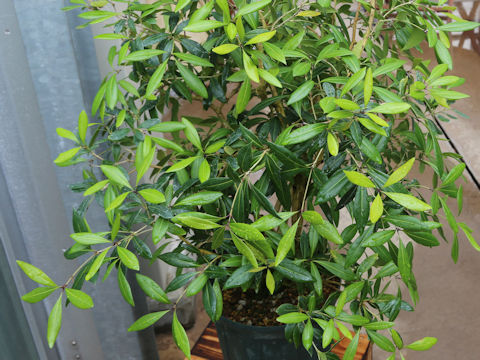
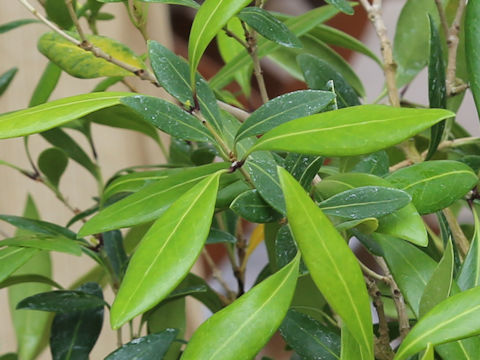
わが国の八重山群島にある西表島の固有種です。山地の林内に生え、高さは2~3メートルになります。葉は倒卵形から楕円形で革質、互生します。葉の縁は、幼木では鋸歯がありますが、成木なると鋸歯はなくなります。9月から11月ごろ、葉腋に白色の花を咲かせます。花冠の先端は4裂します。果実は楕円形の核果です。別名で「いりおもてひいらぎ(西表柊)」とも呼ばれます。
|
|
|
モクセイ科モクセイ属の常緑低木で、学名は Osmanthus iriomotensis。英名はありません。
|
|
|
The "Yaeyama-hiiragi" (Osmanthus iriomotensis) belongs to Oleaceae (the Olive family). It is a small evergreen tree that is an endemic species found on Iriomote Island in Japan's Yaeyama Islands. It grows in mountainous forests and reaches a height of 2 to 3 m. The leaves are obovate to elliptical, leathery, and alternate. The leaf margins are serrated on young trees but become smooth as the tree matures. From September to November, white flowers bloom in the leaf axils. The corolla is four-lobed at the tip. The fruit is an oval drupe. It is also known by the alternative name "Iriomote-hiiragi".
|
|
|
茨城県つくば市「つくば実験植物園」にて、2026年03月28日撮影。
|

 やえやまひいらぎ (八重山柊)

 shu@botanic.jp