
|
|
|

|
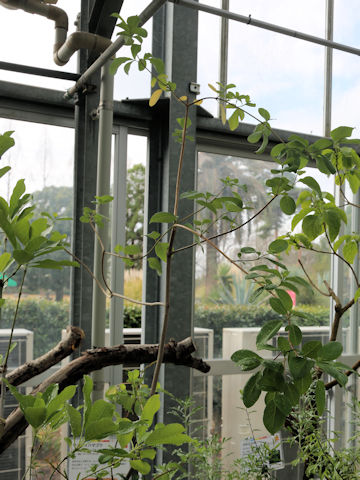
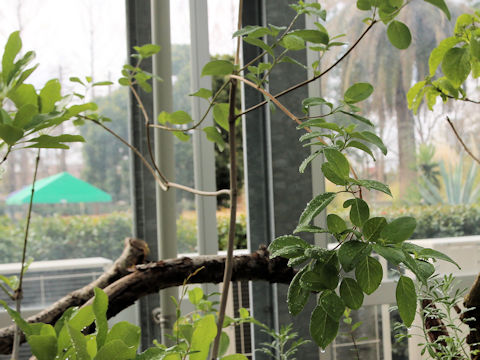
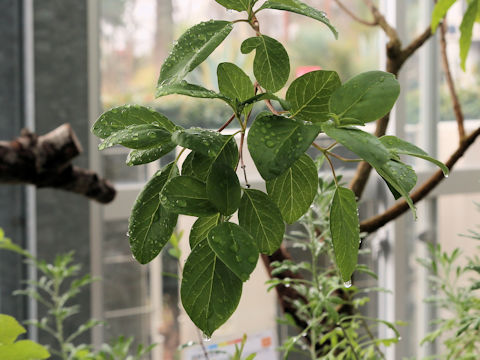
わが国の八重山群島にある石垣島と西表島、それに東南アジアや インド, オーストラリア, ミクロネシア,ポリネシアなどに分布しています。海岸近くの低地に生え、高さは3メートルほどになります。葉は掌状複葉で、披針形から楕円形の小葉が3~5個あり、縁は全縁、先端は鋭く尖って、小葉柄があります。7月ごろ、枝先に円錐花序をだし、淡紫色の花を咲かせます。果実は球形の核果で、黒藍色に熟します。種小名は、葉が乾燥すると表と裏の色が明らかに異なることに由来しています。環境省のレットブックでは絶滅危惧IA類(CR)に分類されています。
|
|
|
クマツヅラ科ハマゴウ属の落葉小低木で、学名は Vitex bicolor (syn. Vitex trifolia var. bicolor)。英名は Indian lilac。
|
|
|
The Indian lilac (Vitex bicolor) belongs to Verbenaceae (the Verbena family). It is a deciduous shrub that is found on Ishigaki Island and Iriomote Island in Japan's Yaeyama Islands, as well as in Southeast Asia, India, Australia, Micronesia, and Polynesia. It grows in lowlands near the coast and reaches a height of about 3 m. The leaves are palmately compound, with 3 to 5 lanceolate to elliptical leaflets that have entire margins, sharply pointed tips, and petiolules. Around July, it produces panicles at the tips of its branches, bearing pale purple flowers. The fruit is a spherical drupe that ripens to a dark blue-black color. The specific epithet derives from the fact that when the leaves dry, the colors of the upper and lower surfaces are distinctly different. It is classified as Critically Endangered (CR) in the Ministry of the Environment's Red List.
|
|
|
茨城県つくば市「つくば実験植物園」にて、2026年03月28日撮影。
|
|
|
|
|

 やえやまはまごう (八重山浜栲)

 shu@botanic.jp